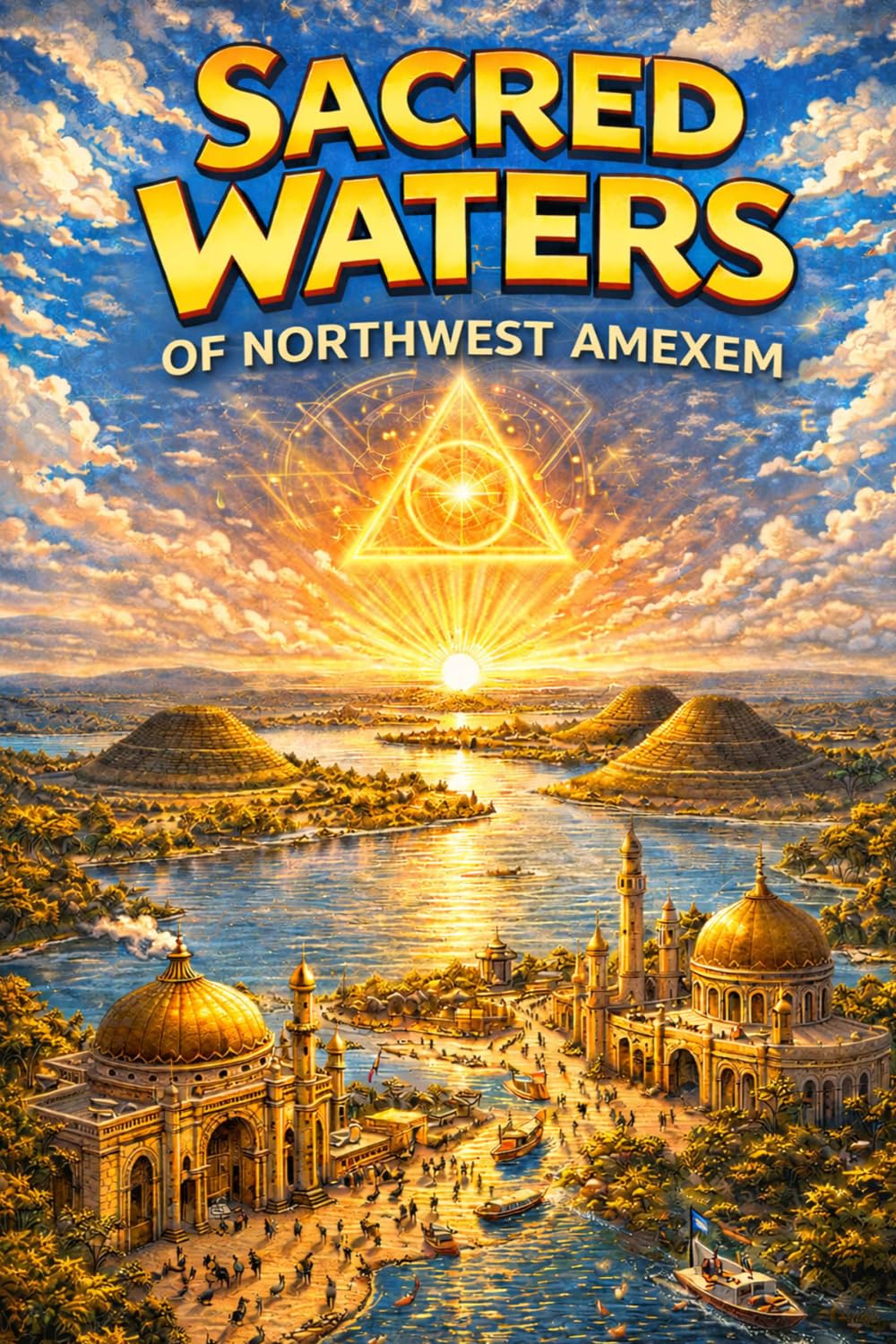



The so-called Great Lakes of North America — Superior, Michigan, Huron, Erie, and Ontario — are more than vast inland seas. In the suppressed literature of Indigenous and Moorish traditions, they are remembered as the “Five Imperial Lakes of the Moabite/Moorish Empire of Northwest Amexem.” These waters were not incidental features of geography but centers of law, trade, culture, and spiritual covenant. Just as the Nile anchored Egyptian civilization, so too did the Great Lakes sustain the mound-building nations of America, whose inheritance has been veiled beneath the colonial narrative of “discovery.” Early explorers marveled at these seas. Samuel de Champlain in 1615 described them as “freshwater seas so vast one cannot see across them” — a phrasing that echoes Mediterranean descriptions of the Aegean or Tyrrhenian. Jesuit missionaries recorded that the peoples of these regions spoke of the waters as sacred, bound to migration, covenant, and memory. To call them “imperial” is to recognize that they once defined the axis of a civilization erased through conquest and reclassification.