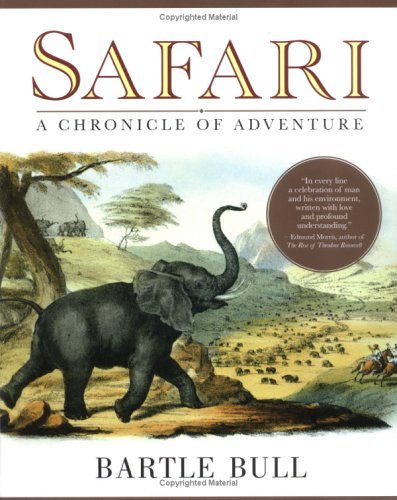



In this magnificent book, Bartle Bull charts the history of the African safari from the first great expedition of 1836, when Cornwallis Harris crossed the Transvaal with an ox-wagon, to the guides of today, carrying on the tradition in the swamps of Tanzania and the forests of Ethiopia. Capturing the timeless beauty of the African bush, Bull tells of the men and women who made this land their home from Frederick Courtenay to Beryl Markham, the legendary expeditioners who brought fame to the safari; from Teddy Roosevelt to the Prince of Whales, and the native Africans who made the adventures possible. An active environmentalist, Bull examines the ethics of hunting and the apparent dilemma of the hunter-conservationist. Against a rich background of tribal and colonial history, he documents developments in weapons and transport, in literature and film, in game control and conservation, and conveys the attraction that has never changed—the magical freedom of the African bush. "In every line a celebration of man and his environment, written with love and profound understanding." -- Edmund Morris, Pulitzer Prize-winning author of The Rise of Theodore Roosevelt "An irresistibly beautiful book... Bull captures the feel and sight and smell and sound of the bush" -- The Boston Globe In this magnificent book, Bartle Bull charts the history of the African Safari from the first great expedition of 1836, when Cornwallis Harris crossed the Transvaal with an ox-wagon, to the guides of today, carrying on the tradition in the swamps of Tanzania and the forests of Ethiopia. Capturing the timeless beauty of the African bush, Bull tells of the men and women who made this land their home, from Frederick Courtenay Selous to Beryl Markham; the legendary individuals who brought fame to the safari, from Teddy Roosevelt to the Prince of Wales; and the Africans who made the adventures possible. An active environmentalist, Bull examines the ethics of hunting and the apparent dilemma of the hunter-conservationist. Against a rich background of tribal and colonial history, he documents developments in weapons and transport, in literature and film, in game control and conservation, and conveys the attraction that has never changed: the magical freedom of the African bush. "Comparison with Hemingway and Ruark is meaningless, for Bull's knowledge of East Africa is profound." - The Washington Post "Full of pictures and lore...One learns a good deal of Natural History...Bull has collected art work, not often seen, from the era before photography... Their works give the book a special edge." â " The New York Times Bartle Bull is the author of the widely praised African novels The White Rhino Hotel , A Café on the Nile , and The Devil's Oasis as well as Shanghai Station . Bull is a member of the Royal Geographical Society and the Explorers Club and was the publisher of The Village Voice .