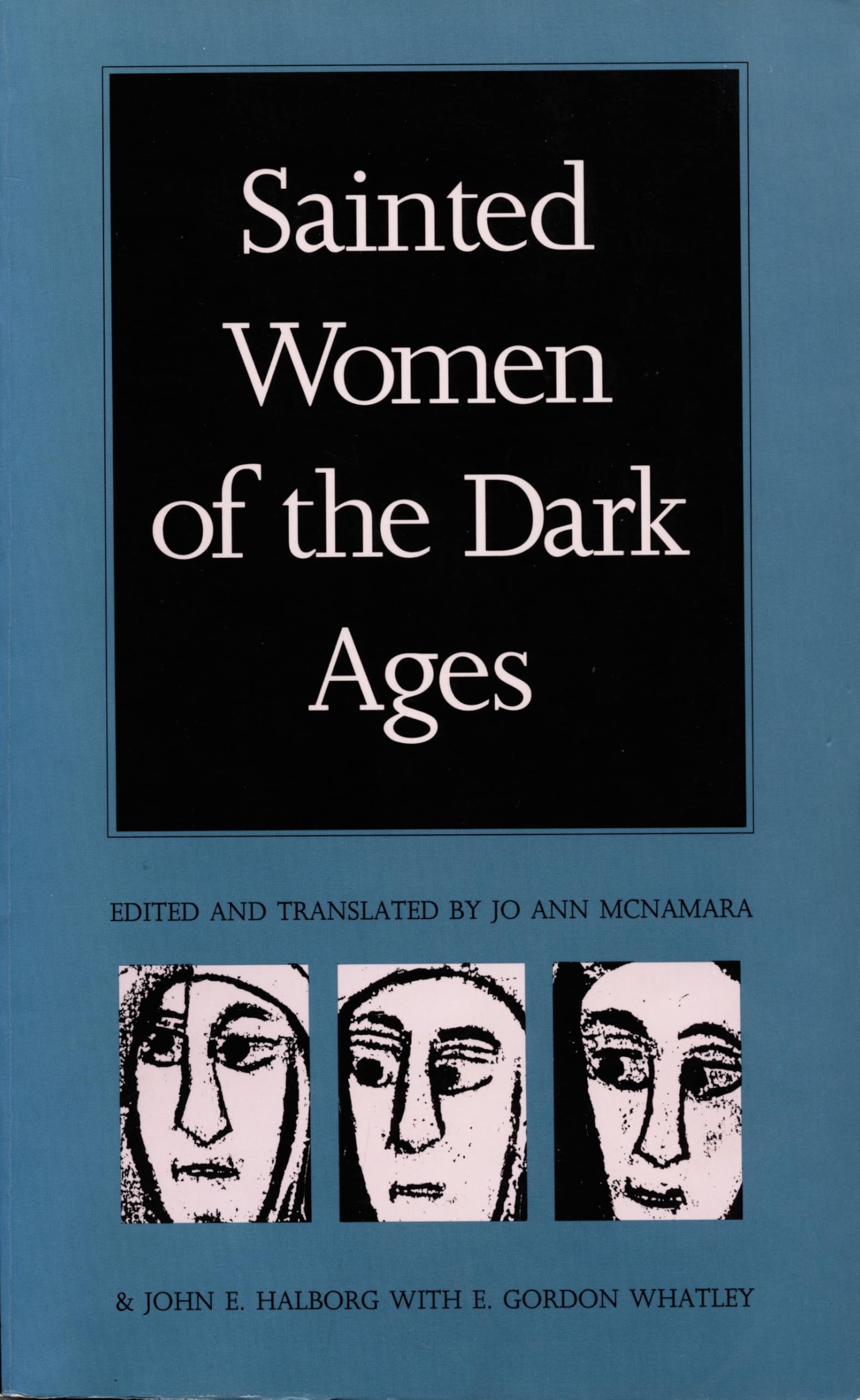



Sainted Women of the Dark Ages makes available the lives of eighteen Frankish women of the sixth and seventh centuries, all of whom became saints. Written in Latin by contemporaries or near contemporaries, and most translated here for the first time, these biographies cover the period from the fall of the Roman Empire and the conversion of the invading Franks to the rise of Charlemagne's family. Three of these holy women were queens who turned to religion only after a period of intense worldly activity. Others were members of the Carolingian family, deeply implicated in the political ambitions of their male relatives. Some were partners in the great Irish missions to the pagan countryside and others worked for the physical salvation of the poor. From the peril and suffering of their lives they shaped themselves as paragons of power and achievement. Beloved by their sisters and communities for their spiritual gifts, they ultimately brought forth a new model of sanctity. These biographies are unusually authentic. At least two were written by women who knew their subjects, while others reflect the direct testimony of sisters within the cloister walls. Each biography is accompanied by an introduction and notes that clarify its historical context. This volume will be an excellent source for students and scholars of women's studies and early medieval social, religious, and political history. "This volume will become a standard part of many surveys of early medieveal history as well as required reading in topical courses on women in the Middle Ages and hagiography."—Patrick J. Geary, Institute for Advanced Study, Princeton University "This volume will become a standard part of many surveys of early medieveal history as well as required reading in topical courses on women in the Middle Ages and hagiography."--Patrick J. Geary, Institute for Advanced Study, Princeton University JoAnn McNamara is Professor of History Emerita at Hunter College, City University of New York. John E. Halborg is a parochial vicar at St. Thomas More Church in New York City. Gordon Whatley is Professor of English at Queen’s College, City University of New York. Sainted Women of the Dark Ages By Jo Ann McNamara, John E. Halborg, E. Gordon Whatley Duke University Press Copyright © 1992 Duke University Press All rights reserved. ISBN: 978-0-8223-1216-1 Contents Note on Language and Abbreviations, Abbreviations in Footnotes and Bibliography, Acknowledgments, Sainted Women of the Dark Ages, Introduction, 1: Genovefa: (423–502), 2: Clothild, Queen of the Franks: (d. 544), 3: Monegund, Widow and Recluse of Tours: (d. 570), 4: Radegund, Queen of the Franks and Abbess of Poitiers: (ca. 525–587), 5: Eustadiola, Widow of Bourges: (594–684), 6: Caesaria II, Abbess of Saint Jean of Arles: (ca. 550), 7: Rusticula, Abbess of Arles: (ca. 556–632), 8: Glodesind, Abbess in Metz: (ca. 600), 9: Burgundofara, Abbess of Faremoutiers: (603–645), 10: Sadalberga, Abbess of Laon: (ca. 605–670), 11: Rictrude, Abbess of Marchiennes: (ca. 614–688), 12: Gertrude, Abbess of Nivelles: (628–658), 13: Aldegund, Abbess of Maubeuge (d. ca. 684) Waldetrude, Abbess of Mons (d. ca. 688), 14: Balthild, Queen of Neustria (d. ca. 680), 15: Bertilla, Abbess of Chelles (d. ca. 700), 16: Anstrude, Abbess of Laon: (ca. 645, d. before 709), 17: Austreberta, Abbess of Pavilly: (650–703), Bibliography, CHAPTER 1 Genovefa: (423–502) * * * Germanus of Auxerre and Lupus of Troyes first encountered the child Genovefa in her hometown of Nanterre about 429. The Roman world was rapidly crumbling before the advances of Germanic tribes. To the south, Augustine of Hippo was soon to die while a Vandal army stormed the gates of his city. At the northern fringe, Patrick had barely begun his mission to Ireland before Anglo-Saxon invaders began to encroach on the Romanized Britons. The collapse of the Roman Empire left the Catholic church as the only outpost of Roman authority, but the church itself had to cope with various heresies that flourished among the barbarians who had heretofore received Christianity without its accompanying hierarchical structure. The two Gallic bishops were on their way to Britain to rally the Catholic people against the Pelagian heresy. In Roman Gaul, Arian Visigoths had infested the southern provinces and the pagan Franks had established a kingdom in the north around Tournai extending south in Genovefa's lifetime to Soissons, Laon, and finally Paris. The evangelization of the countryside had barely begun. The little girl whom Germanus picked out of an admiring crowd as a candidate for future sainthood was destined to live a long life. She moved through a wild, half-pagan countryside and lived among excitable people easily moved to excesses of admiration and hostility. In 451, she rallied the people of Paris, her adopted city, against the Huns, led by their savage king Attila. A few years later, as their intermediary wi