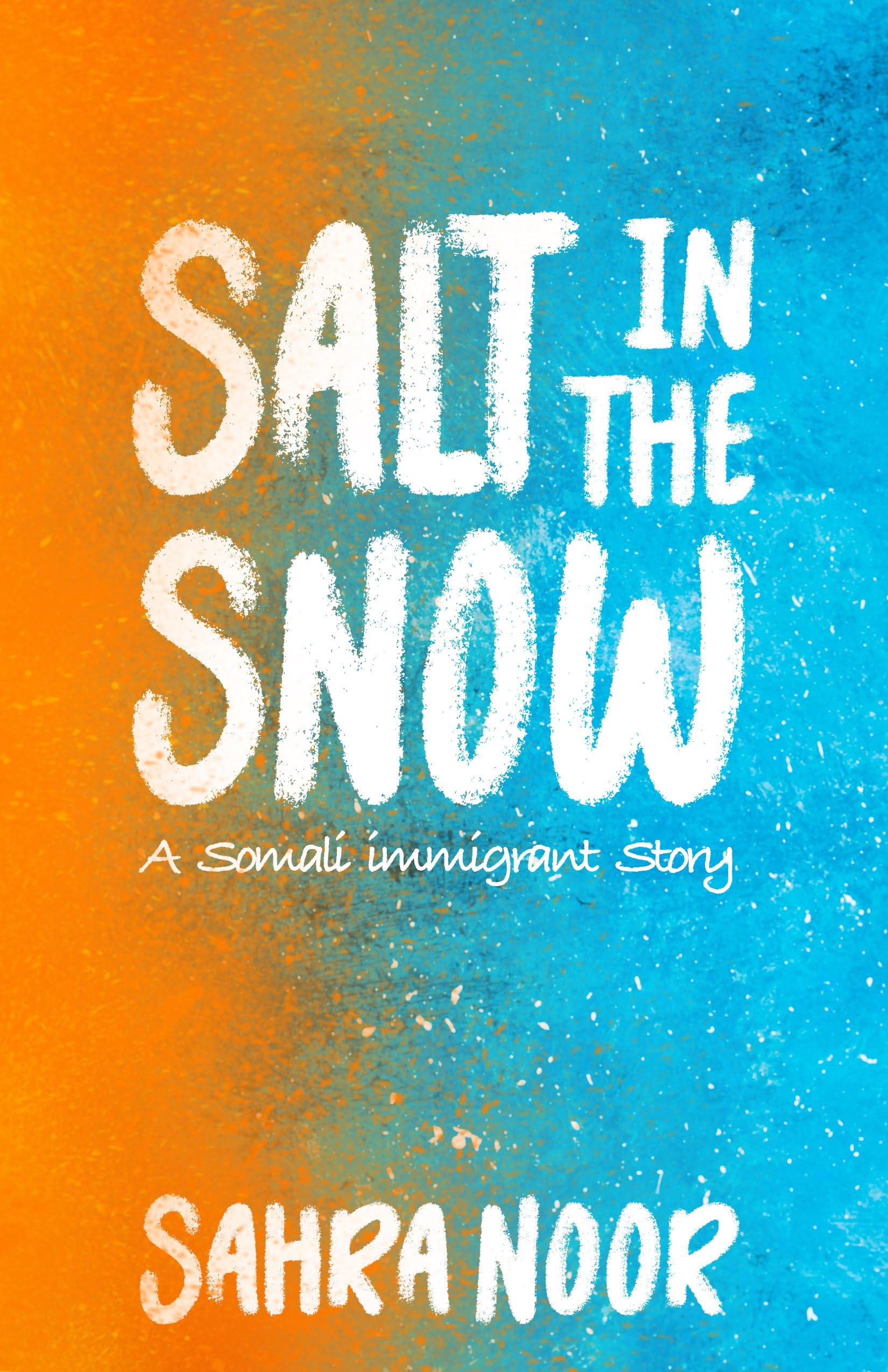



From the sunlit courtyard of her family home in Mogadishu to the icy streets of Minneapolis, Salt in the Snow is a deeply personal memoir about migration, motherhood, and the enduring influence of a father’s love. Raised in a close-knit, multigenerational Somali household, Sahra was shaped early by tradition and by the towering presence of her father, Noor. His voice, his choices, and his values became the compass by which she learned to navigate the world. But when she arrived in the United States as a teenager, everything shifted. As she built a life in America on her own terms, she examined how her father’s hopes and expectations both shaped and confined her and how the love between them, though complex, endured through every chapter of her life. Told with fierce honesty, emotional clarity, and quiet resilience, Salt in the Snow is a memoir for anyone who has ever straddled two cultures, two generations, or two selves and searched for belonging in the in-between. Sahra Noor is a writer, international health and philanthropy consultant, executive coach, and leadership development expert based in Nairobi, Kenya. Noor is the Founder and CEO of Grit Partners, a consulting firm that supports health system reform, capacity building, and leadership transformation across Africa and beyond. My earliest childhood memory is of Aabe teaching me how to swim when I was just five years old by tossing me straight into the ocean at Jazeera Beach. Aabe’s strong hand wrapped around mine as we waded into the waves. Without much warning, he scooped me up and, with a mischievous grin, flung me into the shallow blue. I should have been terrified. But I wasn’t. The water swallowed me for a second and then, as I kicked my legs and came up gasping, I saw him. Aabe stood not far off, arms open wide, waiting for me. I started paddling toward him with all the strength my little arms could manage, and as I got closer, I could almost hear his voice in my head: “Keep swimming. I’m right here. I got you.” That moment stuck with me, not just because it was the first time I swam, but because in every splash, every kick, every time I caught a mouthful of seawater and pushed forward against the tide, I was wrapped in the thrill of doing something hard, with the safety of knowing Aabe was there to save me. He didn’t just teach me how to swim that day. He planted in me an unshakable belief that I could take risks, face danger, take a leap, and know that he would always be nearby, ready to catch me if I stumbled. I carried that feeling of courage and trust with me for the rest of my life. Through every storm and every turning point, I could still picture Aabe’s open arms and hear his unspoken promise: “Go on. Be brave. I’m here.” Beyond the white sand beaches, Mogadishu, the city of my birth, was a colorful place, a playground where every corner seemed to hold a memory, a story, or a piece of who we were. As a child, I was captivated by the beauty of the city. White-painted villas with arched windows lined the main streets, and old colonial landmarks, like the Cattedrale di Mogadiscio, the Arch of Umberto, the Palazzo De Vincenzi, and the national museum Garesa gave Mogadishu a unique blend of history and elegance. What struck me most was how nearby, statues of our heroes, Sayid Mohamed Abdulle Hassan, Dhagaxtuur, and Xaawo Taako stood proud, telling the story of our people’s resistance and patriotism. The closeness of the landmarks and statues seemed to whisper both the pain of colonization and the pride of those who fought back. Italian influence could be felt in Mogadishu’s food scene too, with cozy Italian restaurants and cafés scattered around the city. Aabe’s favorite was the well-known Caffé Nazionale, a lively spot in the center of the city. Whenever I went there with Aabe, I had a sandwich or a steaming bowl of pasta and sip it with cold Pompelmo grapefruit juice while Aabe ordered espresso with his meals regardless of time of day. The food, the drinks, the ambience and friendly staff made me feel like we weren’t in a restaurant but in a rich, hospitable friend’s home. Italian culture became woven into everyday Somali life, especially in Mogadishu and the southern regions, which had been under Italian colonization for over sixty years. Their influence was most evident in our food and language. Eating mishaari (polenta) for breakfast, baasto (pasta) for lunch, and cooling off in the afternoon with homemade fruity jalaato (gelato) was and is still part of our daily routine. Even the Somali language, which became the official national language in 1972, absorbed hundreds of Italian words. It wasn’t unusual to hear people casually saying “ciao” or “perché,” even if they didn’t speak Italian fluently. By the mid-1980s, when I was coming of age, the Italians were long gone, but Mogadishu was still a city in transition, growing and redefining itself with every passing day. The streets buzzed with energy, filled with color and so