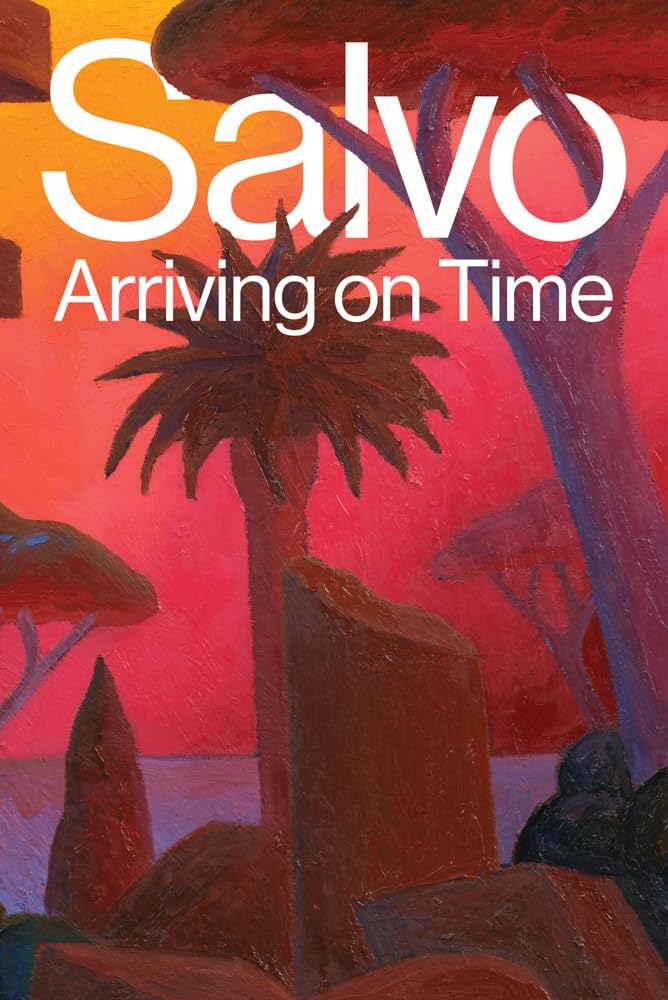



A visual itinerary through Salvo's obsessive themes: the passing of time, art history, urban life, color and light Salvatore Mangione, known as Salvo (1947–2015), is one of the most singular voices of Italian contemporary art, with his paintings still achieving critical and commercial success even a decade after his death. He began as a conceptual artist active in the Arte Povera circle. In 1973, he returned to painting for good―an unconventional, old-fashioned choice for the time. The brightly colored geometric forms that comprise his landscapes and still lifes evoke both the post-Impressionist experimentation of Cézanne and the metaphysical scenes of Giorgio de Chirico. His ceaseless research into light, color and depicting the passage of time gives birth to a mesmerizing vision merging realism with mysticism. Conceived to open up a critical reading of Salvo's work to an international audience, this comprehensive publication, published with Pinacoteca Agnelli, includes new contributions by an international array of artists, curators and writers. Salvatore Mangione (1947-2015), connu sous le nom de Salvo, est l'une des voix les plus singulières de l'art contemporain italien. Né à Leonforte (Sicile), Salvo s'installe à Turin avec sa famille en 1956. Il y développe une pratique conceptuelle et fait partie du cercle de l'Arte Povera, tout en se liant d'amitié avec des artistes tels que Mario et Marisa Merz, Sol LeWitt, Robert Barry, Joseph Kosuth et Alighiero Boetti, avec qui il partage un atelier. En 1972, il participe à la révolutionnaire Documenta 5, organisée par Harald Szeemann. En 1973, il revient à la peinture, qu'il a pratiquée pendant ses premières années de formation, un choix considéré à l'époque comme non conventionnel et démodé. Au cours des quatre décennies suivantes, l'étude de sujets et de langages traditionnels de l'histoire de l'art, tels que les genres du paysage et de la nature morte, a été au cœur de son œuvre de maturité. Son utilisation de motifs récurrents et de formes géométriques, la manière dont son art fait dialoguer l'histoire de l'art – de Paul Cézanne à Giorgio di Chirico – avec la représentation du quotidien (cafés, paysages urbains, ports), sa recherche incessante sur la lumière, l'ombre, la couleur et la manière d'incarner le passage du temps donnent naissance à une vision artistique fascinante où réalisme et mysticisme se confondent.