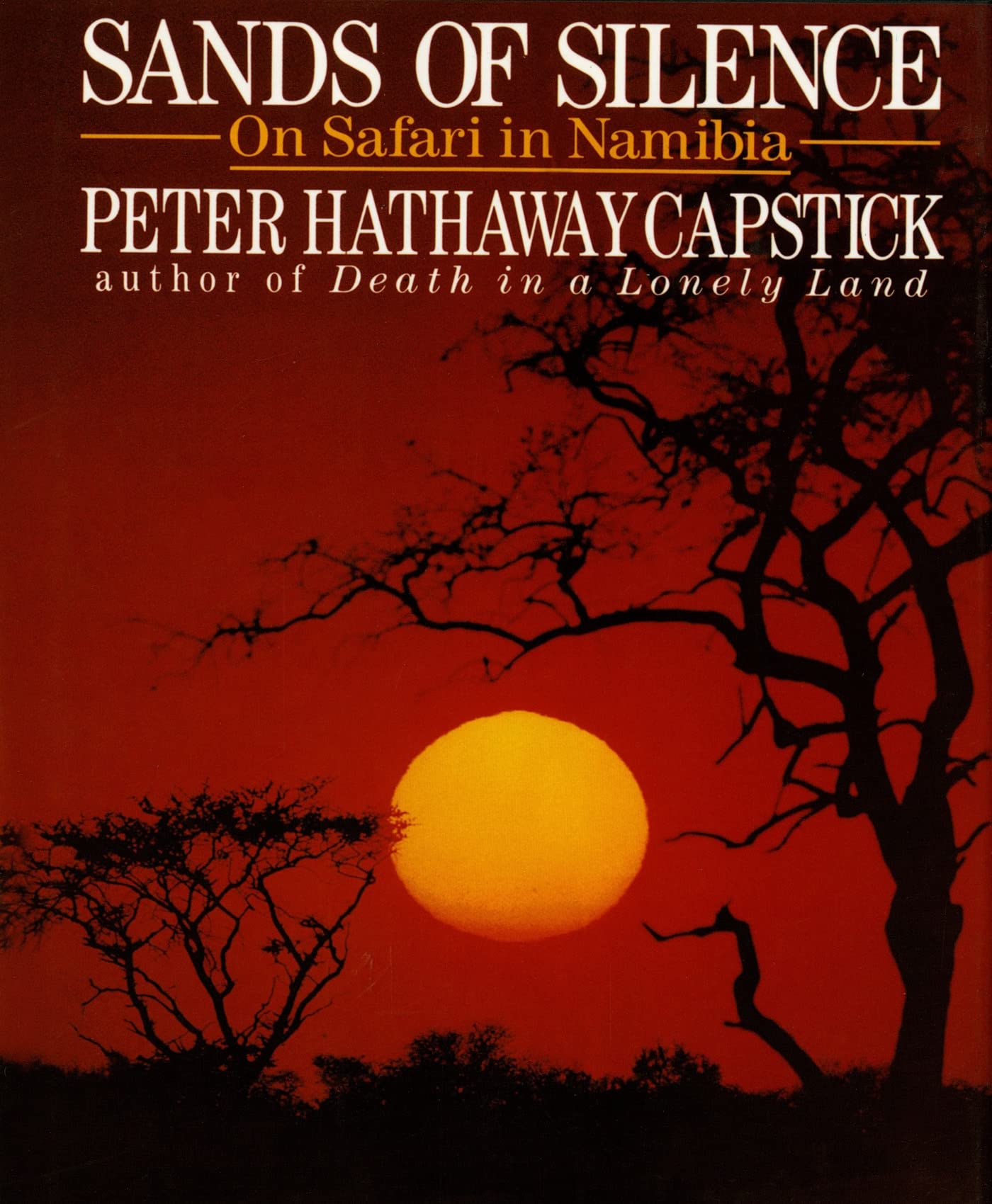



From the successor to Ruark and Hemingway comes the most lavishly illustrated, historically important safari ever captured in print. Peter Hathaway Capstick journeyed on safari through Namibia in the African spring of 1989. This was a nation on the eve on independence, a land scorched by sun, by years of bitter war. In these perilous circumstances, Peter Capstick commences what is surely the most thrilling safari of his stories career. He takes the reader to the stark landscape that makes up the Bushmen's tribal territories. There, facing all kinds of risks, members of the chase pursue their quarry in a land of legend and myth. the result is an exciting big-game adventure whose underlying themes relate directly to the international headlines of today. In this first person adventure, Capstick spins riveting tales from his travels and reports on the Bushmen's culture, their political persecution, and the Stone Age life of Africa's original hunter-gatherers. In addition, the author explains the economic benefits of the sportsman's presence, and how ethical hunting is a tool for game protection and management on the continent. Not since Peter Capstick's Africa has the author taken the reader along on safari. In this superbly illustrated book, Capstick returns to the veld with an ace video cameraman and leading African wildlife photographer Dr. M. Philip Kahl. one hundred of Dr. Kahl's striking color photos capture perfectly life and death in the "land of thirst." Unapologetic great white hunter (22 years in four countries), prolific author (nine books, many articles), editor (reprints of African hunting classics), and video producer, Capstick brings his considerable knowledge of Africa to this frank description of hunting in Bushland. In 1989 he spent six weeks in the northern Kalahari, home of the Ju/Wasi , in order to film and write about hunting for leopard and elephant. In a low-key account described with humor and sometimes exaggerated metaphors--but also with interesting historical notes and definite opinions about African game policy, ethnology, and politics--he vividly describes a modern safari and the various supporting characters vital to its success. He ranges from descriptions of the people of the Bush to the crisis in African elephant populations and the need (and advantages of) ethical big-game hunting. Photos not seen. For public libraries. -Roland Person, Southern Illinois Univ. Lib., Carbondale Copyright 1991 Reed Business Information, Inc. Another vintage safari adventure from Capstick (Death in a Lonely Land, 1990, etc.)--for those who yearn for the simpler days of life in the pristine bush, trophies on the wall, and good old male-bonding. In the spring of 1989, with cameramen--including noted African-wildlife photographer M. Philip Kahl--along for the record, Capstick went to Namibia to hunt elephant to round out his video series on hunting. There, he joined a professional safari outfit and headed for Bushmanland, an arid area sparsely settled by the last remnants of Bushmen tribes. These Bushmen, with independence for Namibia imminent, were rapidly losing their old customs as rival political parties bought their votes with T-shirts and whiskey. Caught between ``a hunting-and-gathering culture and the modern world,'' their future is not promising--the ease of civilization is too tempting, and they have not yet taken to agriculture. On their present journey, as they pursue the perfect elephant, Capstick and his companions have the obligatory encounters with dangerous wild animals and snakes; spend many futile hours in the hot sun watching animals; and, as expected, are finally rewarded with an old tusker worthy of trophydom. Along the way, the author throws in a lot of hunting lore, opinions on game- management, the history of Bushmen, and the role of conservation in the current elephant crisis. For Capstick, the ideal solution would be no ``appreciable'' poaching; some cropping by responsible governments; education of rural Africans on the worth of elephants as ``value on the ground''; and carefully controlled hunting by licensed sportsmen, whose expenditures would fund these other efforts. Chatty, discursive, and splendidly forthright in his opinions, Capstick writes of a way of life fast disappearing but still immensely attractive, especially to those dreamers tethered by domestic reality. (Color photographs--not seen.) -- Copyright ©1991, Kirkus Associates, LP. All rights reserved. “Chatty, discursive, and splendidly forthright in his opinions, Capstick writes of a way of life fast disappearing but still immensely attractive.” ― Kirkus Reviews “Lively account of adventures amid stifling heat and dust.” ― Publishers Weekly “Capstick brings his considerable knowledge of Africa to this frank description of hunting in Bushland.” ― Library Journal After giving up a career on Wall Street, Peter Hathaway Capstick moved to South Africa, where he became a professional game hunter and acclai