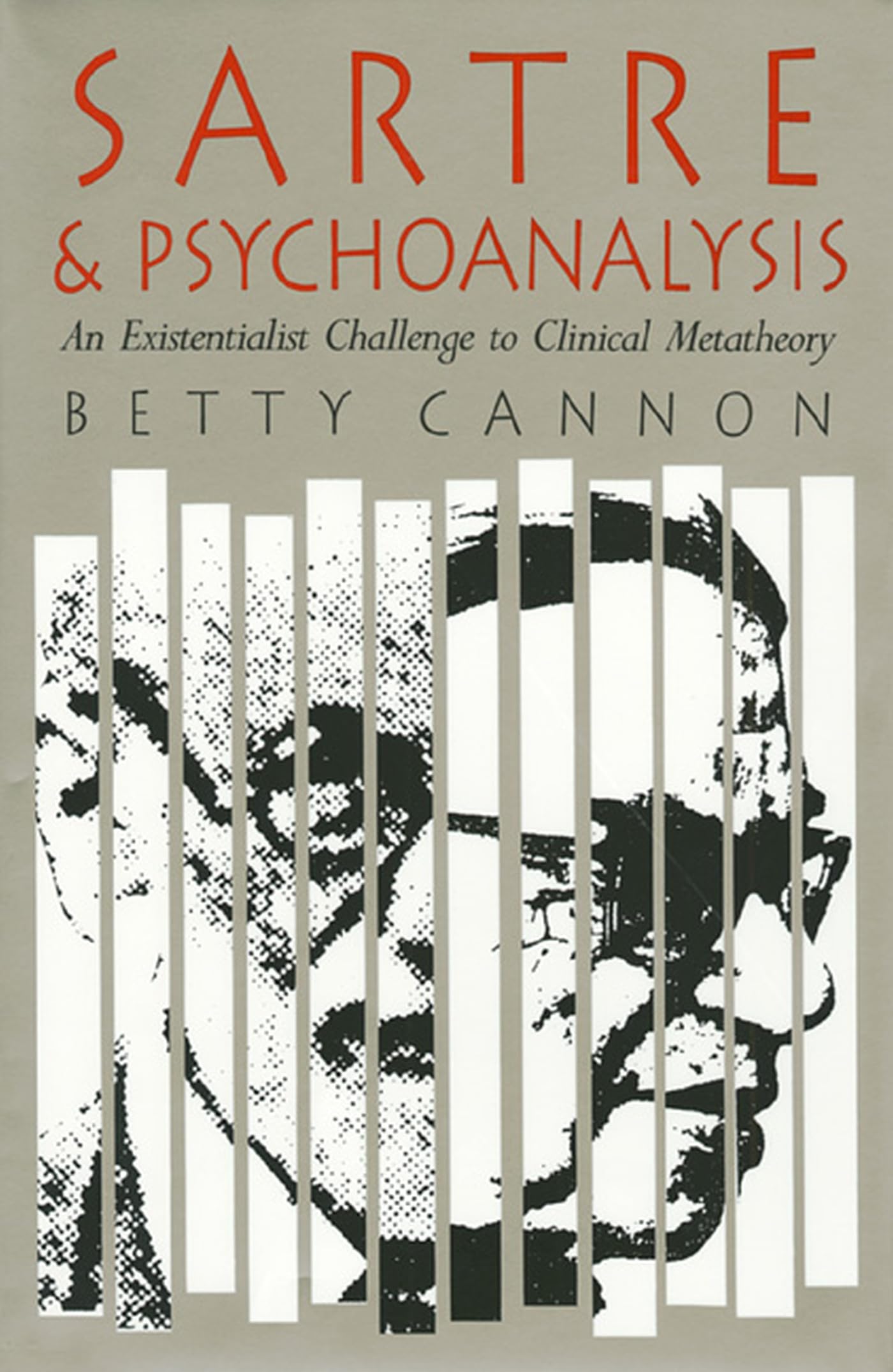
Sartre and Psychoanalysis: An Existentialist Challenge to Clinical Metatheory
$59.99
by Betty Cannon



Betty Cannon is the first to explore the implications of Sartrean philosophy for the Freudian psychoanalytic tradition. Drawing upon Sartre's work as well as her own experiences as a practicing therapist, she shows that Sartre was a "fellow traveler" who appreciated Freud's psychoanalytic achievements but rebelled against the determinism of his metatheory. The mind, Sartre argued, cannot be reduced to a collection of drives and structures, nor is it enslaved to its past as Freud's work suggested. Sartre advocated an existentialist psychoanalysis based on human freedom and the self's ability to reshape its own meaning and value. Through the Sartrean approach Cannon offers a resolution to the crisis in psychoanalytic metatheory created by the current emphasis on relational needs. By comparing Sartre with Freud and influential post-Freudians like Melanie Klein, Otto Kernber, Margaret Mahler, D.W. Winnicott, Heinz Kohut, Harry Stack Sullivan, and Jacques Lacan, she demonstrates why the Sartrean model transcends the limitations of traditional Freudian metatheory. In the process, she adds a new dimension to our understanding of Sartre and his place in twentieth-century philosophy. "A cogently argued piece of psychological writing that offers a refreshingly confident approach to methodological reflection."— Philosophy and Literature "For anyone interested in existential analysis, and most especially anyone practicing such, Cannon’s text is required reading. Thankfully, it is also pleasurable and eloquent reading, admirable for its clarity, authority and lack of academic pretension."— Journal for the Society of Existential Analysis "This innovative study breaks through the artificial barrier separating philosophical conceptions of the self and its development from the rich theoretical and practical field of post-Freudian interpretations of the complexity of the self. A challenging study that breathes new life into existential psychology."— Review of Metaphysics "The author does a skillful job of showing the weaknesses of Freud’s metapsychology and the relative merits of Sartre’s. The extended comparisons of the differences and similarities between Lacan and Sartre are alone with the price."— Choice "Sartre scholars, practicing therapists, and anyone interested in psychoanalytic theory should all find Cannon’s book a challenge. Many will see it as a breakthrough. It will be widely read, much discussed, and very influential."— Hazel E. Barnes , author of Existentialist Ethics and Sartre and Flaubert "There is something magnificent about the sweep of this effort. No study goes to as much trouble to specify the strengths and weaknesses of post-Freudian theorists; few are as erudite or eloquent about Sartre; and none as consistent in relating therapeutic implications to theoretical formulation. Sartre is brought firmly into focus, not simply as an innovator or critic, but as a philosopher who contributes something the clinical tradition has always needed—a sense of ontology and its importance to our thought and action in the consulting room."— Ernest Keen , author of The Three Faces of Being: Toward an Existential Clinical Philosophy "This book should attract the attention of anyone concerned with psychoanalytic theory and practice. Its clear but authoritative voice should appeal to both professionals and nonprofessionals."— Joseph S. Catalano , author of two book-length studies of Sartre’s Being and Nothingness and Critique of Dialectical Reason "I would like to state my unequivocal praise for this ground-breaking book, which blends philosophy with therapy. I say ground-breaking because existential therapy has been around for quite a while, but Cannon’s knowledge of Sartre gives this therapy a vitally needed philosophical underpinning. The writing is lucid and direct, and can be read with appreciation by laymen as well as professionals."— Joanne Greenberg , author of I Never Promised You a Rose Garden "I would like to state my unequivocal praise for this ground-breaking book, which blends philosophy with therapy. I say ground-breaking because existential therapy has been around for quite a while, but Cannon's knowledge of Sartre gives this therapy a vitally needed philosophical underpinning. The writing is lucid and direct, and can be read with appreciation by laymen as well as professionals."--Joanne Greenberg, author of I Never Promised You a Rose Garden "Sartre scholars, practicing therapists, and anyone interested in psychoanalytic theory should all find this book a challenge. Many will see it as a breakthrough. It will be widely read, much discussed, and very influential."--Hazel E. Barnes, translator of Sartre's Being and Nothingness and author of Sartre, Humanistic Existentialism, An Existentialist Ethics, and Sartre and Flaubert "There is something magnificent about the sweep of this effort. No study goes to as much trouble to specify the strengths and weaknesses of post-Freudian theorists; fe