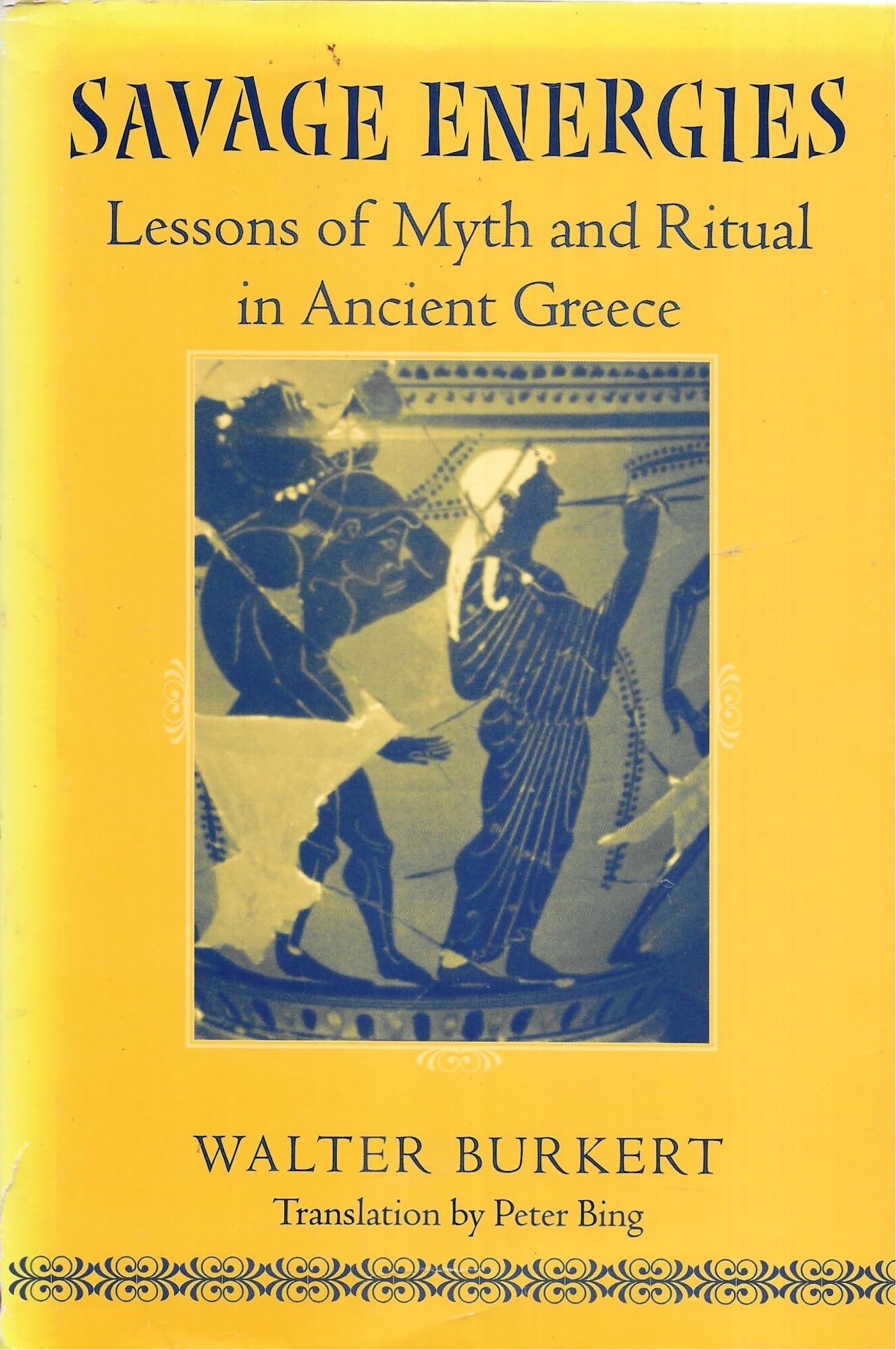



We often think of classical Greek society as a model of rationality and order. Yet as Walter Burkert demonstrates in these influential essays on the history of Greek religion, there were archaic, savage forces surging beneath the outwardly calm face of classical Greece, whose potentially violent and destructive energies, Burkert argues, were harnessed to constructive ends through the interlinked uses of myth and ritual. For example, in a much-cited essay on the Athenian religious festival of the Arrephoria, Burkert uncovers deep connections between this strange nocturnal ritual, in which two virgin girls carried sacred offerings into a cave and later returned with something given to them there, and tribal puberty initiations by linking the festival with the myth of the daughters of Kekrops. Other chapters explore the origins of tragedy in blood sacrifice; the role of myth in the ritual of the new fire on Lemnos; the ties between violence, the Athenian courts, and the annual purification of the divine image; and how failed political propaganda entered the realm of myth at the time of the Persian Wars. “The English-speaking world is now being invited, forty years after the original date of publication . . . to read or reread some of the seminal insights that Walter Burkert introduced to the austere tribunal of classical philology. These insights were the basis for an anthropological . . . hermeneutics that advanced an exemplary and resolutely bold thesis.” -- Pier Giorgio Solinas ― Journal of Religion “The author of this study is the foremost living interpreter of Greek religious ritual, whose theoretical influence extends well beyond the world of classical studies. . . . It is very good to have these essays, three of them oft-cited classics, published together.” -- Eva Stehle ― The Historian “There can be no question that Walter Burkert is the preeminent historian of Greek religion of our time. In this book are five of his early essays . . . all of them dealing with aspects of the relationships between sacrificial ritual and myth in ancient Greece, in which brilliant new light is cast on obscure and enigmatic examples.” -- Birger A. Pearson ― Religion “Throughout the collection Burkert displays mastery of his wide-ranging materials, considerable controlled insight, and the ability to see into the darker and more violent side of myth and ritual that the Greeks were increasingly reluctant to highlight.” -- Harold Tarrant ― European Legacy We often think of classical Greek society as a model of rationality and order. Yet as Walter Burkert demonstrates in these influential essays on the history of Greek religion, there were archaic, savage forces surging beneath the outwardly calm face of classical Greece, whose potentially violent and destructive energies, Burkert argues, were harnessed to constructive ends through the interlinked uses of myth and ritual. For example, in a much-cited essay on the Athenian religious festival of the Arrhephoria, Burkert uncovers deep connections between this strange nocturnal ritual in which two virgin girls carried sacred offerings into a cave and later returned with something given to them there and tribal puberty initiations by linking the festival with the myth of the daughters of Kekrops. Other chapters explore the origins of tragedy in blood sacrifice; the role of myth and past crime in the ritual of the new fire on Lemnos; the ties among violence, the Athenian courts, and the annual purification of the divine image; several well-known myths, often retold in poetry, that refer to religious festivals; and how failed political propaganda about the miraculous birth of a king entered the realm of myth at the time of the Persian Wars. With Savage Energies , Burkert convincingly shows how the lessons of myth and ritual interacted to construct and reconstruct classical Greek society. Classicists, historians of religion, and mythologists should all benefit from his insights. We often think of classical Greek society as a model of rationality and order. Yet as Walter Burkert demonstrates in these influential essays on the history of Greek religion, there were archaic, savage forces surging beneath the outwardly calm face of classical Greece, whose potentially violent and destructive energies, Burkert argues, were harnessed to constructive ends through the interlinked uses of myth and ritual. For example, in a much-cited essay on the Athenian religious festival of the Arrhephoria, Burkert uncovers deep connections between this strange nocturnal ritual—in which two virgin girls carried sacred offerings into a cave and later returned with something given to them there—and tribal puberty initiations by linking the festival with the myth of the daughters of Kekrops. Other chapters explore the origins of tragedy in blood sacrifice; the role of myth and past crime in the ritual of the new fire on Lemnos; the ties among violence, the Athenian courts, and the annual pu