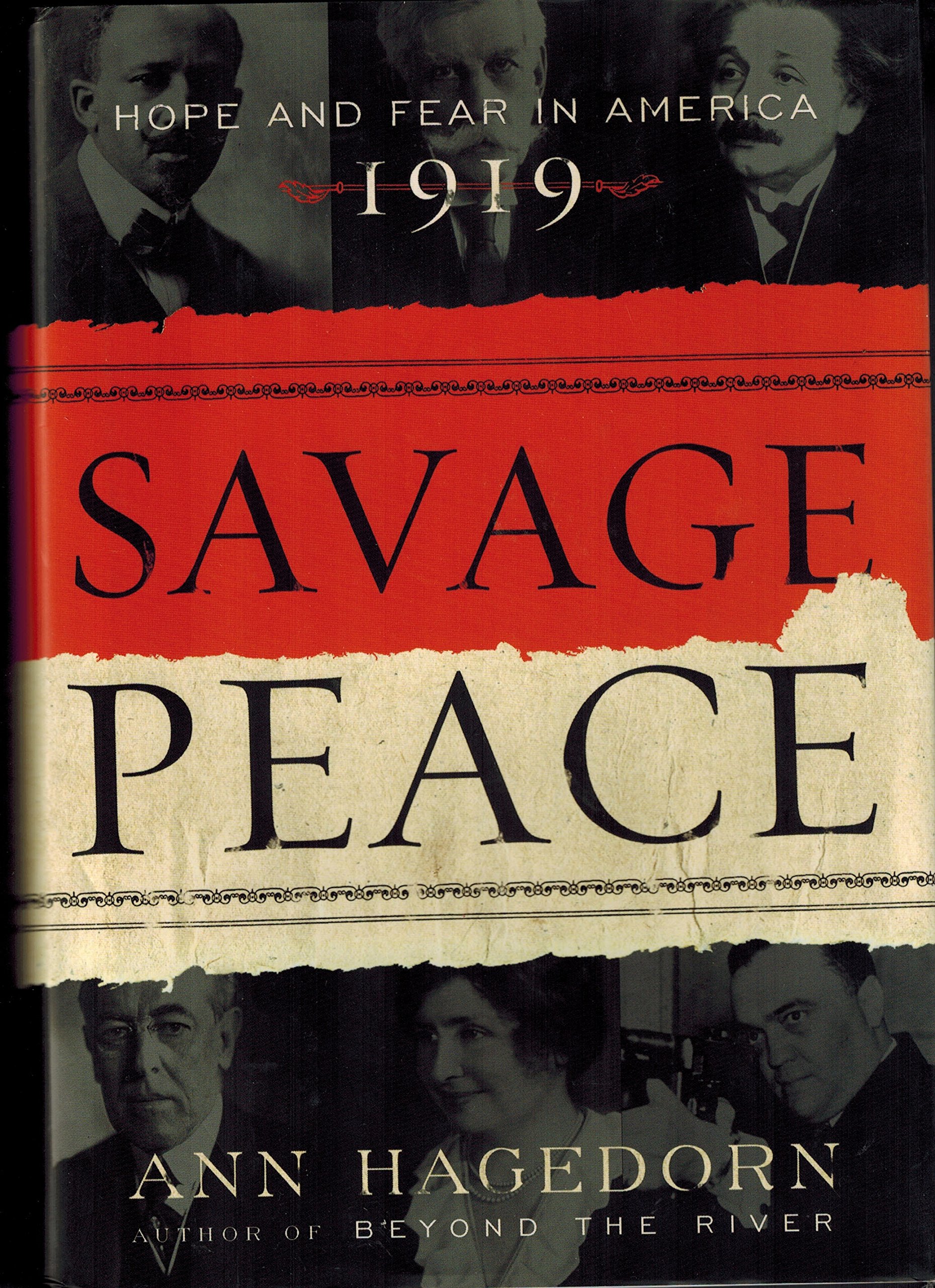



Written with the sweep of an epic novel and grounded in extensive research into contemporary documents, Savage Peace is a striking portrait of American democracy under stress. It is the surprising story of America in the year 1919. Book Description Written with the sweep of an epic novel and grounded in extensive research into contemporary documents, Savage Peace is a striking portrait of American democracy under stress. It is the surprising story of America in the year 1919. In the aftermath of an unprecedented worldwide war and a flu pandemic, Americans began the year full of hope, expecting to reap the benefits of peace. But instead, the fear of terrorism filled their days. Bolshevism was the new menace, and the federal government, utilizing a vast network of domestic spies, began to watch anyone deemed suspicious. A young lawyer named J. Edgar Hoover headed a brand-new intelligence division of the Bureau of Investigation (later to become the FBI). Bombs exploded on the doorstep of the attorney general's home in Washington, D.C., and 36 parcels containing bombs were discovered at post offices across the country. Poet and journalist Carl Sandburg, recently returned from abroad with a trunk full of Bolshevik literature, was detained in New York, his trunk seized. A 21-year-old Russian girl living in New York was sentenced to 15 years in prison for protesting U.S. intervention in Arctic Russia, where thousands of American soldiers remained after the Armistice, ostensibly to guard supplies but in reality to join a British force meant to be a warning to the new Bolshevik government. In 1919, wartime legislation intended to curb criticism of the government was extended and even strengthened. Labor strife was a daily occurrence. And decorated African-American soldiers, returning home to claim the democracy for which they had risked their lives, were badly disappointed. Lynchings continued, race riots would erupt in 26 cities before the year ended, and secret agents from the government's "Negro Subversion" unit routinely shadowed outspoken African-Americans. Adding a vivid human drama to the greater historical narrative, Savage Peace brings 1919 alive through the people who played a major role in making the year so remarkable. Among them are William Monroe Trotter, who tried to put democracy for African-Americans on the agenda at the Paris peace talks; Supreme Court associate justice Oliver Wendell Holmes Jr., who struggled to find a balance between free speech and legitimate government restrictions for reasons of national security, producing a memorable decision for the future of free speech in America; and journalist Ray Stannard Baker, confidant of President Woodrow Wilson, who watched carefully as Wilson's idealism crumbled and wrote the best accounts we have of the president's frustration and disappointment. Weaving together the stories of a panoramic cast of characters, from Albert Einstein to Helen Keller, Ann Hagedorn brilliantly illuminates America at a pivotal moment. An Exclusive Note to Readers from Ann Hagedorn Savage Peace is the biography of the year 1919 in America told through interweaving narratives that connect the reader to the individuals, events and themes that make the year so hugely significant. My quest is always to make history as accessible as possible to the general public using storytelling techniques and so I structured Savage Peace like a work of fiction with main characters and story arcs. It is, however, based firmly on facts gleaned from primary sources housed in archives nationwide, including declassified military intelligence and justice department records. I spent more than five years researching and writing the book in an effort of course to get to the very core of the significance of the year 1919 and to deliver that truth to you, the reader, in an entertaining style. But why 1919? First, I consider the year a missing page in our history. We typically associate 1919 with the Paris Peace Conference, Woodrow Wilson and the League of Nations--all important aspects of the year, of course. But there is far more to the year than what happened in Paris. In fact, Savage Peace tells the story of what happened in America while Wilson was in Paris. Remember that 1919 was the aftermath of a world war, a flu pandemic, and the Russian Revolution. It was an uncertain, very intense year that shaped policies and attitudes for nearly a century in America. In many respects it was the year that made modern America. Consider that the foundation of our domestic intelligence system was firmly established in 1919; that our "cold" relationship with the Soviet Union emerged from events such as U.S. intervention in north Russia that year and the governments raid on the Soviet Bureau in Manhattan; and that our response to the 1919 race riots (in 26 cities) was to use segregation as the solution instead of identifying it as the problem. One of the things that drew me to the year w