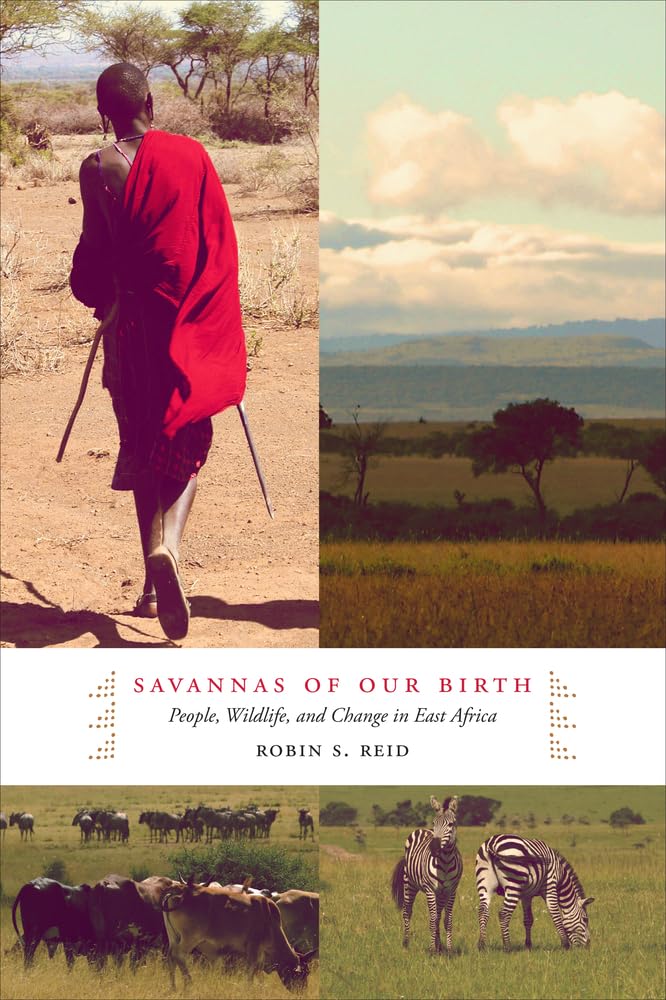



This book tells the sweeping story of the role that East African savannas played in human evolution, how people, livestock, and wildlife interact in the region today, and how these relationships might shift as the climate warms, the world globalizes, and human populations grow. Our ancient human ancestors were nurtured by African savannas, which today support pastoral peoples and the last remnants of great Pleistocene herds of large mammals. Why has this wildlife thrived best where they live side-by-side with humans? Ecologist Robin S. Reid delves into the evidence to find that herding is often compatible with wildlife, and that pastoral land use sometimes enriches savanna landscapes and encourages biodiversity. Her balanced, scientific, and accessible examination of the current state of the relationships among the region’s wildlife and people holds critical lessons for the future of conservation around the world. "A tremendous amount of personal experience and research has gone into this book..." -- Ian Martin ― Biological Conservation Published On: 2013-10-01 "Refreshing -- perhaps even inspiring . . . Reid's inclusive analysis is one of the most comprehensive and well-balanced examinations of human-environment interactions in African savanna ecosystems . . . an exceptional project." -- Eric J. Lovell and Mara J. Goldman ― Pastorialism Published On: 2014-09-11 "Ultimately, we can all trace our origins back to the savannas of Africa. Robin Reid's book provides an eloquent introduction into the biology of the savannas that shaped us as humans; simultaneously, she provides an insightful and comprehensive overview of current and future threats to East African savannas and the steps that need to be taken to conserve the world we first lived in. Don't go to East Africa without first reading this book; it will enhance your safari and empower your research." Andrew P. Dobson, author of Conservation and Biodiversity " Savannas of Our Birth provides a balanced, scientific, and accessible examination of the current state of East African savannas and the relationships among the wildlife and people who live there. Reid examines how savannas came to be and what alternative futures may be possible by trying to chart a middle ground in contentious debates about conservation and local rights." J. Terrence McCabe, author of Cattle Bring Us to Our Enemies: Turkana Ecology, History, and Raiding in a Disequilibrium System "Reid's research focusing on pastoralists has reminded me that wildlife and domestic livestock co-existed to their mutual benefit for the last 2000 years. With reopened eyes, I've even seen it for myself in the case of the Masai and the savanna wildlife I study. There is an extraordinary wealth of information in this book." Richard D. Estes, author of The Behavior Guide to African Mammals "Ultimately, we can all trace our origins back to the savannas of Africa. Robin Reid's book provides an eloquent introduction into the biology of the savannas that shaped us as humans; simultaneously, she provides an insightful and comprehensive overview of current and future threats to East African savannas and the steps that need to be taken to conserve the world we first lived in. Don't go to East Africa without first reading this book; it will enhance your safari and empower your research."–Andrew P. Dobson, author of Conservation and Biodiversity " Savannas of Our Birth provides a balanced, scientific, and accessible examination of the current state of East African savannas and the relationships among the wildlife and people who live there. Reid examines how savannas came to be and what alternative futures may be possible by trying to chart a middle ground in contentious debates about conservation and local rights."–J. Terrence McCabe, author of Cattle Bring Us to Our Enemies: Turkana Ecology, History, and Raiding in a Disequilibrium System "Reid's research focusing on pastoralists has reminded me that wildlife and domestic livestock co-existed to their mutual benefit for the last 2000 years. With reopened eyes, I've even seen it for myself in the case of the Masai and the savanna wildlife I study. There is an extraordinary wealth of information in this book."–Richard D. Estes, author of The Behavior Guide to African Mammals Robin S. Reid is Director of the Center for Collaborative Conservation and Senior Research Scientist in the Natural Resources Ecology Lab at Colorado State University. Savannas of Our Birth People, Wildlife, and Change in East Africa By Robin S. Reid UNIVERSITY OF CALIFORNIA PRESS Copyright © 2012 Robin S. Reid All rights reserved. ISBN: 978-0-520-27355-9 Contents Acknowledgments, vii, 1. Searching for the Middle Ground, 1, 2. Savannas of Our Birth, 17, 3. Pastoral People, Livestock, and Wildlife, 47, 4. Moving Continents, Varying Climate, and Abundant Wildlife: Drivers of Human Evolution?, 73, 5. Ecosystem Engineers Come of Age, 95, 6. Can Pastoral Peopl