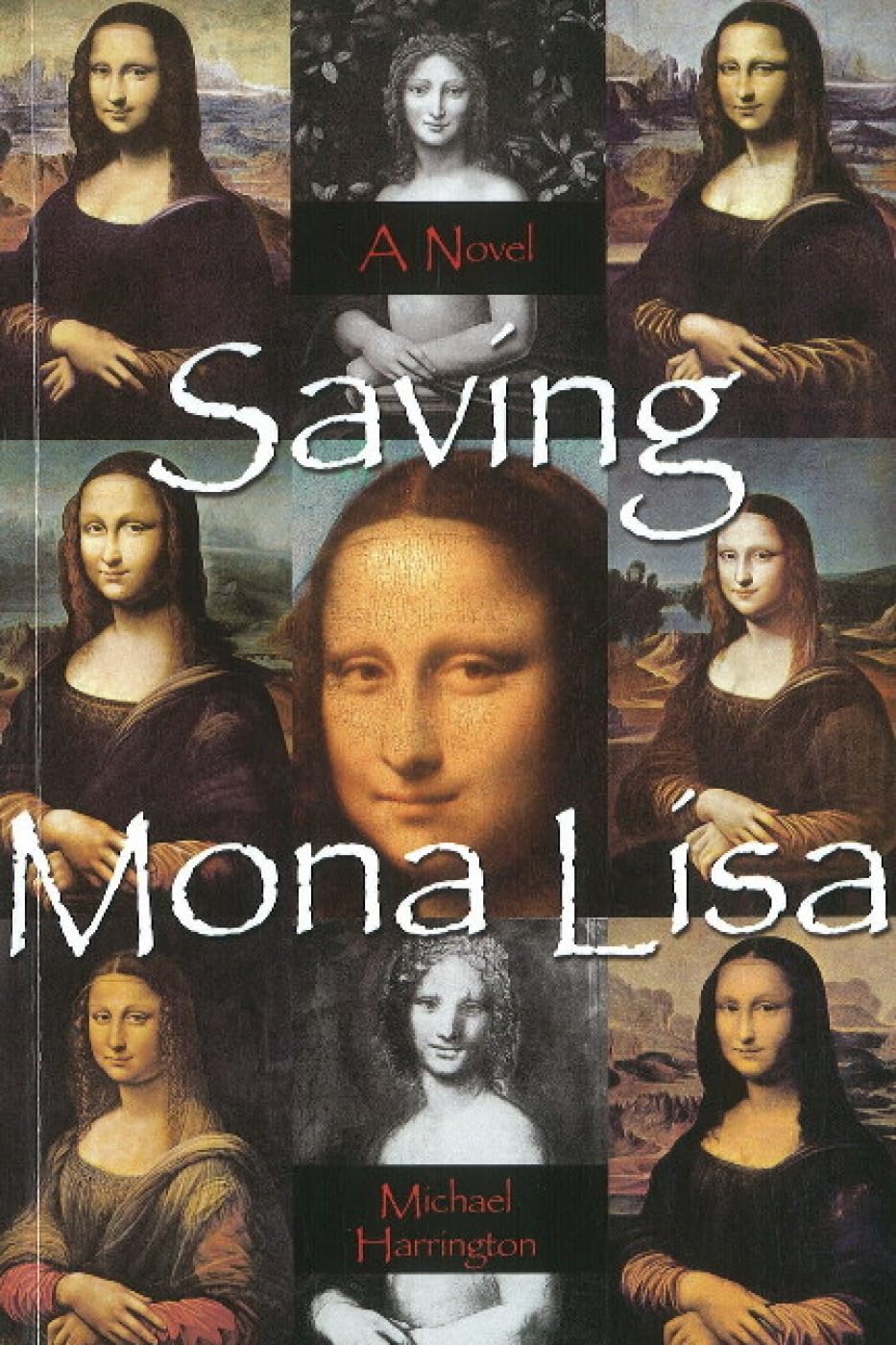



Saving Mona Lisa is the story of Leonardo da Vinci and two of his apprentices clashing over the ultimate fate of a painting that had achieved great renown soon after everyone thought it was finished...everyone, that is, except Leonardo. Art is never finished, only abandoned. -Leonardo da Vinci Preface On September 24, 1513, Leonardo da Vinci recorded in his journal that he was departing for Rome, via Florence. For the previous two years there is no detailed record of his activities and only sketchy evidence of his whereabouts. We know that sometime after December 1511 he left Milan and moved to the Villa Melzi in Vaprio d Adda, a small town on a river about a half-day s ride east. Here he and his bottega were hosted comfortably by the Count of Vaprio, father of Francesco Melzi, Leonardo s youngest apprentice. Eight years previously, Leonardo had been residing temporarily in his native Florence, where he was commissioned to paint a portrait of a wealthy merchant s young wife. This portrait, called La Gioconda and known to us as Mona Lisa, exercised a strange hold on the artist. He refused to finish it or surrender it to its rightful owner, keeping it close, as one would a mistress. Apparently, this obsession baffled everyone who knew of it. Recounted through the eyes of the youthful Francesco, the following story of the aging artist and his muse is set during the last few months of his hiatus at the Villa Melzi. ***The Kindle version of Saving Mona Lisa is programmed for easy reader navigation and includes short bios of the principal characters, maps, historical Afterword, Italian glossary, and over 30 illustrations and photographs of Leonardo s most important works. I just finished reading "Saving Mona Lisa" and enjoyed it immensely. . He has brought to life such an interesting insight into the day-to-day life of "Il Maetsro Leonardo" during this very interesting and unknown period - and the intricacies surrounding the Mona Lisa. What a great read! --Andre DiMino, Past President of UNICO Really drew me in and kept me reading, wondering what would happen next. The drama and twists of real life somehow make Leonardo s work seem all the more magical. When transcendent art is rooted in real life, it takes on even more grandeur. This well-crafted tale follows an intriguing possibility. History is all the more interesting when brought to life through fascinating characters. This book does that, and more. --Francis French, author In the Shadow of the Moon" Really drew me in and kept me reading, wondering what would happen next. The drama and twists of real life somehow make Leonardo s work seem all the more magical. When transcendent art is rooted in real life, it takes on even more grandeur. This well-crafted tale follows an intriguing possibility. History is all the more interesting when brought to life through fascinating characters. This book does that, and more. --Francis French, author In the Shadow of the Moon" I have harbored a life-long fascination with the giants of the Renaissance, especially Leonardo da Vinci and Michelangelo Buonarroti. My exploration of these historical figures at a young age revealed the cultural richness of the time period and especially the history of Florence and its citizens. Thus I became infected with that common affliction of the Italophile. My first historical take focused on the dramatic Savonarolan episode in Florence during the last decade of the 15th century. The main characters were Savonarola and Machiavelli, with minor roles played by Michelangelo, Botticelli, Lorenzo de' Medici, Pope Alexander VI and the diarist, Luca Landucci. This story is of epic proportions and spans the three books of The City of Man . Saving Mona Lisa is a story focused specifically on the person of Leonardo da Vinci and his two favorite apprentices. (Though a Florentine, Leonardo was residing in Milan during the Savonarolan episode.) The story is motivated by the mysteries of Leonardo surrounding his personal eccentricities, his intellectual and artistic genius, and his most famous creation, the Mona Lisa (in Italian the painting is called La Gioconda ). Saving Mona Lisa is a short, playful and hopefully insightful vignette into one of the most fascinating personalities of all time. Michael Harrington has earned advanced degrees in economics, finance, and political science and has worked in the securities and venture capital industries as an investment portfolio manager and financial analyst. He has also taught political science as a lecturer at the University of California and worked as a research fellow and public policy analyst. Harrington has harbored a life-long fascination with the Italian Renaissance, its art, culture, and politics, and has lived and studied in Italy, near Florence. He speaks passable Italian, French, and German. His enduring interests in social movements and artistic creativity during the Florentine Renaissance directed him toward the fascinating s