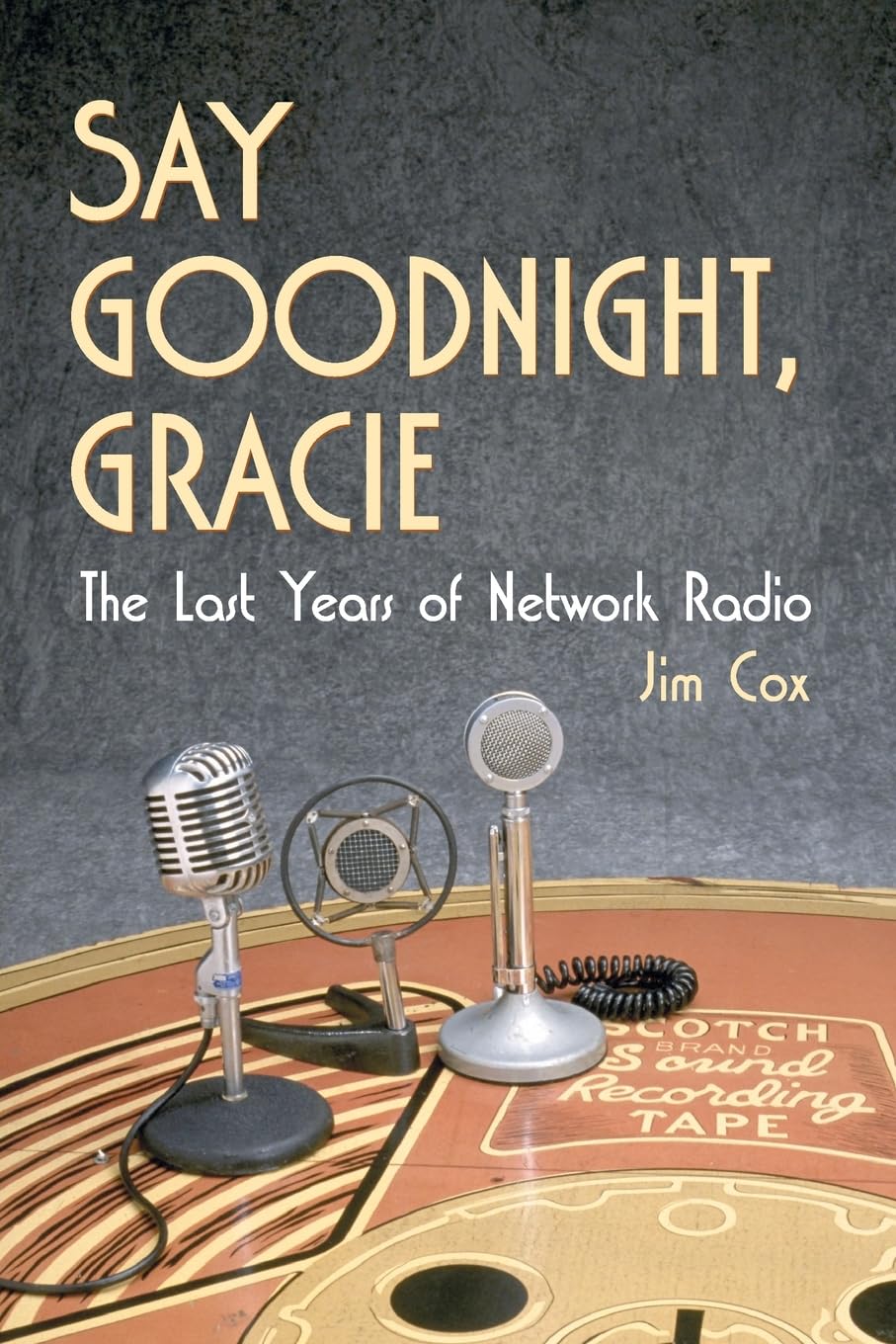



Until the late 1940s, most Americans relied heavily upon radio, the only means of mass communication they knew, for information and entertainment. But with the 1950s came television sets and prosperity enabled more people to afford them. Radio began a decline. This work examines what could be called the final decade of AM network radio and the many factors that contributed to its decline. The first chapter is an overview of AM radio in the 1950s. The second chapter covers 1950 through 1953, when radio was still a popular medium but faced a need to make changes in its programming. Bill Paley and David Sarnoff strongly promoted radio in those years and the networks attempted to increase the ratings of their programs. Chapter three covers 1954 through 1956, three years in which radio experienced losses of its primary audience and some of its most popular shows (because of the pullout of advertisers), and an effort was made by the networks to keep their programs going and to convince audiences the medium was not on its way out. Chapter four, 1957 through 1960, chronicles the "end" of AM radio in homes, the cancellation of almost all remaining programs, network affiliates' going independent, and the rise in popularity of "drive time" radio. Chapter five covers 1961 to the present and summarizes the major changes that have taken place. Aficionados of old-time radio have recently enjoyed a wealth of catalogs, memoirs, and reference books, including, for example, Ron Lackman's Encyclopedia of American Radio: An A-Z Guide to Radio from Jack Benny to Howard Stern and Luther F. Sies's Encyclopedia of American Radio, 1920-1960. Retired college professor Cox (The Great Radio Soap Operas) drew on many of those published works, plus personal correspondence and interviews, to compile this lively if flawed account of the decline of the commercial radio networks. Though divided into chronological chapters, the text adheres only loosely to this arrangement; the history of the networks themselves, for example, doesn't appear until the final pages. Equally frustrating is Cox's habit of identifying authors quoted in the text simply as a "commentator" or "authority," forcing the reader to consult the endnotes just to find out who is being quoted. Overall, the book's value for researchers or radio buffs is greatly diminished by its many cries for copyediting. "Not surprisingly," begins one sentence, "a number of the powerful dynamics we have encountered already coalesced to mournfully impact the audio medium." Recommended only for comprehensive broadcast history collections. Susan M. Colowick, North Olympic Lib. Syst., Port Angeles, WA Copyright 2002 Reed Business Information, Inc. “lively...recommended”― Library Journal ; “well researched and superbly written...highly recommended”― The Illustrated Press ; “Cox continues to establish himself as one of the premier chroniclers of the golden age of radio...excellent...a must-read...wonderful”― Chattanooga Airwaves ; “one of the best…delightful…highly recommend[ed]”― Old Time Radio Digest ; “in-depth…excellent…informative…thought-provoking…entertaining…lively discussions…fine contribution…well-worth reading”― Radio Historical Association of Colorado ; “useful”― Communication Booknotes Quarterly. Jim Cox, a leading radio historian, is an award-winning author of numerous books on the subject. A retired college professor, he lives in Louisville, Kentucky.