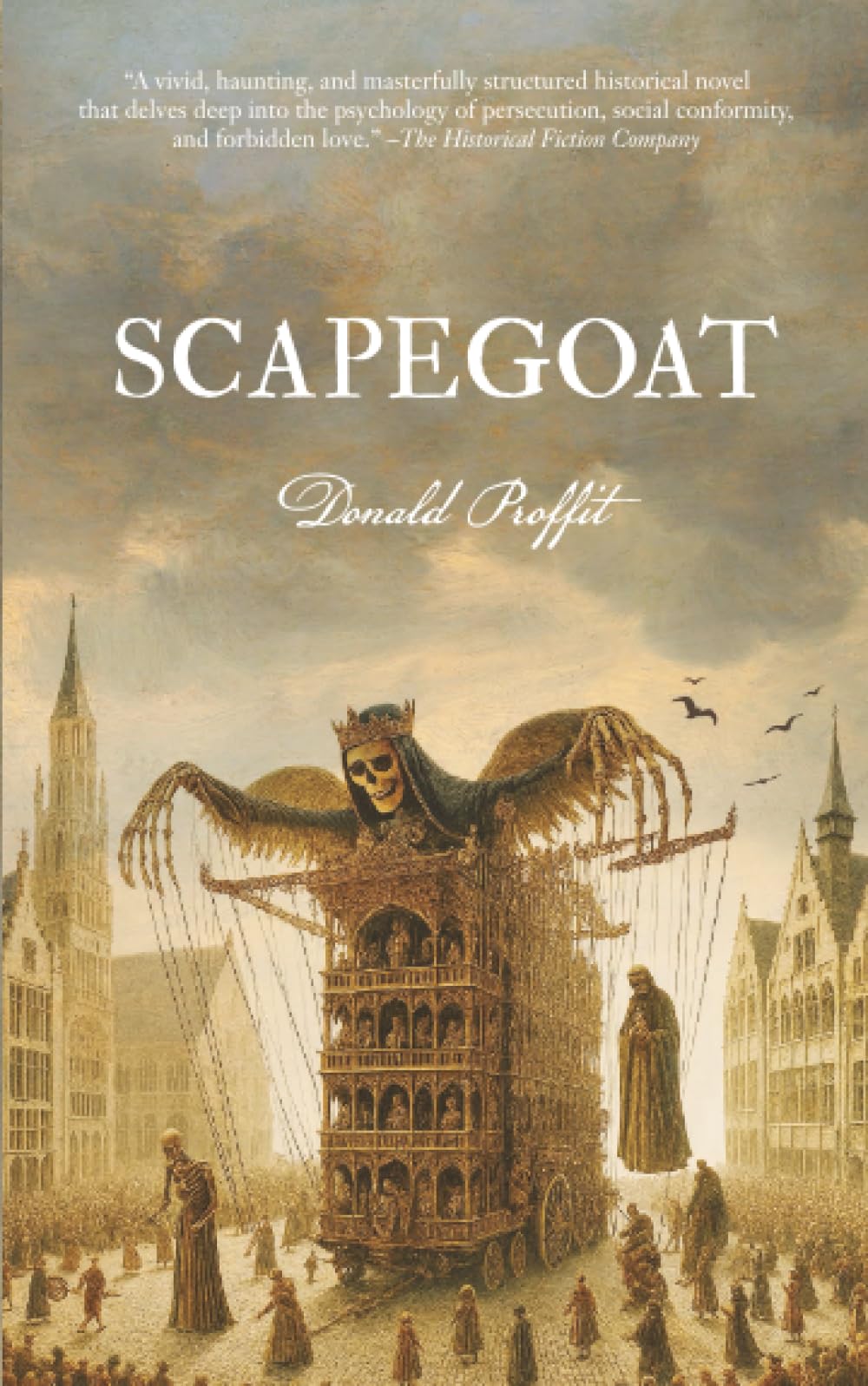



Bruges, 1558—a city of faith and ferocity, grandeur and terror, where whispers can turn to accusations, and justice serves power above truth. When young Matthias arrives in Bruges, he is drawn into the orbit of François van Daele and Willem de Clerc, two men living quietly in the shadows—until a jealous rival brands them as sinners. Dragged into a society ravenous for vengeance, they face sentences of unspeakable cruelty—caught in a corrupt inquisition where innocence is condemned, and guilt walks free. As the grip of authority tightens, loyalties fray, truths are twisted into confessions, and the city itself turns predator, hunting those who dare resist its will. Yet even in Bruges’ darkest corners, songs are sung, stories endure, and redemption may still be found—for those willing to pay its price. Guided by Knowledge, a towering puppet from the morality play The Summoning of Everyman, François must confront a world gone mad and search for truth within its lies. Inspired by actual events, Scapegoat is a searing tale of power, persecution, and the enduring strength of human bonds. Rich in historical detail and haunting allegory, it is a story of courage in the face of tyranny—and the hope that even in the darkest times, truth, love, and the loyalty of a true friend may find a way. BookLife Review in 16th century Bruges, Proffit's fictionalized account of the real trial and punishment of François van Daele and Willem de Clerc—two teenage boys accused of sodomy with a priest—unfolds through an imagined ballad by poet Joos van den Rijm, at a tavern called The Bear. Strumming the events that led to François and Willem's exile, van den Rijm recounts a city bristling with fear, religious zealotry, and the lurking threat of death for those the law judges as "witches, scoundrels, sodomites, and thieves alike." The story begins when François and Willem befriend journeyman Matthias Engel and help him find a place to stay, an act of kindness that, combined with the attentions they receive from priest Henric van der Velde, is received with suspicion by certain town members. Proffit ( The Object of His Affection ) crafts evocative prose that brings the medieval city to life, with its imposing Basilica of the Holy Blood and staging of fervent morality plays carving an atmosphere of menace and gloom. Van der Velde, a powerful priest who preys on young men, embodies the city's treachery and lurking evil, and his sexual abuse of François and Willem ends in a devastating outcome for the two boys—spurred by a vengeful employee at The Bear, who poses the public letter that leads to their arrest. The frenzied atmosphere of shock, paranoia, and mistrust that follows lays bare the efforts at self-preservation that often take over when corruption runs rampant. Proffit's descriptions of the morality play—looming, giant-sized puppets, the ferocity of the crowds measured against the apathy of the powerful—add to the richness of the setting, where even the weather brews undercurrents of melancholy. Despite their abuse, torture, and prejudiced treatment at the hands of the law, both François and Willem choose to stand together, as an ultimate testament to the need "to hold onto love, even when fear surrounds us." Takeaway: Arrestive 16th-century tale of love surviving vengeance and corruption. Comparable Titles: Jamie O'Neill's At Swim, Two Boys , Maria McCann's As Meat Loves Salt . Production grades Cover: B+ Design and typography: A Illustrations: N/A Editing: A Marketing copy: A Donald Proffit's Scapegoat is one of those rare historical novels that doesn't just recreate the past—it interrogates it. Set in 1558 Bruges, a city clinging to its decaying splendor and gripped by religious paranoia, the novel unspools the tragic tale of François van Daele and Willem de Clerck; two young men whose love and lives are consumed by fear, power, and the cruel machinery of moral judgment. It's a grim and lyrical work that lands uncomfortably close to our present moment, and that's precisely what makes it so compelling. The novel opens in 1596 with a fictional balladeer, Joos van den Rijm, recounting the events of 1558 in a smoky Bruges tavern. Joos serves as both chorus and provocateur, challenging official history with a mischievous grin: "Ah, but what is history if not a song retold until it pleases the powerful?" That line stuck with me; not just because it's sharply written, but because it sets the tone for a narrative that's deeply aware of how storytelling itself can become an act of resistance. What follows is a vividly detailed plunge into Bruges during Ascension Day festivities, where puppet morality plays and parades mask a deeply fractured society. Matthias Engel, a journeyman weaver, is our initial outsider lens into this world. His arrival in the city and fast friendship with François and Willem; two locals navigating the treacherous terrain of queerness in a theocratic regime—grounds the novel in lived experie