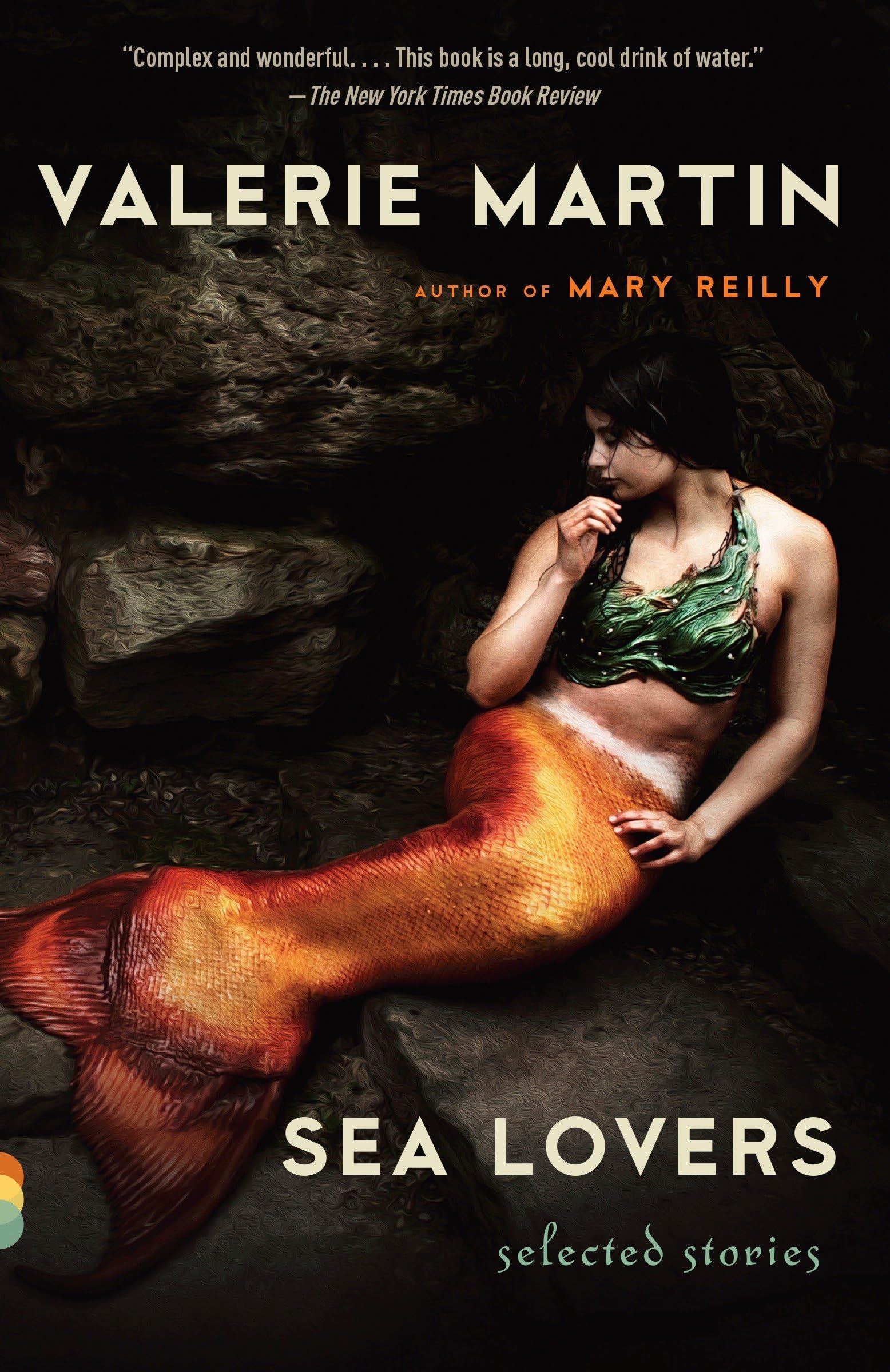



Twelve extraordinary short stories from the award-winning, bestselling author of Property that explore human morality and our shared losses and joys, shifting from realism to myth, from the Louisiana bayou to the streets of Rome and beyond. • “Complex and wonderful.... A long, cool drink of water.” — The New York Times Book Review In these stories, Martin mines her three literary preoccupations—animals, artists, and metamorphoses—to unforgettable effect. In “The Consolation of Nature,” a family battles a giant rat that has invaded their home. “The Open Door” follows an American poet in Rome, forced to choose between her lover and a world so new it takes her breath away. In “Et in Academic Ego,” a seventeen-year-old bayou orphan falls in love with a centaur who transforms her life. And the title story conjures up a hideous mermaid who fatally seduces a fisherman. Sophisticated, incisive, deeply felt and always surprising, Sea Lovers showcases the enduring work of an indispensable writer. “Complex and wonderful.... This book is a long, cool drink of water.” — The New York Times Book Review “Valerie Martin is a consummate stylist. A cool, spare writer who can make the fantastic utterly, often horribly believable.” — The Boston Globe “Revelatory. . . . Distinguished by an alluring precision. . . . Exact and provocative.” —Jane Smiley, The Guardian (London) “Elegantly ruthless. . . . Valerie Martin dissects the inner lives of men and women (not to mention one chilling mermaid).” — More “Captivating. . . . Martin’s writing is a reward in itself, a wonderful precision-tool. She uses it to chisel at the human condition—and the effect is astonishing.” — Financial Times “Exceptional. . . . This immaculate collection spans Martin’s career from the tight and serious ambition of her youth, through a wittier, more playful phase investigating creativity through stories about music and painting as well as writing.” — Daily Mail “Enthralling. . . . The prose is grounded in precision and certainty, it’s a steady navigation system, and cantilevers the most remarkable flights of fancy with what we recognize as all-too-human behavior.” — Chronogram “Varied, engaging, and often shocking. . . . An insightful look into the evolution of Martin’s writing and her talent for depicting our darker natures.” — Kirkus Reviews (starred) “This collection is rife with the unspoken cracks between people, and leaves a haunting, lingering impression.” — Publishers Weekly VALERIE MARTIN is the author of eleven novels, four collections of short fiction, and a biography of Saint Francis of Assisi, titled Salvation. She has been awarded grants from the National Endowment for the Arts and the John Simon Guggenheim Fellowship, as well as the Kafka Prize (for Mary Reilly ) and Britain's Orange Prize (for Property ). Spats The dogs are scratching at the kitchen door. How long, Lydia thinks, has she been lost in the thought of her rival dead? She passes her hand over her eyes, an unconscious effort to push the hot red edge off everything she sees, and goes to the door to let them in. When Ivan confessed that he was in love with another woman, Lydia thought she could ride it out. She told him what she had so often told him in the turbulent course of their marriage, that he was a fool, that he would be sorry. Even as she watched his friends loading his possessions into the truck, even when she stood alone in the silent half-empty house contemplating a pale patch on the wall where one of his pictures had been, even then she didn't believe he was gone. Now she has only one hope to hold on to: He has left the dogs with her, and this must mean he will be coming back. At the door Gretta hangs back, as she always does, but Spats pushes his way in as soon as she has turned the knob, knocking the door back against her shins and barreling past her, his heavy tail slapping the wood repeatedly. No sooner is he inside than he turns to block the door so that Gretta can't get past him. He lowers his big head and nips at her forelegs; it's play, it's all in fun, but Gretta only edges past him, pressing close to Lydia, who pushes at the bigger dog with her foot. "Spats," she says, "leave her alone." Spats backs away, but he is only waiting until she is gone; then he will try again. Lydia is struck with the inevitability of this scene. It happens every day, several times a day, and it is always the same. The dogs gambol into the kitchen, knocking against the table legs, turning about in ever-narrowing circles, until they throw themselves down a few feet apart and settle for their naps. Gretta always sleeps curled tightly in a semicircle, her only defense against attacks from her mate, who sleeps on his side, his long legs extended, his neck stretched out, the open, deep sleep of the innocent or the oppressor. Lydia stands at the door looking back at the dogs. Sometimes Ivan got right down on the floor with Spats, lay beside him h