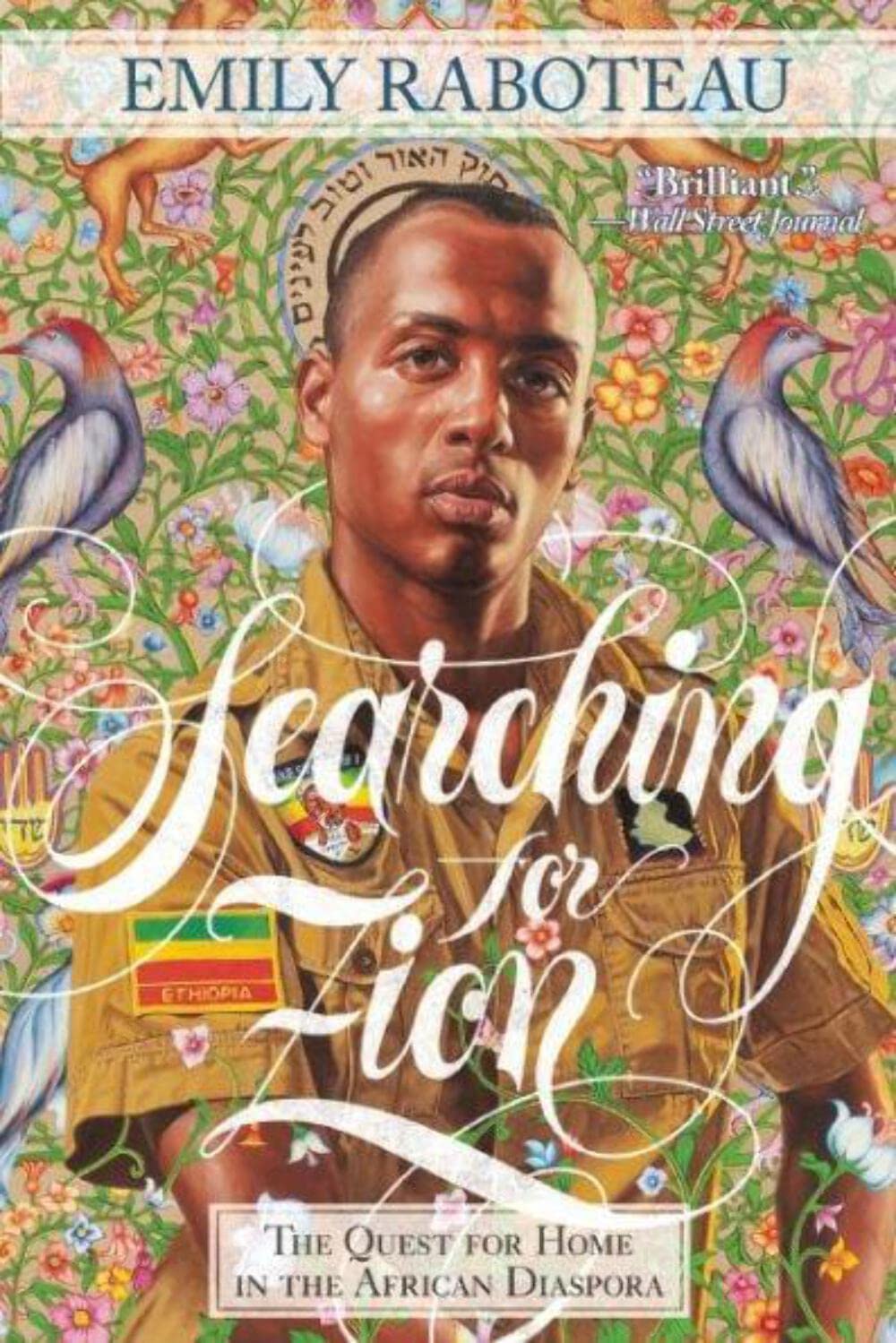



A decade in the making, Emily Raboteau's Searching for Zion takes readers around the world on an unexpected adventure of faith. Both one woman's quest for a place to call "home" and an investigation into a people's search for the Promised Land, this landmark work of creative nonfiction is a trenchant inquiry into contemporary and historical ethnic displacement. At the age of twenty-three, award-winning writer Emily Raboteau traveled to Israel to visit her childhood best friend. While her friend appeared to have found a place to belong, Raboteau could not yet say the same for herself. As a biracial woman from a country still divided along racial lines, she'd never felt at home in America. But as a reggae fan and the daughter of a historian of African-American religion, Raboteau knew of "Zion" as a place black people yearned to be. She'd heard about it on Bob Marley's Exodus and in the speeches of Martin Luther King. She understood it as a metaphor for freedom, a spiritual realm rather than a geographical one. Now in Israel, the Jewish Zion, she was surprised to discover black Jews. More surprising was the story of how they got there. Inspired by their exodus, Raboteau sought out other black communities that left home in search of a Promised Land. Her question for them is same she asks herself: have you found the home you're looking for? On her ten-year journey back in time and around the globe, through the Bush years and into the age of Obama, Raboteau wanders to Jamaica, Ethiopia, Ghana, and the American South to explore the complex and contradictory perspectives of Black Zionists. She talks to Rastafarians and African Hebrew Israelites, Evangelicals and Ethiopian Jews, and Katrina transplants from her own family--people that have risked everything in search of territory that is hard to define and harder to inhabit. Uniting memoir with historical and cultural investigation, Raboteau overturns our ideas of place and patriotism, displacement and dispossession, citizenship and country in a disarmingly honest and refreshingly brave take on the pull of the story of Exodus . "Considerably more SOPHISTICATED and thought-provoking than the quest memoir Eat Pray Love ..." -- Winnipeg Free Press "Lucid and ranging...a BRILLIANT illustration of the ways in which race is an artificial construct that, like beauty, is often a matter of perspective." -- The Wall Street Journal "Raboteau's voice is as COMPLEX as her journey. Her descriptions are COGENT and STRIKING . Her irreverence and gumption provide comic relief and invite the reader to want to be friends with this scribe whose mouth sometimes gets her in trouble, and who ultimately seems to be as tough as she is vulnerable. It is undoubtedly an intellectual's path, filled with detailed discussions of African American religious history, Rastafarian theology, Ethiopian history and ending with a brilliant analysis of the prosperity gospel of evangelical mega-churches." --San Francisco Chronicle "An INSTRUCTIVE read... [Raboteau] finds the ground she wants to make her own, and she sinks her roots there." --The Boston Globe " SURPRISING turns garnish Emily Raboteau's Searching For Zion. . . . a quest whose outlines are neither new nor unknown: forced or voluntary bi-directional movements across the Atlantic to Liberia, Sierra Leone, Ethiopia, and Israel. New however, are the warmth, wit, and ARRESTING details which saturate this odyssey." --The Philadelphia Review of Books At the age of twenty-three, Emily Raboteau traveled to Israel to visit her childhood best friend. While her friend appeared to have found a place to belong, Raboteau could not yet say the same for herself. As a biracial woman from a country still divided along racial lines, she'd never exactly felt at home in America. But as a reggae fan and the daughter of a historian of African-American religion, Raboteau knew of "Zion" as a place black people yearned to be. She'd heard about it on Bob Marley's album, Exodus and in the speeches of Martin Luther King. She understood it as a metaphor for freedom, a spiritual realm rather than a geographical one. Now in Israel, the Jewish Zion, she was surprised to discover black Jews. More surprising was the story of how they got there. Inspired by their exodus, Raboteau sought out other black communities that left home in search of a Promised Land. Her question for them is same she asks herself: have you found the home you're looking for? On her ten-year journey back in time and around the globe, through the Bush years and into the age of Obama, Raboteau wanders through Jamaica, Ethiopia, Ghana, and the American South to explore the complex and contradictory perspectives of Black Zionists. She talks to Rastafarians and African Hebrew Israelites, Evangelicals and Ethiopian Jews, Katrina transplants from her own family--people that have risked everything in search of territory that is hard to define and harder to inhabit. Uniting memoi