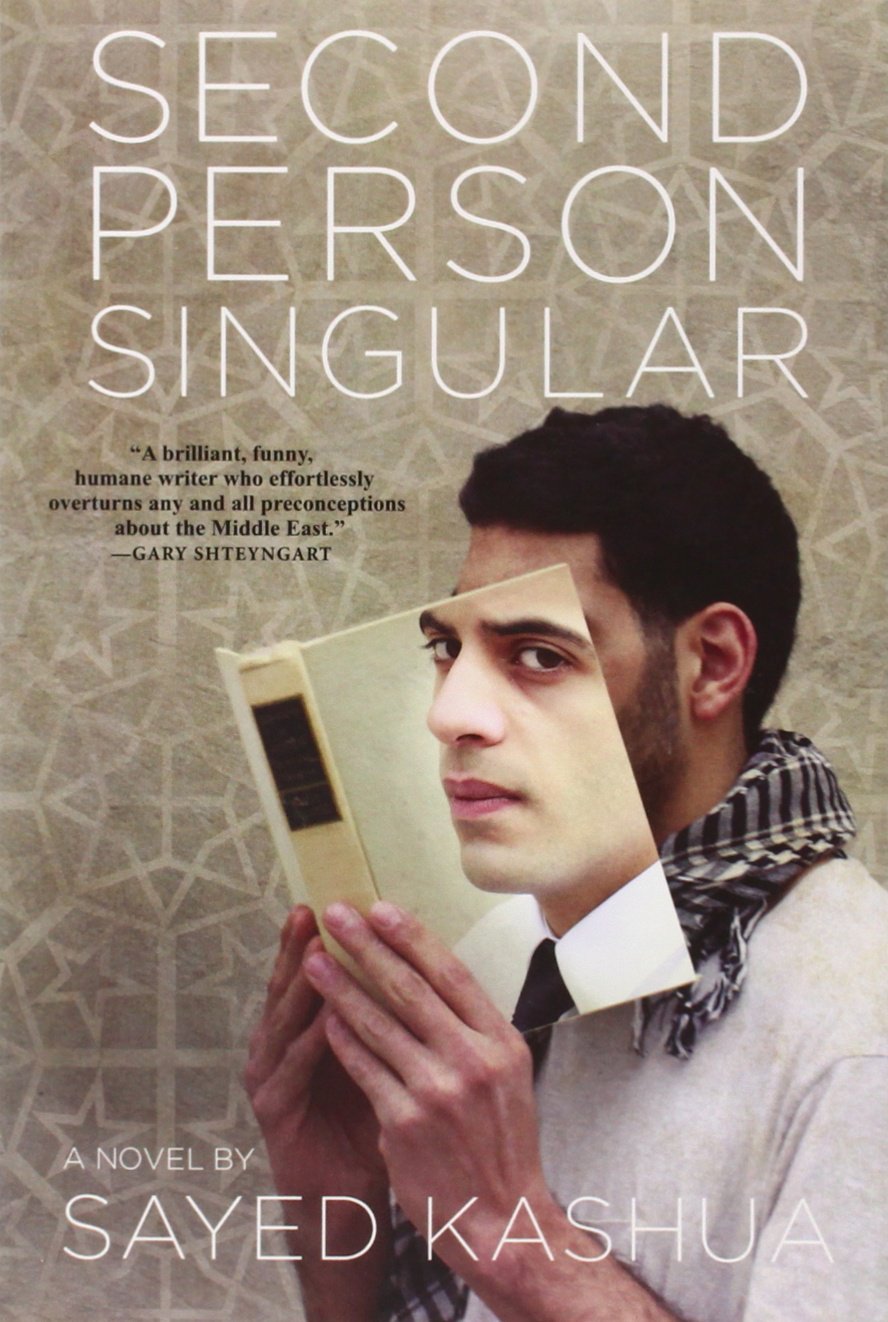



An award-winning novel of love, betrayal, and Arab Israeli identity by the author of Dancing Arabs—"one of the most important contemporary Hebrew writers" ( Haaretz ). A successful Arab criminal attorney and a social worker-turned-artist find their lives intersecting under the most curious of circumstances. The lawyer has a thriving practice in Jerusalem, a large house, and a Mercedes. He speaks both Arabic and Hebrew, and lives with his wife and two young children. To maintain his image as a sophisticated Israeli Arab, he makes frequent visits to a local bookstore and picks up popular novels. But on one fateful evening, he decides to buy a used copy of Tolstoy's The Kreutzer Sonata , a book his wife once recommended. Tucked in its pages, he finds a love letter, in Arabic . . . in his wife's handwriting. Consumed with suspicion and jealousy, he decides to hunt down the book's previous owner—a man named Yonatan. But Yonatan's identity is more complex than the attorney imagined. In the process of dredging up old ghosts and secrets, the lawyer breaks the fragile threads that hold all of their lives together. Winner of the 2011 Bernstein Prize, Second Person Singular is "part comedy of manners, part psychological mystery" ( The Boston Globe ) that offers "sharp insights on the assumptions made about race, religion, ethnicity, and class that shape Israeli identity" ( Publishers Weekly ). "[Kashua's] dry wit shines." — Los Angeles Times "Kashua's protagonists struggle, often comically . . . making his narratives more nuanced than some of the other Arabs writing about the conflict" — Newsweek "Sayed Kashua is a brilliant, funny, humane writer who effortlessly overturns any and all preconceptions about the Middle East. God, I love him." —Gary Shteyngart, author of Super Sad True Love Story "Kashua’s parable deftly examines universal themes of isolation vs. assimilation. A worthy contribution to the increasingly popular works coming out of the Middle East." — Library Journal "This novel illuminates just how fluid identity can be, even—or especially—amid the Arab-Israeli tension of Jerusalem . . . A compelling two-sided narrative . . . [Kashua] has sharp insights on the assumptions made about race, religion, ethnicity, and class that shape Israeli identity." — Publishers Weekly "[Kashua’s] dry wit shines . . . with each of the main characters offering windows into the prejudices and longings of Arabs and Jews . . . The themes are universal in a world in which every culture, it seems, has an ‘other’ against which to play out prejudice, and feelings of supremacy." — Los Angeles Times "At a time when Israeli attitudes toward Arabs seem to be hardening, Kashua’s popularity is especially noteworthy . . . Kashua’s protagonists struggle, often comically, with the tension of being both citizens of Israel and the kin of Israel’s enemies. They usually end up encountering ignorance and bigotry on both sides of the divide, making his narratives more nuanced than some of the other Arabs writing about the conflict." — Newsweek "Powerful . . . Kashua shows us the underside of success, with clear-eyed insight into an Israeli society that is becoming ever more tainted by discrimination based on class and money." — Haaretz "Kashua’s writing and insight serve to translate several different, and conflicting, realities at once . . . Kashua’s work captures the unique and often painful situation of Israel’s Arab citizens, while also opening a window for the non-Arab reader to better understand this dilemma." — Tablet " Second Person Singular triumphs as a tragicomedy composed of two suspensefully intertwined stories tracing the lives of two unnamed Arab protagonists, illuminating their fraught condition as insiders and outsiders and their painful struggle to create a life of meaning . . . Kashua’s razor-sharp wit and irony are on full display . . . [This] is storytelling of the highest order." — Jewish Daily Forward "[This] story is one of loneliness and reinvention, also offering an uncommon view of Israeli society. Kashua narrates powerfully, with careful attention to detail." — The Jewish Week "Kashua presents Israel with a mirror that inverts the dominant story of Jewish marginalization. Here it is Arabs who carry the burden of alienation that is so familiar from Jewish existence in the diaspora." — J Weekly "[Kashua] has a gift for taking the small absurdities of everyday existence and the comic humiliations of family life, themselves served up with self-effacing deadpan humor, and making them comment on the bigger, often darker, contradictions of his life and the two cultures in which he lives." — Jewish Review of Books "If you were to ask Sayed Kashua about his new, best-selling book, Second Person , he’d say it’s 'a satire disguised as a cheap melodrama.' But, of course, you shouldn’t take his word for it. As intimated by its name, Second Person is a story of identity . . . [it] cunningly follows two Israeli Arabs, a lawyer