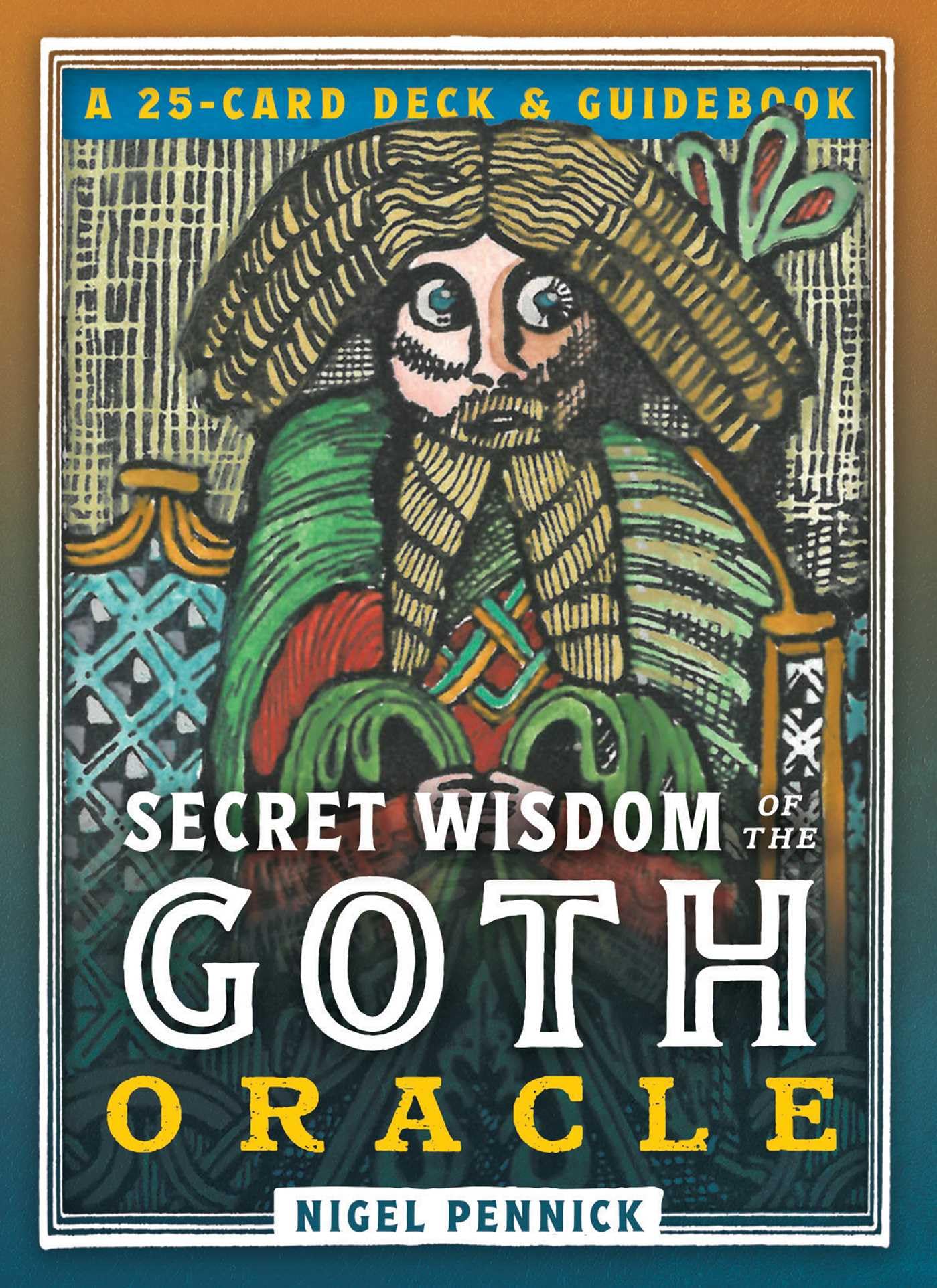



Using the Gothic alphabet for runic divination • Examines the divinatory meanings of the 25 Gothic staves and how they correspond with the 24 runes of the Norse Futhark • Provides a series of rune spreads and several divination techniques for different approaches to questioning and gaining insight • Explores the Goths’ spiritual beliefs, cosmology, and magical systems Originating in Scandinavia, the ancient Goths viewed runes as mystical symbols from the spirit realm, using them to read the cycles of fate, known as Orlög. As the Goths migrated across Europe into North Africa, they adopted a new alphabet to mask their Pagan origins. Yet the staves, or characters of the Gothic alphabet, were rooted in the sacred runes and still used for divining, leading the Roman Catholic Church to declare the Gothic alphabet “heretical” 1400 years ago. Revealing here for the first time the system of seership embedded in the Gothic alphabet, Nigel Pennick examines the 25 Gothic staves and compares their divinatory insights with those of the traditional Futhark of the 24 Norse runes. Pennick considers each stave alone and as part of its aett, the three divisions of the runic alphabet. He provides rune spreads and reading techniques, including the Raed Waen divinatory rite, and explores how new meanings arise as staves are combined in dyads or triads. Nigel Pennick is an authority on ancient belief systems, traditions, runes, and geomancy and has traveled and lectured extensively in Europe and the United States. He is the author and illustrator of more than 60 books, including The Pagan Book of Days and The Ancestral Power of Amulets, Talismans, and Mascots . He lives near Cambridge, England. Techniques of Gothic Divination The earliest recorded technique of rune-reading tells that slivers of wood marked with characters were cast upon a cloth. From this comes the expression “casting the runes.” A similar technique was used by the Greeks, who threw the sheep knucklebones called astragali in a ceremonial manner. The patterns they formed gave the divinatory reading. Sometimes the astragali were marked in some way, with letters or dots like dice, and indeed, they may be the origin of dice. Significantly, Icelandic folklore ascribed the invention of both the runes and of dice to Odin. Like the runes, dice originated as a technique of divination. They are related to numerical and combinatorial oracles like divinatory geomancy.* Although at one time the runes were cast, developments in technique mean that today there are many other possibilities of using symbolic letters in divination. There are two basic forms that can be used. Either the letters or runes are carved or drawn upon stones, or some form of cards can be made. Either kind lends itself to the following methods. The most basic way of choosing a rune or Gothic character is simply to pull one card from the deck (or, if using rune stones, to take one stone from a bag). This gives an instant reading, which has the merit of being spontaneous but the drawback that any negative thoughts, states of mind, or surrounding conditions will inevitably be apparent. As in all traditional systems of divination, it is far more desirable to conduct a divination in a ceremonial manner. When we cast the characters ceremonially, then we must be mindful of the diviner’s location and the direction in which the divination is to be made before we conduct the ceremony. Most importantly is to be in a proper frame of mind, free of preoccupations and distractions, while conducting a divination. RAED WAEN: RIDING THE WAGON A useful ceremonial technique of Gothic divination is known as Raed Waen, “riding the wagon.” In this technique, the diviner places him- or herself metaphorically in the position of the god or goddess on the wagon, from which all things can be seen. Riding the wagon is a divinatory rite in which the actual casting, called the shoat or shoot, is carried out. When we conduct the ceremony of Raed Waen, we always consider the surrounding physical and psychic environment. As with any activity that requires harmony with prevailing conditions, it is necessary be aware of their effects upon the proceedings. When we choose to conduct Raed Waen indoors, then the axis of the shoat should coincide with the main axis of the room—the rig or right line. This can be visualized as an imaginary straight line drawn across the floor. It need not be accurate in surveying terms, and it can be worked out easily. Theoretically, the right line should be the alignment that is best in harmony with the energies of the Earth in that room, and is therefore an aspect of the ancient art of location. In a building where the walls are oriented correctly—that is, facing the four cardinal directions—the axis should lie in the direction east–west. In the Northern Tradition, this is the direction of non-adversarial interactions, lying at right angles to the presence , which is the place of the god