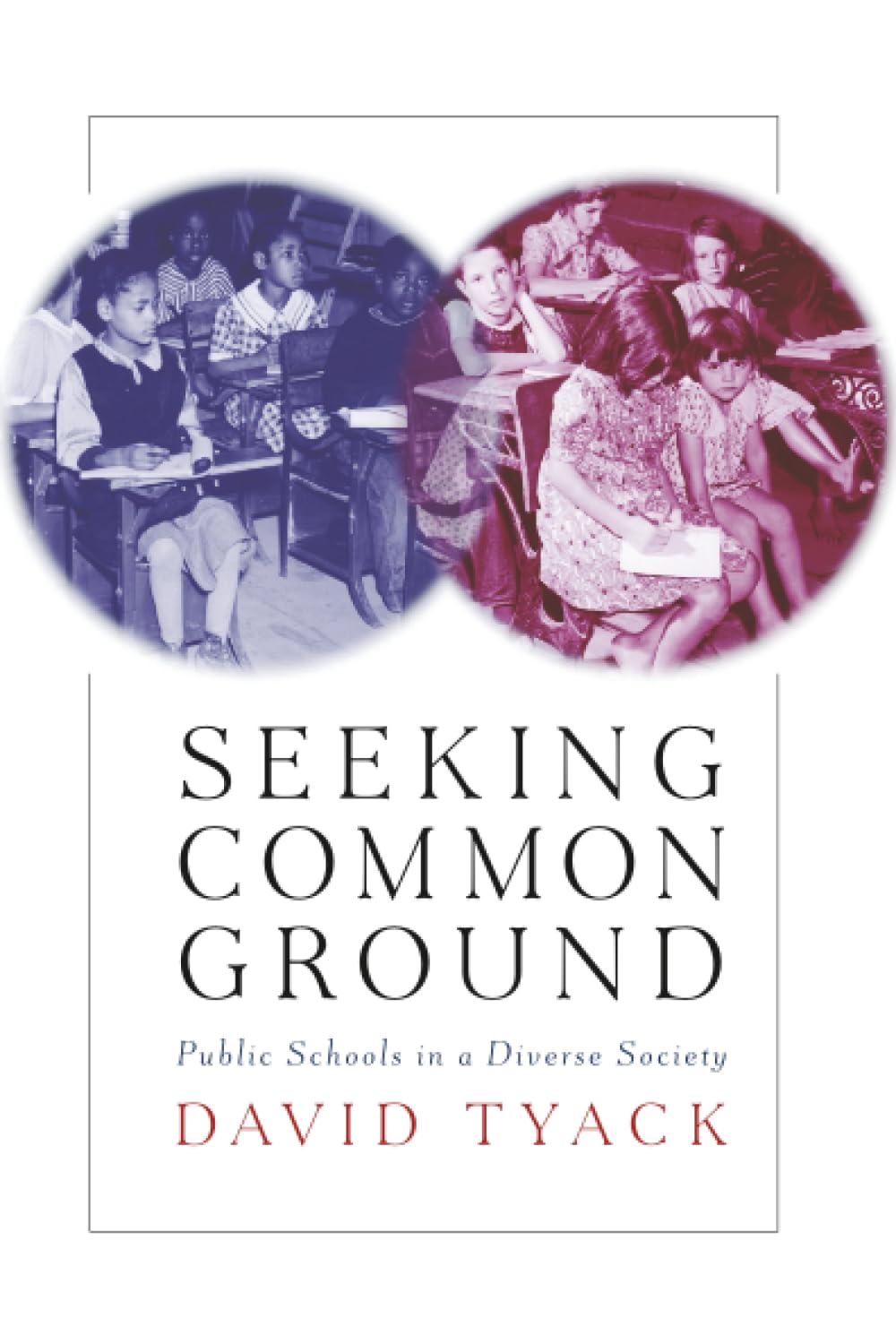



The American republic will survive only if its citizens are educated--this was an article of faith of its founders. But seeking common civic ground in public schools has never been easy in a society where schoolchildren followed different religions, adhered to different cultural traditions, spoke many languages, and were identified as members of different "races." In this wise and enlightening book, filled with vivid characters and memorable incidents that make history but don't always make history books, David Tyack describes how each American generation grappled with the knotty task of creating political unity and social diversity. Seeking Common Ground illuminates puzzles about democracy in education and chronic conflicts that continue to make news. Americans mistrusted government, yet they entrusted the civic education of their children to public schools. American history textbooks were notoriously dull, but they were also highly controversial. Although the people liked local control of schools, educational experts called it "democracy gone to seed" and campaigned to "take the schools out of politics." Reformers argued about whether it was more democratic to teach all students the same subjects or to tailor curriculum to individuals. And what was the best way to "Americanize" immigrants, asked educators: by forced-fed assimilation or by honoring their ethnic heritages? With a broad perspective and an eye for telling detail, Tyack lets us see that debates about the civic purposes of schools are an essential part of a democratic culture, and integral to its future. “This is a little book with enormous importance for policy makers, educators, parents, and anyone who is interested in American public education. Drawing on historical insight of the changes in public education, David Tyack cautions that we should balance ‘the claims of innovation and conservation’ in school reforms, for we may lose ‘what works in schools’ in the rush to make drastic changes in order to meet new demands… Tyack’s critical examination of school reforms offers timely advice for caution in reform and commends realistic policies with committed funding for education.” ― Liping Bu , American Historical Review “David Tyack makes an important argument in this book. Let’s hope that readers don’t miss it because of the ease with which it goes down. The book is a historical look at issues of unity and diversity in public education in the United States… Tyack takes us back to the origins of the public system and to the miscellany of church and pay schools that existed at the time… Seeking Common Ground is not a polemical book. Tyack identifies no bad guys, avoids hyperbole, and grounds his points in solid scholarship. One senses that the book has a strategic aim, but that aim does not weigh with a rhetorically heavy hand… Tyack has performed a great service. Those who already know Tyack’s work will find most of what he says unsurprising, but if they persist through familiar territory, a stroke of brilliance awaits. This stroke comes near the end of the book, but it gives force and reason to all that precedes it. Moreover, it is a clean move, so compelling that one wonders why one hasn’t seen it before. Educators and policy makers would do well to add it to their repertoires.” ― Nancy Beadie , American Journal of Education “ Seeking Common Ground eloquently examines how leaders sought to educate citizens, deal with social diversity, and govern schools… Amid the current pleas for school reform, it is difficult to pause and reflect on the outcomes of past efforts. Tyack’s book serves as a reminder of the need to do so in hopes of avoiding history’s mistakes.” ― Torria Bond , Childhood Education “Organized around the themes of unity, diversity, and democracy, the book ranges across the landscape of educational history. Among other things, it describes the quest for a common denominator of political and moral truths that informed the creation of the common schools; discusses the various ways in which educators have dealt with questions of social and educational diversity, focusing in particular on issues of race, immigration and ethnicity, gender and academic failure; and examines questions of educational governance, including an analysis of the struggle between democratic localism and bureaucratic centralism, as well as the history of private alternatives to public education with specific reference to current debates over vouchers and school choice. [Tyack] looks at these in terms of two competing educational ideals: securing common values and respecting cultural differences, with an emphasis on how political leaders and school officials since the late eighteenth century have sought to use public education to create civic cohesion while recognizing the ethnic and religious differences of the various groups that have made up American society.” ― Harvey Kantor and Robert Lowe , Educational Theory “ Seeking Common Ground is ri