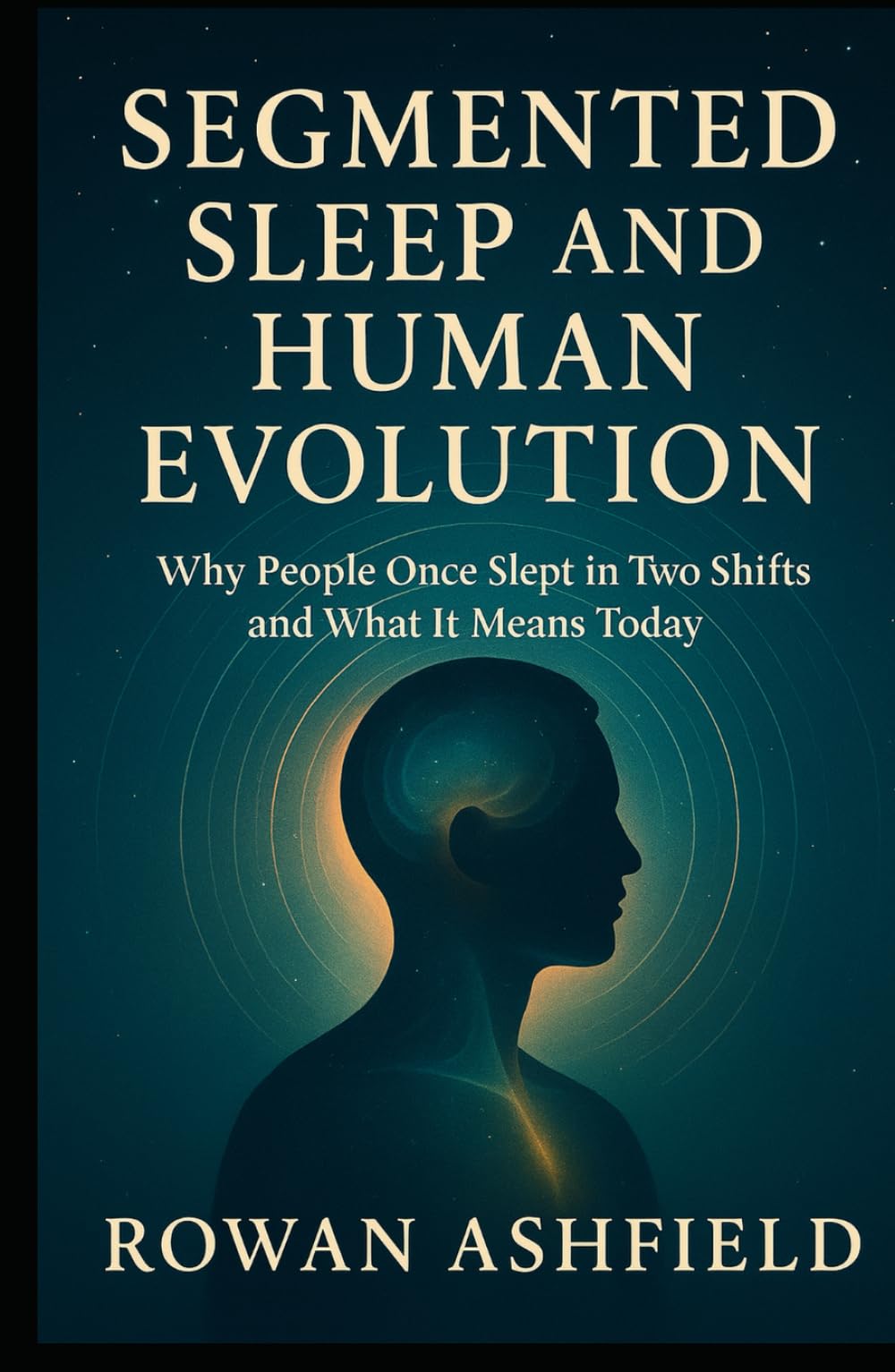
Segmented Sleep and Human Evolution: Why People Once Slept in Two Shifts and What It Means Today
$21.99
by Rowan Ashfield



For most of human history, people did not sleep in one long, uninterrupted block. Instead, they followed a natural rhythm known as segmented sleep or biphasic sleep. This pattern divided the night into two phases—commonly called first sleep and second sleep—with a period of quiet wakefulness in between. During this interval, people prayed, reflected, read, worked on small tasks, or shared intimacy. Far from being seen as insomnia or a disorder, waking in the middle of the night was completely normal. It was part of the natural rhythm of human rest, repeated across cultures for centuries. Segmented Sleep and Human Evolution uncovers the forgotten history of this ancient pattern and explains how it shaped daily life for thousands of years. Drawing on historical evidence from medieval diaries, Renaissance literature, legal records, and religious texts, the book shows how first and second sleep were woven into the fabric of society. It explores how artificial light, urbanization, and industrialization gradually erased this rhythm, replacing it with the modern expectation of eight hours of continuous sleep. This transformation reveals how much culture and technology can reshape even the most basic biological functions. The book also connects past and present by looking at sleep science today. Laboratory experiments have shown that when people live in conditions without artificial light, they often return naturally to segmented sleep. Studies on circadian rhythm, melatonin release, and brain activity confirm that biphasic sleep is deeply embedded in human biology. Modern testimonies from people experimenting with first and second sleep echo what historical sources described: a calm, creative, and restorative period of wakefulness that feels strikingly natural. By reframing nocturnal wakefulness as a forgotten biological rhythm, the book offers a new perspective on insomnia and restless nights. Accessible and engaging, Segmented Sleep and Human Evolution is more than a history book. It is a journey into the science of sleep, the anthropology of human rest, and the cultural forces that shape our nights. Readers will discover why first sleep and second sleep were once universal, how segmented sleep influenced religion, work, and intimacy, and what this history means for us today. Packed with insights for anyone curious about natural sleep patterns, circadian biology, or the history of everyday life, this book speaks to readers of science writing, history, and wellness alike. Whether you struggle with insomnia, wonder about alternative sleep patterns, or simply want to understand how humans once lived in harmony with night and darkness, this book will change how you think about rest. By remembering the forgotten rhythm of first and second sleep, we rediscover the adaptability of human biology, the diversity of cultural practices, and the possibility of reimagining what healthy sleep really means in the modern world.