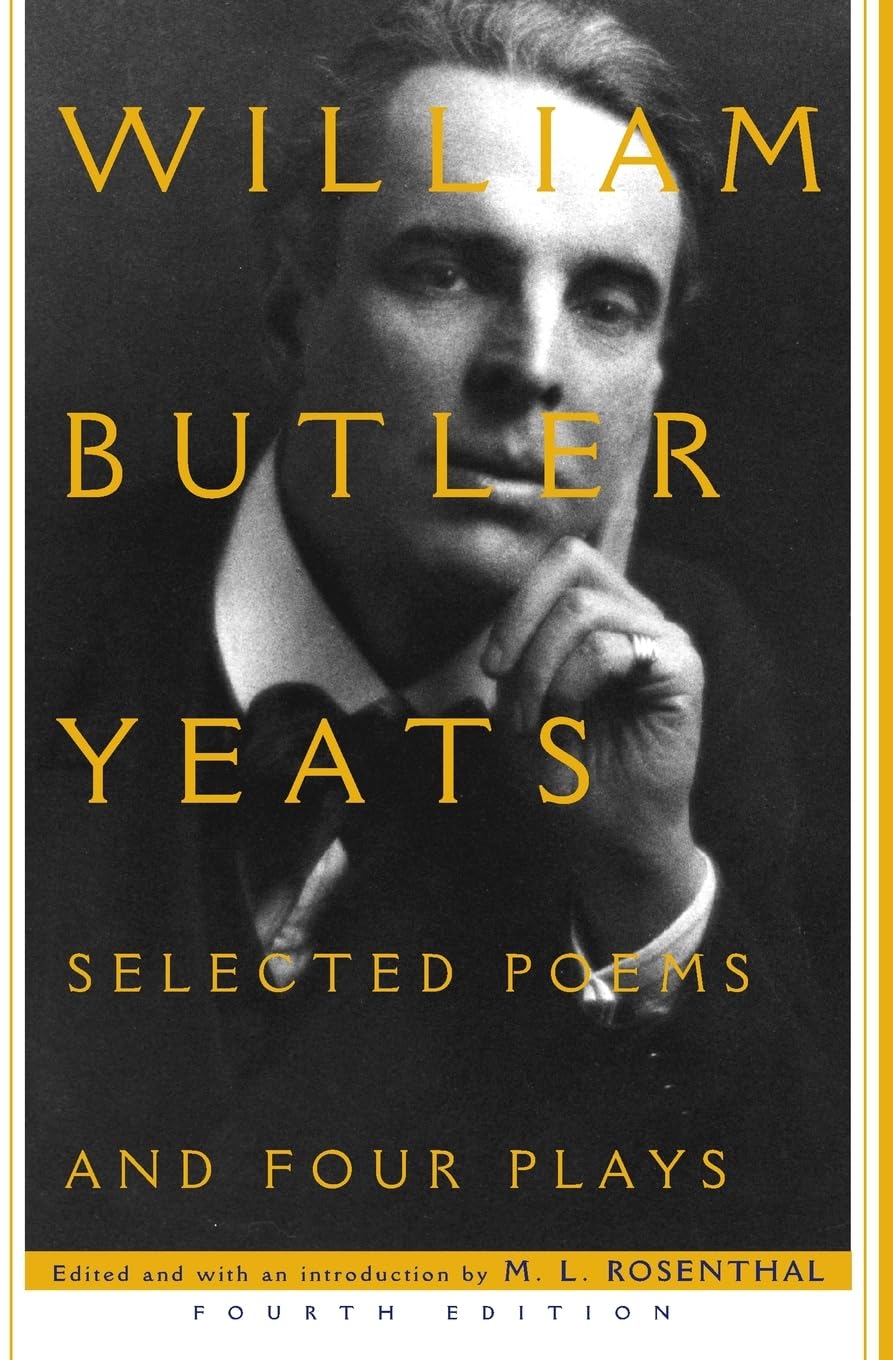



Since its first appearance in 1962, M. L. Rosenthal's classic selection of Yeats's poems and plays has attracted hundreds of thousands of readers. This newly revised edition includes 211 poems and 4 plays. It adds The Words Upon the Window-Pane, one of Yeats's most startling dramatic works in its realistic use of a seance as the setting for an eerily powerful reenactment of Jonathan Swift's rigorous idealism, baffling love relationships, and tragic madness. The collection profits from recent scholarship that has helped to establish Yeats's most reliable texts, in the order set by the poet himself. And his powerful lyrical sequences are amply represented, culminating in the selection from Last Poems and Two Plays, which reaches its climax in the brilliant poetic plays The Death of Cuchulain and Purgatory. Scholars, students, and all who delight in Yeats's varied music and sheer quality will rejoice in this expanded edition. As the introduction observes, "Early and late he has the simple, indispensable gift of enchanting the ear....He was also the poet who, while very much of his own day in Ireland, spoke best to the people of all countries. And though he plunged deep into arcane studies, his themes are most clearly the general ones of life and death, love and hate, man's condition, and history's meanings. He began as a sometimes effete post-Romantic, heir to the pre-Raphaelites, and then, quite naturally, became a leading British Symbolist; but he grew at last into the boldest, most vigorous voice of this century." Selected Poems and Four Plays represents the essential achievement of the greatest twentieth-century poet to write in English. William Butler Yeats, whom many consider this century's greatest poet, began as a bard of the Celtic Twilight, reviving legends and Rosicrucian symbols. By the early 1900s, however, he was moving away from plush romanticism, his verse morphing from the incantatory rhythms of "I will arise and go now, and go to Innisfree" into lyrics "as cold and passionate as the dawn." At every stage, however, Yeats plays a multiplicity of poetic roles. There is the romantic lover of "When You Are Old" and "A Poet to His Beloved" ("I bring you with reverent Hands / The books of my numberless dreams..."). And there are the far more bitter celebrations of Maud Gonne, who never accepted his love and engaged in too much politicking for his taste: "Why should I blame her that she filled my days / With misery, or that she would of late / Have taught to ignorant men most violent ways, / Or hurled the little streets upon the great, / Had they but courage equal to desire?" There is also the poet of conscience--and confrontation. His 1931 "Remorse for Intemperate Speech" ends: "Out of Ireland have we come. / Great hatred, little room, / Maimed us at the start. / I carried from my mother's womb / A fanatic heart." Yeats was to explore several more sides of himself, and of Ireland, before his Last Poems of 1938-39. Many are difficult, some snobbish, others occult and spiritualist. As Brendan Kennelly writes, Yeats "produces both poppycock and sublimity in verse, sometimes closely together." On the other hand, many prophetic masterworks are poppycock-free--for example, "The Second Coming" ("Turning and turning in the widening gyre / The falcon cannot hear the falconer; / Things fall apart; the centre cannot hold; / Mere anarchy is loosed upon the world...") and such inquiries into inspiration as "Among School Children" ("O body swayed to music, O brightening glance, How can we know the dancer from the dance?"). And at his best, Yeats extends the meaning of love poetry beyond the obviously romantic: love becomes a revolutionary emotion, attaching the poet to friends, history, and the passionate life of the mind. Since its first appearance in 1962, M. L. Rosenthal's classic selection of Yeasts's poems and plays has attracted hundreds of thousands of readers. This newly revised edition includes 211 poems and 4 plays. It adds The Words Upon the Window-Pane, one of Yeats's most startling dramatic works in its realistic use of a seance as the setting for an eerily powerful reenactment of Jonathan Swift's vigorous idealism, baffling love relationships, and tragic madness. The collection profits from recent scholarship that has helped to establish Yeats's most reliable texts, in the order set by the poet himself. And his powerful lyrical sequences are amply represented, culminating in the selection from Last Poems and Two Plays, which reaches its climax in the brilliant poetic plays The Death of Cuchulain and Purgatory. William Butler Yeats is generally considered to be Ireland’s greatest poet, living or dead, and one of the most important literary figures of the twentieth century. He was awarded the Nobel Prize in Literature in 1923. Chapter 1 from Crossways (1889) THE CLOAK, THE BOAT, AND THE SHOES 'What do you make so fair and bright?' 'I make the cloak of Sorrow: O lovely to see i