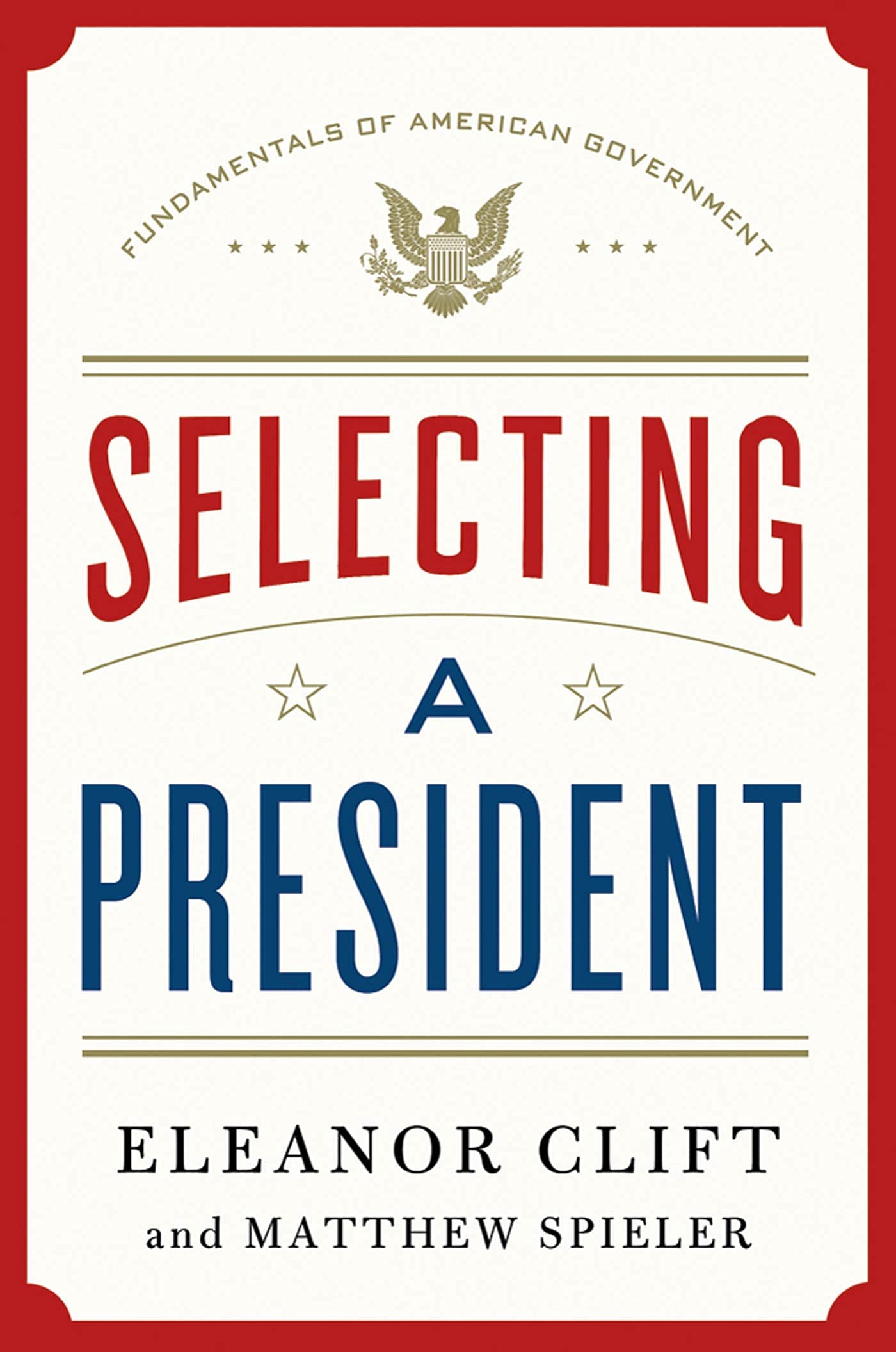



The debut of a brand-new civics series for high school seniors and college freshmen, that clearly, concisely and cleverly explains how the United States elects its president Selecting a President explains the nuts and bolts of our presidential electoral system while drawing on rich historical anecdotes from past campaigns. Among the world's many democracies, U.S. presidential elections are unique, where presidential contenders embark on a grueling, spectacular two-year journey that begins in Iowa and New Hampshire, and ends at 1600 Pennsylvania Avenue. Modern presidential campaigns are a marked departure from the process envisioned by America's founders. Yet while they've evolved, many of the basic structures of our original electoral system remain in place―even as presidential elections have moved into the modern era with tools like Twitter and Facebook at their disposal―they must still compete in an election governed by rules and mechanisms conceived in the late eighteenth century. In this book, Clift and Spieler demonstrate that presidential campaigns are exciting, hugely important, disillusioning at times but also inspiring. By the time most voters in the U.S. get into the voting booth to elect a president, many crucial decisions have already been made with or without their participation. This guide offers information on the complete process, from the Iowa caucuses to the inauguration. Veteran political reporter Clift and policy analyst Spieler offer details on the election cycle, from the primaries through the party nominating conventions, from the counting of the popular vote to the pledging of delegates to the Electoral College. They detail the two-year process that begins with exploratory committees formed two years into a president’s term and just after the midterm elections as prospective candidates begin to gauge the political climate and their chances. The book ends with the contest on a Tuesday in early November every four years. Along the way, Clift and Spieler offer historical perspective on the role of alternative parties, variations on primary election rules from state to state, campaign financing, and the controversies surrounding recent elections. Given that we’re already in primary season, this is not the best-timed resource, but it is still valuable. --Vanessa Bush Eleanor Clift is a political reporter, television pundit and author. She is currently a contributing editor for Newsweek magazine, a regular panelist on The McLaughlin Group , and is also a political contributor for the Fox News Channel. She is the author of Selecting a President . Matthew Spieler is a former social policy analyst for Congressional Quarterly (CQ). He currently works as a political writer for Voterpunch.org, and Oakland-based non-profit organization. He is co-author of Selecting a President . Selecting a President By Eleanor Clift Thomas Dunne Books Copyright © 2012 Eleanor Clift All right reserved. ISBN: 9781250004499 CHAPTER 1 THE PRESIDENTIAL ELECTION YEAR: A SNAPSHOT On a Tuesday evening in early November, Americans gather in front of their television sets for the grand finale of a political drama years in the making. Once every four years, the usual sitcoms, primetime dramas, and reality shows give way to special news coverage: America is electing a new president. As Election Night unfolds, a map of the United States begins to take shape. States won by Democrats are colored in blue, while those won by Republicans are shaded red. Sometimes, the night unfolds at an agonizingly slow pace. The first news of the night usually trickles in around 7 p.m., after a few states with early poll closings report their results. Vermont’s three electoral votes, not surprisingly, go to one party. The other standard-bearer wins Kentucky, as expected. An hour or two later, if all goes smoothly and it’s not an especially close election, the networks declare winners in Pennsylvania, Ohio, and Michigan, and the outcome becomes clearer. Election night can be filled with drama and surprises. Some candidates will win states they were projected to lose, and vice versa. Alternatively, Election Night can be a rather dull affair, as the outcome may not have been in doubt for months leading up to the voting. On Election Day, the presidency is far from the only important political office up for grabs. All members of the House of Representatives and roughly one third of U.S. senators must also stand for election on that same day. But in presidential election years, the race for the White House is undoubtedly the main event. Election Day in the United States is the culmination of a long, grueling process that tests those who seek the highest office in the land—and the leadership of the free world. While most Americans may only have been paying attention to the campaign for a matter of weeks, it has, in fact, been more than two years in the making. Mere days after a new president takes office (or returns