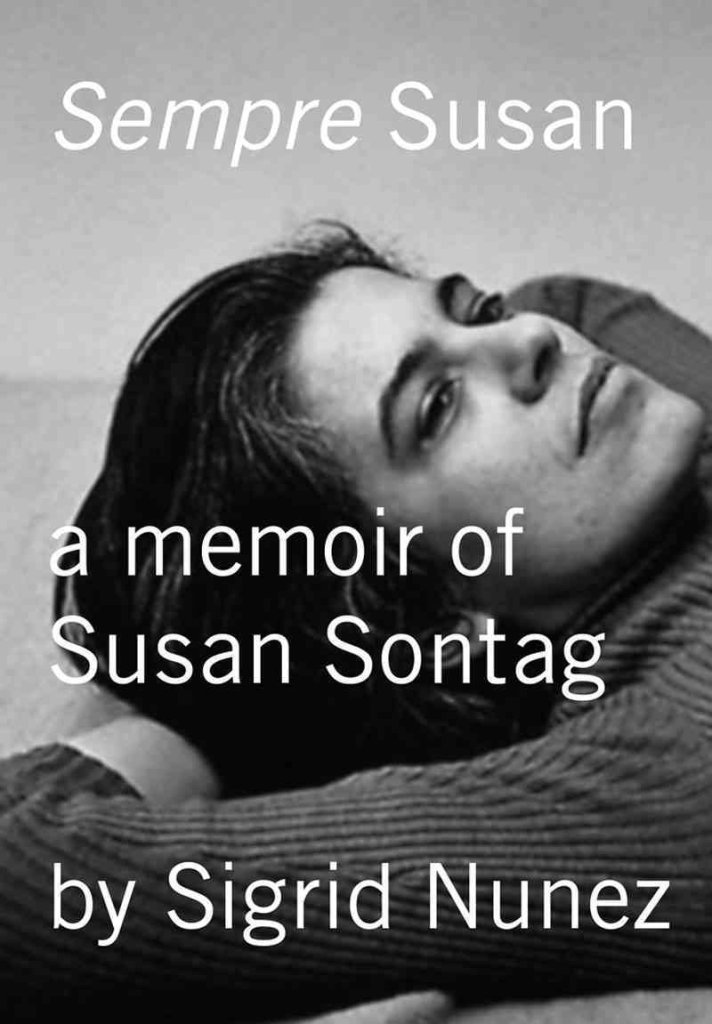



A poignant, intimate memoir of one of America's most esteemed and fascinating cultural figures, and a deeply felt work of homage. Novelist Sigrid Nunez was an aspiring writer when she first met Susan Sontag, already a legendary figure known for her polemical essays, her blindingly bright intelligence, and her edgy personal style. Sontag introduced Nunez to her son, the writer David Rieff, and the two began dating. Soon Nunez had moved into the apartment that Rieff and Sontag shared. Described by Nunez as "a natural mentor," Sontag inevitably infected those around her with her many cultural and intellectual passions. Her influence on Nunez would be profound, and Nunez looks back with gratitude for having had, as an early model, "someone who held such an exalted, unironic view of the writer's vocation." For a young woman who yearned to become a writer, says Nunez, meeting Sontag was one of the luckiest strokes of her life. Published more than six years after Sontag's death, this book is a startlingly truthful portrait of this outsize personality, who made being an intellectual a glamorous occupation. When Susan Sontag, 43, needed help catching up with correspondence in the wake of a radical mastectomy in 1976, friends suggested Nunez, then a 25-year-old writer wannabe, now an acclaimed novelist. Sontag was avid about sharing her knowledge, enthusiasms, and even her adored son, David Rieff, with Nunez, who ended up moving in. Now, six years after Sontag�s death, Nunez chronicles those heady and unnerving times in a boldly intimate, stingingly frank, and genuinely fascinating memoir. She portrays ever-controversial Sontag as an insatiable reader and moviegoer susceptible to love, a restless yet didactic intellectual who loathed solitude and who had to force herself to write in Dexedrine-fueled marathon sessions, and a clingy single mother. In short, an overwhelming presence for private and restrained Nunez. Sontag averred that getting to know famous writers can be disappointing, but there is nothing diminishing about this up-close-and-personal account of one interlude in Sontag�s remarkable life of blazing literary accomplishment, activism, and valor. And Nunez herself is intriguing. Readers of this thorny remembrance will hope that Nunez tells her own story next time. --Donna Seaman “Sontag once wrote about feeling estranged from the “Susan Sontag” who stood on the spine of the books she had written. In Nunez’s Sempre Susan, the gap between the writer and the person who wrote the books is made all the more vividly real—a reminder of the extraordinary transformative work that goes into writing in the first place.” ( Meghan O'Rourke - Slate ) “…Nunez, an uncompromising talent in her own right ( The Last of Her Kind, Salvation City ), offers the most vibrant and multifaceted portrait of Sontag to date.” ( Meghan O'Grady - Vogue ) “This detailed, nuanced account of the more private side of a complex, contradictory public figure is told with even-handed good humor and more than a little compassion. Utterly absorbing.” ( Lydia Davis ) “The best thing written about Sontag.” ( Edmund White ) “Graceful, respectful and achingly honest.” ( Kirkus Reviews ) “Nunez has constructed a eulogy that mythologizes and humanizes one of the most intimidating figures of contemporary culture.” ( Alice Gregory - The Boston Globe ) “Ms. Nunez's book is an elegy for a great woman and the company she kept, the vanished salon where she was the center.” ( James Camp - The New York Observer ) “‘Looking back,’ Nunez writes, ‘I only wish that I could feel more joy—or, at least, that I could find a way of remembering that is not so painful.’ For the reader, if not for herself, she has.” ( Craig Seligman - San Francisco Chronicle ) “Sigrid Nunez’s intimate portrayal of Susan Sontag will fascinate both ardent Sontag fans and those who have never read her work. This memoir is at once a window into the writing life in general, an examination of the complexities of one artist in particular, and a tribute to the lost intellectual New York City of the 1970s. Remarkably, it’s as honest as it is affectionate and as sad as it is charming.” ( Curtis Sittenfeld, author of American Wife ) “ Sempre Susan is written with quiet authority, flashes of poetry, and a steady accumulation of startling, precise details, some apocryphal (Sontag didn’t know what a dragonfly was? drank blood as a child?), until by the end Sontag the Myth comes to life. What is amazing about this wonderful book is that by the end we know as much about Nunez as we do about Sontag, by the very focus of her attention, by her perception of the myth, by her compassionate interpretation.” ( Nick Flynn, author of The Ticking Is the Bomb ) “ Sempre Susan is as epigrammatic, funny and brutal as its subject. Sontag fans, haters, and agnostics alike will find that it contains indispensable lessons, both explicit and subtle, about how and how not to write, and how and how not