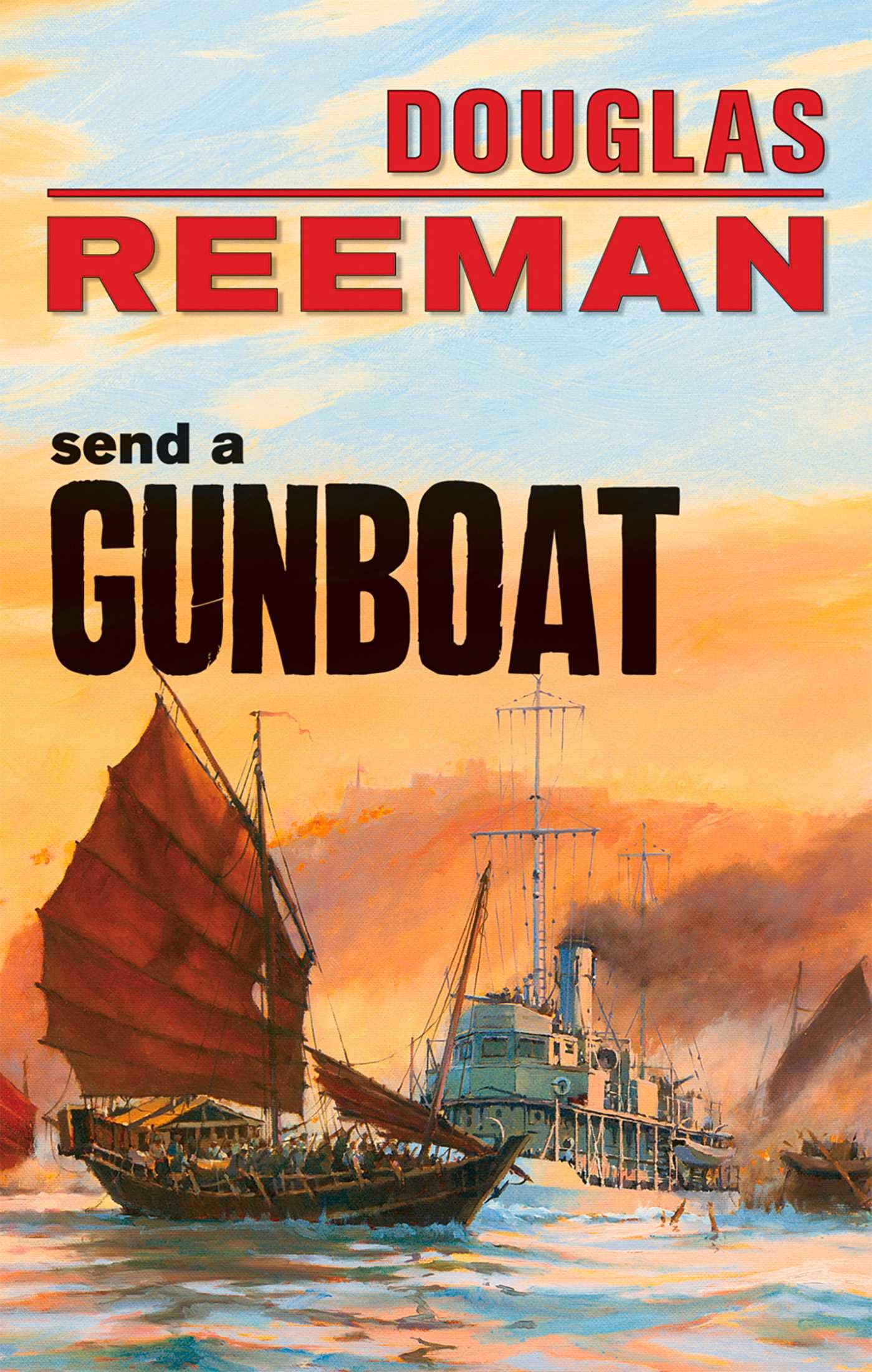



The orders from the Admiralty to the Captain were explicit. He was to take his ship to the small island of Santu, which lay under threat of invasion from the Communist mainland of China, and evacuate the British colony there. The ship, however, was the flat-bottomed, antiquated River gunboat H. M. S. Wagtail, waiting in a Hong Kong harbor for the disgrace of the breaker's hammer to overtake her. Her captain, Justin Rolfe, embittered by the verdict of a court-martial, knew that the assignment offered more than escape from misery and humiliation—it was a reprieve for himself and his ship. "A fine nautical adventure, a rattling yarn in the best tradition of navy fiction." -- Birmingham Mail "The adventures ashore and afloat are as brilliantly pictured as the general plot is cleverly conceived. Character-drawing, action, Rolfe's conquest of his worse self--all go to make much more than a notable thriller." -- Birmingham Post Douglas Reeman served in the Royal Navy in the Atlantic and Mediterranean campaigns during World War Two. He has written 37 novels under his own name as well as 28 novels featuring Richard and Adam Bolitho under the pseudonym Alexander Kent. Send a Gunboat By Douglas Reeman McBooks Press, Inc. Copyright © 1960 Douglas Reeman All rights reserved. ISBN: 978-1-59013-729-1 CHAPTER 1 Another long summer was beginning, but even the dry, heavy breath which fanned the glittering water of Hong Kong's main anchorage, failed to quell the normal air of feverish activity and mounting noise, which surged back and forth in a weird ever-changing and confusing pattern. The hard, unblinking sun fixed the white buildings around the harbour in a swimming heat-haze, making the windows glitter and twist, as if in pain. Even the mean, squalid little streets, crammed with their surging streams of colourful humanity, could not escape, although the shopfronts crouched in permanent semi-darkness. Only the uneven tops of the smart new skyscrapers, and the distant roofs of the sleepy hill-property seemed free from the stifling pressure of noise and dirt. From the harbour these buildings made a pleasant backdrop, distance helping to mould them into a live and vital picture for the newcomer. Old mixed with new. The great temple, overshadowed by the giant building of the Communist China Bank, and the neat white bungalows of the civil servants, lumped almost alongside the peeling tin roof of a canning factory. The contrast was apparent too on the water. It was never quite still, as in any other harbour. It was always jammed with its countless beetle-like craft, from bobbing ungainly sampans, and the battered water-taxis, to the tall, ancient junks, which glided like great bats amongst the other craft with unerring accuracy and calm. A P&O liner, her derricks clanking and jerking, lay alongside the main quay, her rails jammed with excited faces, and gay dresses, and two wharves away, the squat, eagle-crested ferry steamer sidled slowly out into the stream, about to start on yet another journey across the blue water to Macao. Clear of the main waterway, and aloof from the bustling life of the harbour, the cruiser towered like a giant pale-grey rock, the soft wavelets shimmering and reflecting against her lofty sides. As she pulled gently at her mooring buoys, the dancing lights flickered from the brass fittings about the spotless decks, while the long taut awnings flung back the hard glare to the clear skies above. Few figures moved about the decks, for apart from the heat, and the obvious boredom of looking at the same view, it was Sunday, and the ship's company at least showed no desire to follow the example of the busy people around them. A marine sentry paced stolidly at the head of the accommodation ladder, his red face shadowed by the wide sweep of his tropical helmet, the gleaming rifle already hot in his grasp. The Officer-of-the-Day, immaculate in white drill, tucked the long telescope under his arm, and licked his lips, savouring the taste of gin, and trying to remember what he had just had for lunch. Occasionally he glanced carefully at the shaded skylight in the middle of the cruiser's wide quarterdeck, as if expecting a sign to tell him of the movements of the Admiral beneath it. For this was the Flagship, and as the thought crossed his sweating mind, the officer squinted aloft to the limp flag at the masthead. The flag of Admiral Commanding the China Inshore Squadron. He stepped back gratefully under the awning, his eyes resting momentarily on the two American destroyers which were moored side-by-side about half a mile away. Even from here he could clearly discern the wild blare of jazz which poured unceasingly from their deck loudspeakers to join the other discordant noises around them. A police boat slid quietly between two moored junks, and prowled uneasily alongside one of the fishing yawls. The puppet-like figures waved and nodded in the age-old game of question and answer, until the lau