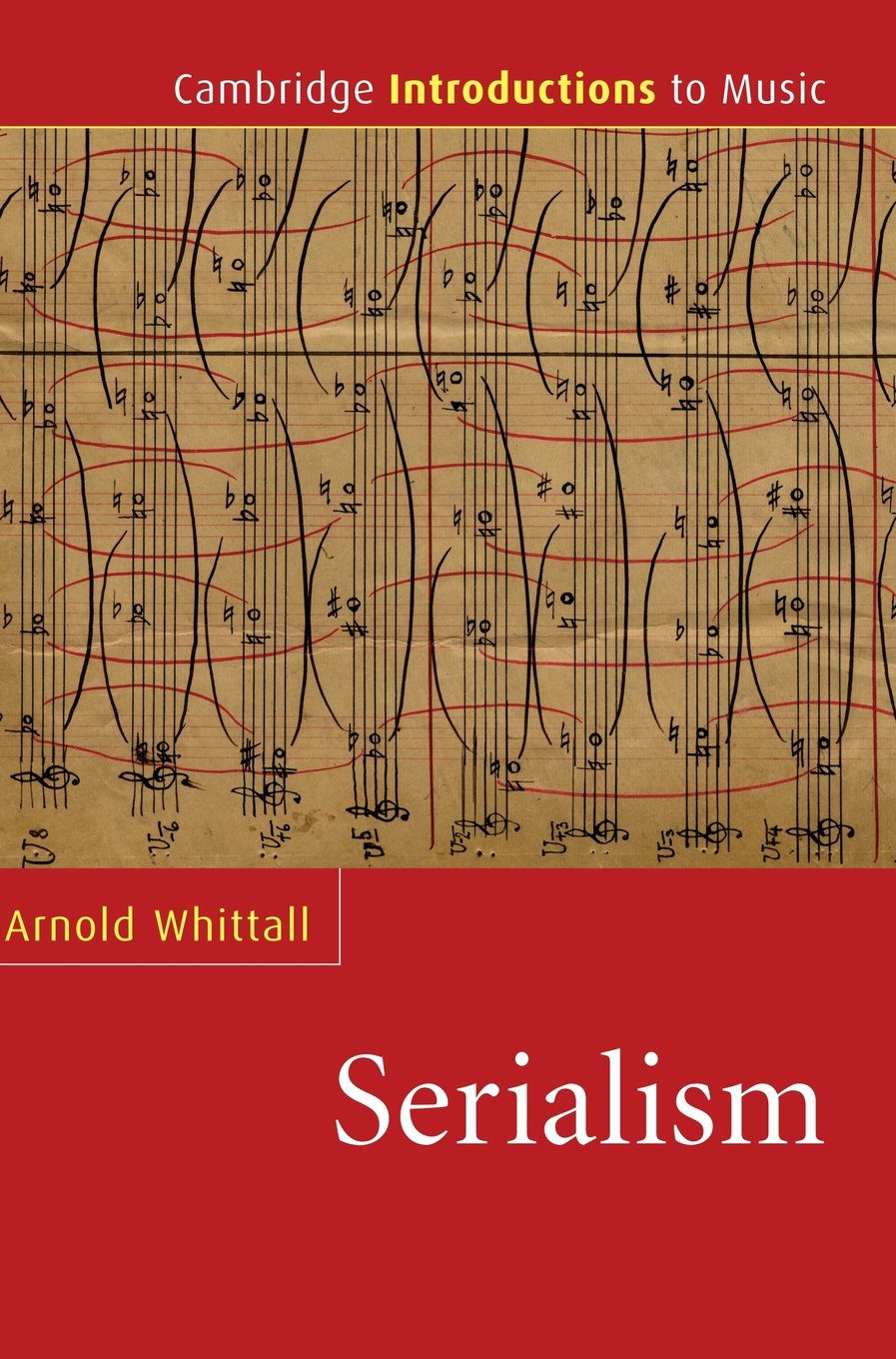



From the earliest years of the 20th century composers sought ways in which to break from earlier musical traditions. Serialism is one of the most prominent innovations resulting from this. From Schoenberg to Stockhausen, Berg to Boulez, this introduction tells the story of how serialism emerged, and provides a basic outline of serial compositional techniques. • Introduces serialism - a traditionally complex but key area of music studies - in a thorough and straightforward way • Clearly and concisely describes the technical aspects of serialism, using illustrative music examples • Contains a glossary to aid readers unfamiliar with specialised vocabulary. "Cambridge University Press - and more specifically Victoria Cooper, the senior commissioning editor from music and theater - is to be congratulated for formulating the idea on an 'Introduction to Music' series. Indeed, if Arnold Whittall's excellent Serialism is anything to go by - the first book in the series and in every respect its guiding light - then clearly we have much to look forward to in future publications. Serialism fulfills its role as an introductory text with great aplomb and rigorous academic integrity. It will almost certainly attract many undergraduate and graduate supporters, and the technical discussions and analysis will no doubt provide university teachers with invaluable teaching materials... Whittall has shown to a wider, more general readership that serialism is not 'one of the great lost causes of twentieth-century music' a some argued, but rather is a vital and integral part of the warp and weft of 20th-century music." --Musical Times A clear, non-technical introduction to serialism - a key topic in music studies for both undergraduate and graduate students. Arnold Whittall is Professor Emeritus at King's College London. Used Book in Good Condition