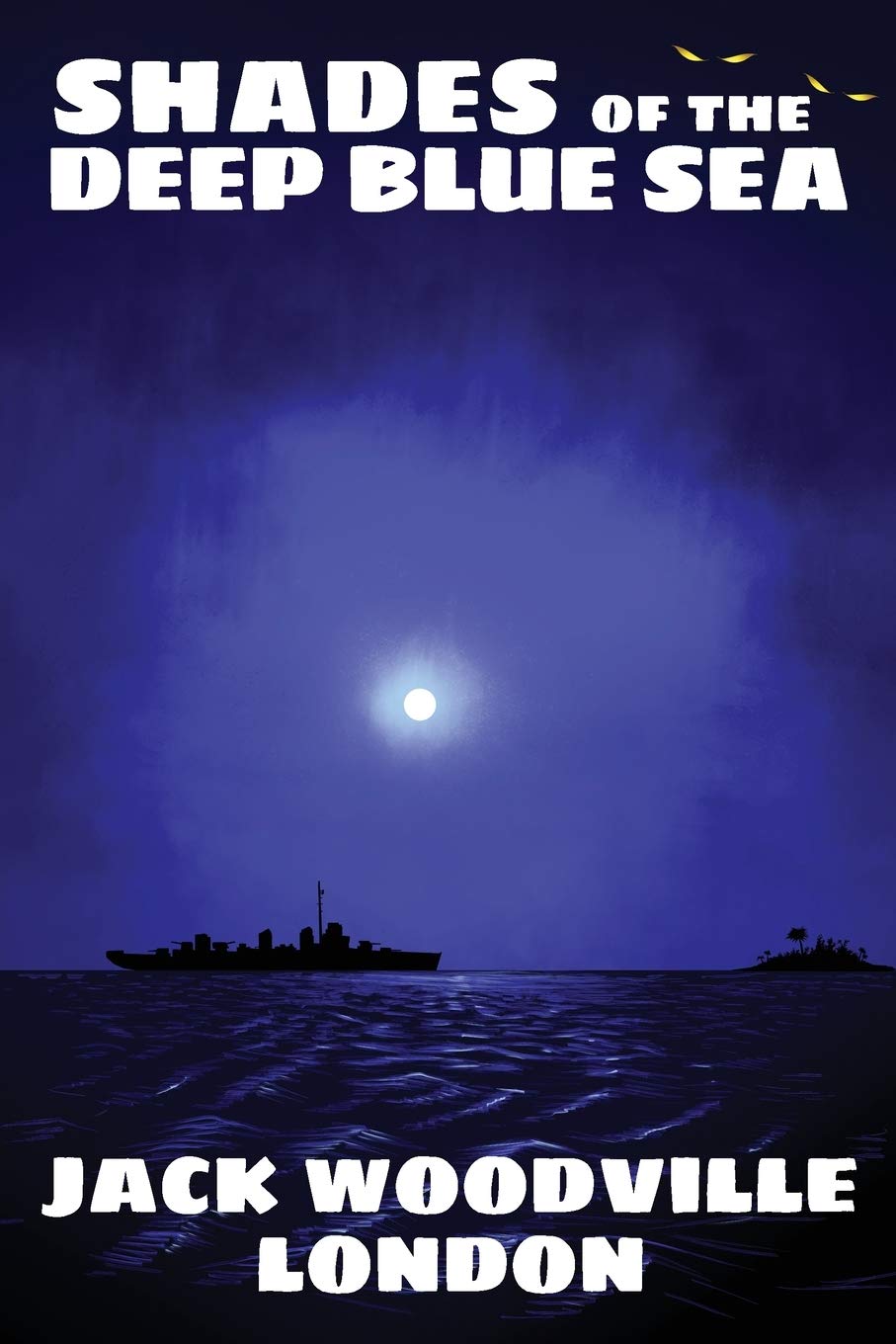



From the award-winning author of the Best Military Fiction of 2018. "Dead or Alive? London's approach to this question thrusts the reader into their own vision of immortality and an immensely entertaining story of the life/death struggle of a character that dramatically makes you want to see his destiny." - Dan Witt, author of Marsh Musings for the Great Bend Tribune in Great Bend Kansas "... an intriguing nautical adventure as well as a ripping good historical fiction complete with typhoons, spirits, and cannibals." - Mark Bowlin, author of The Texas Gun Club novels "The plot twists blew me out of the water. Narrowly avoiding burial at sea, born again Bart's heart is in the right place but the avalanche of his military misdeeds can only be held back so long. A depth of great writing with a creative approach to character development." - Robert Goswitz, author of The Dragon Soldier's Good Fortune As their ship crosses the Pacific, headed to war in the Philippines, the bumbling Olafson looks for ways to kill Bart who is looking for ways to stay alive, all while the crew of the Renegade begins to believe that Bart might already have become a shade. But, the winds of war blow Bart and Olafson to the Spice Islands and the Japanese, and to Saya, who is fighting a war of her own. Can they survive in a jungle world of cannibals, poisonous birds, and a woman bent on revenge against the Japanese? Shades of the Deep Blue Sea is more than a historically-precise novel of World War II in the Pacific. It also is a riveting foray into dodging torpedoes, machine guns, and Japanese patrols that makes one wonder whether Bart could actually see what happened beforehand. A shade, after all, is more than just a change of color.... Shades of the Deep Blue Sea is another remarkable work of historical fiction from Jack Woodville London, author of Children of a Good War, winner of Best Historical Fiction, War and Military, 2018 and the French Letters Series. "A World War II novel that will make you smile--who knew? The author obviously had fun with this oddball, imaginative South Pacific war tale." - Kirkus Reviews Behind the Book: Honolulu Dance Halls, Ghost Soldiers, Hollandia, Halsey's Typhoon, and the Ambon Island Japanese POW Camp Shades of the Deep Blue Sea follows American sailors Bart Sullivan and Petty Officer Olafson from Honolulu to the beach landing at Peleliu, into the most destructive cyclone in the war, and onto a South Pacific spice island teeming with cannibals and Japanese patrols. What is the story behind them? In December 1944 Admiral 'Bull' Halsey sailed the US Third Fleet east from the Philippines to refuel; he led his ships straight into the eye of one of the most devastating cyclones in naval history. Three destroyers sank with the loss of 790 men. More than 30 ships were damaged so badly that they had to be rebuilt. Many of the 13 aircraft carriers suffered fires from boilers and some 100 carrier planes were lost. The fleet searched for three days in hurricane seas and succeeded in pulling from the ocean some 93 sailors who had been washed overboard. The storm was quickly named Halsey's Typhoon. Pacific Command said that the cyclone had done far more damage than any enemy engagement. Even so, neither cyclones nor combat were the only dangers of the Pacific. Virtually none of the 1,400,000 Americans in the Pacific in World War II knew anything of the enormous island of New Guinea, its waters, lands, or islands. Most of them were under 24 years old; many spent their last days ashore in the dance halls of Honolulu, hunting for a girl to give them something to remember as they sailed into danger. Few of them had heard of New Guinea before the war. American sailors' and soldiers' introduction to New Guinea began with General MacArthur's island-hopping plan to attack Japanese bases on the Pacific side of the island. American navy troopships transported American soldiers to New Guinea to conduct a surprise attack on the Japanese by crossing the Owen Stanley Mountain Range. Most of the world's second largest island was mountainous jungle and thick rainforest. For more than five weeks the soldiers hacked at jungle to cross an impenetrable mountain pass in the monsoon season; when they reached the summit, tribes fled from them because they believed the troops were ghosts. The mountain crossing led to the defeat of the Japanese at Buna and Hollandia, a former Dutch shipping and administrative center of the spice trade that became an American naval base for the invasion of the Philippines. Inland New Guinea was occupied by indigenous tribes who lived in a Stone Age culture. In the remote western jungles, the Sawi tribe practiced cannibalism and hunted with bows, arrows, and spears. There are pitohui birds, whose poisonous feathers are deadly to people, and thorny devil walking sticks, carnivorous insects that spray a paralyzing vapor in self-defense. In all parts of New Guinea t