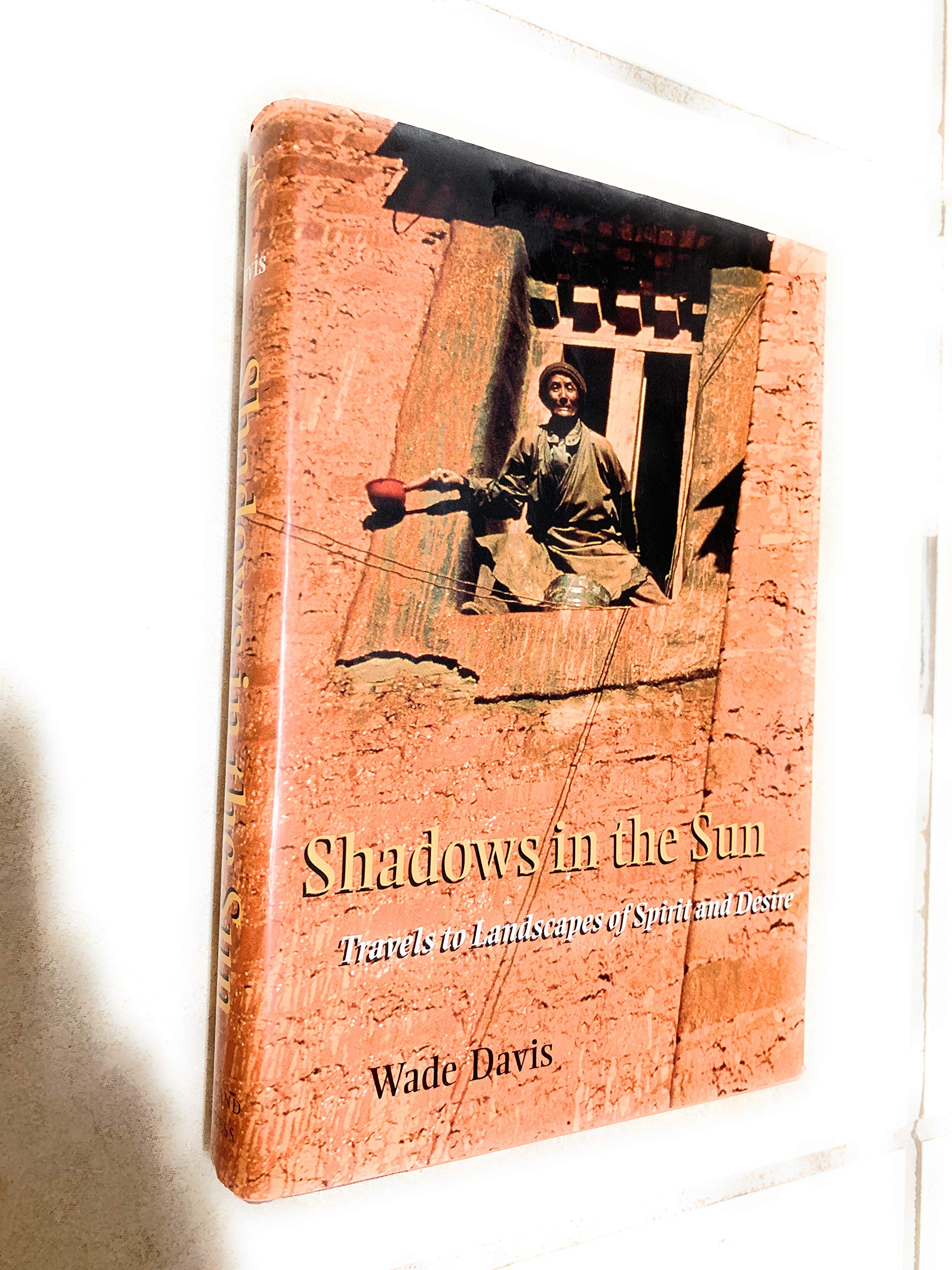



Wade Davis has been called "a rare combination of scientist, scholar, poet and passionate defender of all of life's diversity." In Shadows in the Sun , he brings all of those gifts to bear on a fascinating examination of indigenous cultures and the interactions between human societies and the natural world.Ranging from the British Columbian wilderness to the jungles of the Amazon and the polar ice of the Arctic Circle, Shadows in the Sun is a testament to a world where spirits still stalk the land and seize the human heart. Its essays and stories, though distilled from travels in widely separated parts of the world, are fundamentally about landscape and character, the wisdom of lives drawn directly from the land, the hunger of those who seek to rediscover such understanding, and the consequences of failure.As Davis explains, "To know that other, vastly different cultures exist is to remember that our world does not exist in some absolute sense but rather is just one model of reality. The Penan in the forests of Borneo, the Vodoun acolytes in Haiti, the jaguar Shaman of Venezuela, teach us that there are other options, other possibilities, other ways of thinking and interacting with the earth." Shadows in the Sun considers those possibilities, and explores their implications for our world. Renowned anthropologist Wade Davis shows us how preserving the diversity of the world's cultures and spiritual beliefs is just as important as preserving our endangered plants, insects, and animals. In this collection of personal essays, Davis tells of dramatic personal adventures during which he visits and often lives with indigenous communities in the remote regions of the world. He offers reports of toad-smoking shamanistic journeys in the Amazon forests, tracking an elusive cloud leopard in the mountains of Tibet, and a soulful lament for the lost American buffalo. Although he has been called a modern-day Indiana Jones, Davis has far more integrity. His stories are not in service to self-glorification, but rather to one resounding theme: If there is one lesson I have drawn from my travels, it is that cultural and biological diversity are far more than the foundation of stability; they are an article of faith, a fundamental truth that indicates the way things are supposed to be.... There is a fire burning over the Earth, taking with it plants and animals, cultures, languages, ancient skills, and visionary wisdom. Quelling this flame and reinventing the poetry of diversity is the most important challenge of our times. --Gail Hudson Davis, who holds a Harvard Ph.D. in ethnobotany and degrees in biology and anthropology, is also a prolific writer (e.g., One River, LJ 7/96). His current work is an eclectic collection of essays, some previously published, dealing with topics that include hallucinogenic plants (of which he partakes), toad licking, disappearing rain forests, Haitian voudoun, and the elusive clouded leopard. While at first glance these may not seem related, an overall appreciation for native cultures and for the natural world is evident throughout. Davis is straightforward and clear but not quite spellbinding. Still, this enjoyable read takes the armchair traveler to places few have written about. Recommended for all travel collections.?Kathleen A. Shanahan, American Univ. Lib., Washington, DC Copyright 1998 Reed Business Information, Inc. Anthropologist and ethnobotanist Davis has sojourned in places where people still live in harmony with the earth, remote communities at the base of the Himalayas, on the ice of the Arctic, or deep in the center of the Amazon rain forests. In essays so sensitively written their pristine language reflects the landscapes they describe, Davis chronicles his unusual adventures and striking observations as a welcome guest in these spiritually vibrant enclaves now threatened by industrial invasion. Drawing on the great wealth of botanical, anthropological, and historical knowledge from which he created his magnum opus about the Amazon, One River (1996), Davis delves into the mysteries of South American shamanic healing and Haiti's vodun religion, relates the maddening story of the fight to save the rain forests of Borneo, and describes the ingenuity of the Inuit. Truly global in thought and deed, poetic and outspoken, Davis deftly illuminates the little understood connection between biodiversity and cultural diversity and strongly suggests that more be done to preserve what's left of wilderness. Donna Seaman The wonders of the diversity of various cultures and their relationship to their landscape - from the high Arctic and the northern forests to the swamps of the Orinoco - are hunted, gathered, and honestly appreciated here by the peripatetic Davis (One River, 1996). Davis is a sojourner in remote places. He tarries, hoping to get a taste of the intimate, deep reverence for the home place that indigenous people experience by staying put, to sample some of the mythopoet