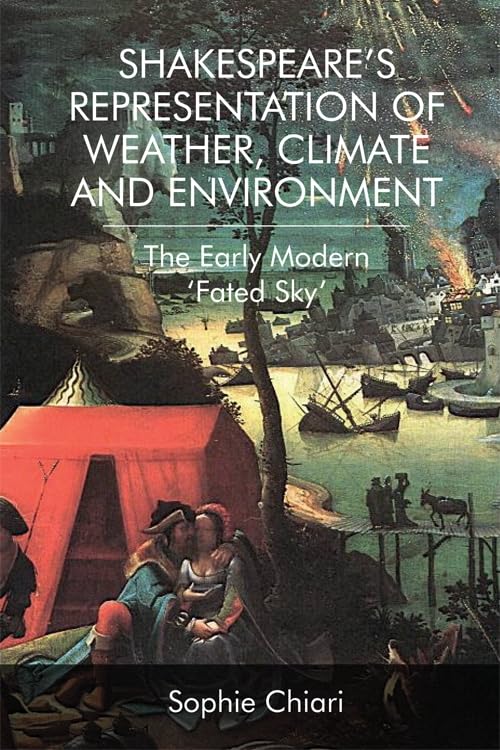
Shakespeare’s Representation of Weather, Climate and Environment: The Early Modern ‘Fated Sky’
$39.95
by Sophie Chiari



The first in-depth exploration of Shakespeare’s representations of climate and the sky While ecocritical approaches to literary texts receive more and more attention, climate-related issues remain fairly neglected, particularly in the field of Shakespeare studies. This monograph explores the importance of weather and changing skies in early modern England while acknowledging the fact that traditional representations and religious beliefs still fashioned people’s relations to meteorological phenomena. At the same time, a growing number of literati stood against determinism and defended free will, thereby insisting on the ability to act upon celestial forces. Sophie Chiari argues that Shakespeare reconciles the scholarly approaches of his time with popular views rooted in superstition and promotes a sensitive, pragmatic understanding of climatic events. Taking into account the influence of classical thought, each of the book’s seven chapters addresses a different play where sky-related topics are crucial and considers the way climatic phenomena were presented on stage and how they came to shape the production and reception of Shakespeare’s drama. Key Features Offers an all-encompassing approach on early modern climate in ShakespeareRedefines the notion of ‘climate’ as Shakespeare’s contemporaries understood itSuggests new hermeneutic tracks to understand Shakespeare’s major comedies and tragediesProbes environmental issues in Shakespeare’s plays and, in doing so, echoes major concerns of the present time A brilliant and bold contribution to both Shakespeare studies and to the emerging field of eco-criticism. Eloquently written, this is a thorough literary analysis of the status of the elements and environment as symbols, metaphors and crucially, as material phenomena. ― Dympna C. Callaghan, Syracuse University In its profusion of material, this book is like the River Nile as imagined in Antony and Cleopatra : fecund and teeming with life. -- Tom Rutter, University of Sheffield ― Early Modern Literary Studies Chiari's work will be of value to scholars and students looking for a comprehensive account of the intersections of weather, climate, and environment in some of Shakespeare's most familiar texts. -- Karen L. Raber ― Shakespeare Studies The first in-depth exploration of Shakespeare s representations of climate and the sky While ecocritical approaches to literary texts receive more and more attention, climate-related issues remain fairly neglected, particularly in the field of Shakespeare studies. This monograph explores the importance of weather and changing skies in early modern England while acknowledging the fact that traditional representations and religious beliefs still fashioned people s relations to meteorological phenomena. At the same time, a growing number of literati stood against determinism and defended free will, thereby insisting on the ability to act upon celestial forces. Sophie Chiari argues that Shakespeare reconciles the scholarly approaches of his time with popular views rooted in superstition and promotes a sensitive, pragmatic understanding of climatic events. Taking into account the influence of classical thought, each of the book s seven chapters addresses a different play where sky-related topics are crucial and considers the way climatic phenomena were presented on stage and how they came to shape the production and reception of Shakespeare s drama. Sophie Chiari is Professor of Early Modern English Literature at Clermont Auvergne University, France. The first in-depth exploration of Shakespeare’s representations of climate and the sky While ecocritical approaches to literary texts receive more and more attention, climate-related issues remain fairly neglected, particularly in the field of Shakespeare studies. This monograph explores the importance of weather and changing skies in early modern England while acknowledging the fact that traditional representations and religious beliefs still fashioned people’s relations to meteorological phenomena. At the same time, a growing number of literati stood against determinism and defended free will, thereby insisting on the ability to act upon celestial forces. Sophie Chiari argues that Shakespeare reconciles the scholarly approaches of his time with popular views rooted in superstition and promotes a sensitive, pragmatic understanding of climatic events. Taking into account the influence of classical thought, each of the book’s seven chapters addresses a different play where sky-related topics are crucial and considers the way climatic phenomena were presented on stage and how they came to shape the production and reception of Shakespeare’s drama.Sophie Chiari is Professor of Early Modern English Literature at Clermont Auvergne University, France. Sophie Chiari is Professor of Early Modern English Literature at Université Clermont Auvergne, France, where she is also the Director of the ‘Maison des Sciences de l’Homme de Cler