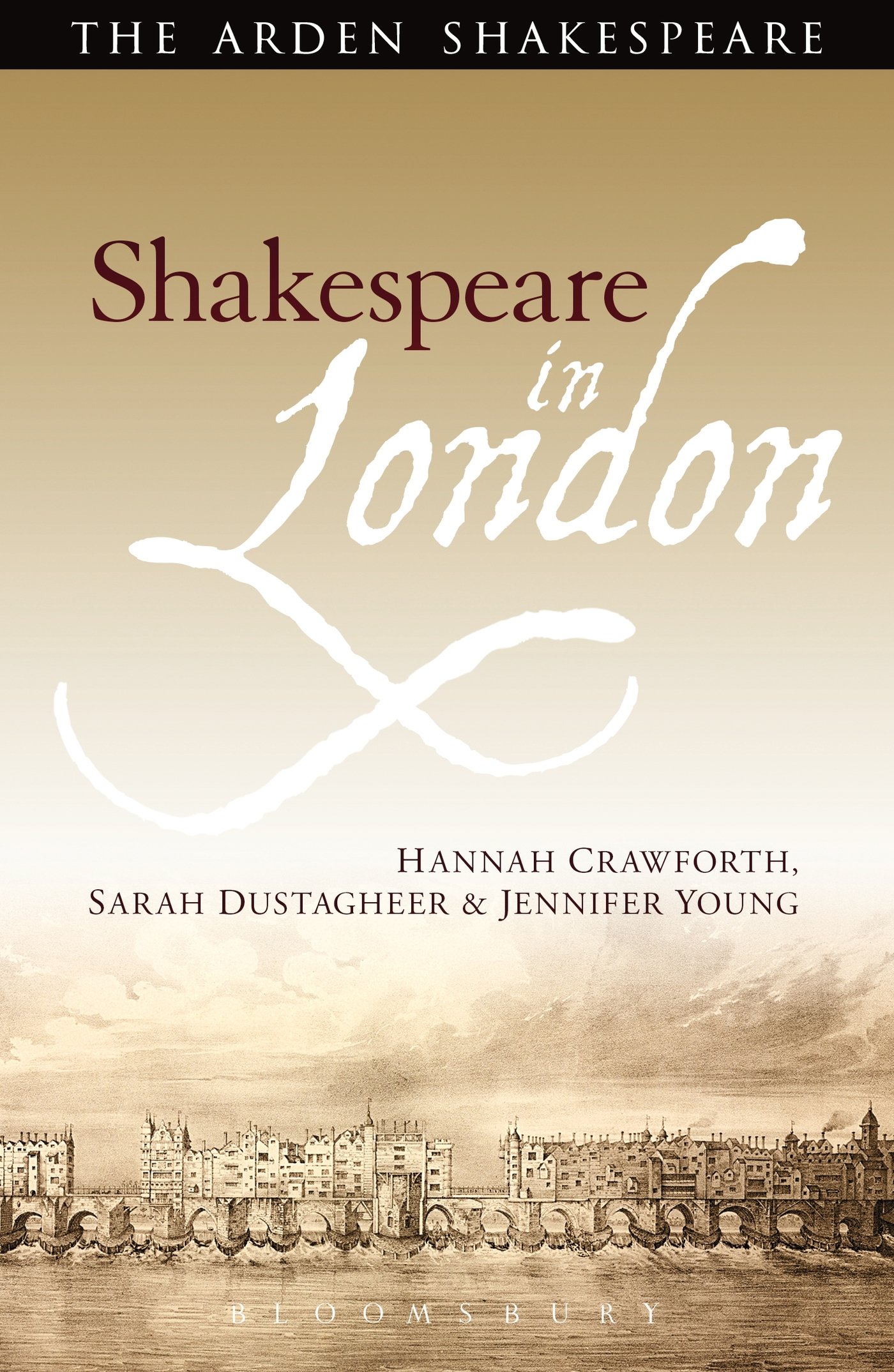



Shakespeare in London offers a lively and engaging new reading of some of Shakespeare's major work, informed by close attention to the language of his drama. The focus of the book is on Shakespeare's London, how it influenced his drama and how he represents it on stage. Taking readers on an imaginative journey through the city, the book moves both chronologically, from beginning to end of Shakespeare's dramatic career, and also geographically, traversing London from west to east. Each chapter focuses on one play and one key location, drawing out the thematic connections between that place and the drama it underwrites. Plays discussed in detail include Hamlet , Richard II , The Merchant of Venice , The Tempest , King Lear and Romeo and Juliet . Close textual readings accompany the wealth of contextual material, providing a fresh and exciting way into Shakespeare's work. “An evocative journey that places Shakespeare's plays in a revealing urban context” ― The Guardian “[An] excellent book ... with clear prose, a valuable context-specific chronology, focussed further reading, and astute plot summaries ... The authors' extensive research is worn elegantly, as they gloss, surprise, and unlock.” ― English Journal “[An] excellent and imaginatively construed new book ... From its introduction imagining Shakespeare first walking into London to its epilogue showing how Henry VIII represented the Tower of London, Shakespeare in London manages to be both a useful guide and full of insight, a rare combination.” ― Around the Globe “[An] allusive, thought-provoking and approachable work that should be required reading for any undergraduate student of early-modern English literature ... Shakespeare in London offers useful insights into Shakespeare's work and his working practices. But it is also a wonderful, wide-ranging introduction to the richness and complexity of late-Elizabethan and early-Jacobean society. It would be instructive reading for anyone.” ― History Today “Crawforth, Dustagheer, and Young argue that the city in which Shakespeare lived and worked influenced the writing and performance of his plays. Each chapter of the book focuses on one play and one social or historical context for that play … The authors provide useful supplementary materials: a chronology of Shakespeare's life, traced against important contemporary events in London, and a list of suggested reading, arranged by subject … Summing Up: Highly recommended. Lower- and upper-division undergraduates; general readers.” ―K. K. Smith, University of South Carolina, Aiken, CHOICE “A well-written, user-friendly companion to London's place in the plays and poems of Shakespeare as well as a good starting point for further research. It persuasively demonstrates that London is present in Shakespeare's work in overt and indirect ways and offers a helpful overview of these references and, through them, an enriched reading of the plays. It will be a valuable purchase for university and research libraries keen to enhance their archive of key Shakespeare resources.” ― The London Journal “The authors are to be congratulated on exploring [their topic] in fresh and exciting ways ... Augmented by the usual apparatus of the Arden Shakespeare series, including a chronology, eight illustrations and suggested further reading, this study evokes a palpable, powerful sense of Shakespeare's London and the numerous ways in which it permeated his playwriting.” ― Early Modern Literary Studies “Shakespeare's comedies and tragedies seem to take place everywhere but Elizabethan London: Athens, Elsinore, Ephesus, Rome, Troy, Venice, Verona. This engaging book shows, contrary to received tradition, how deeply Shakespeare's experience of life in London inspired the themes and scenes of plays purportedly set elsewhere” ― Lena Cowen Orlin, Professor of English, Georgetown University, USA Hannah Crawforth is Reader in Early Modern Literature at King's College London, UK, where her research is primarily concerned with the under-examined political, religious and literary implications of the history of the English language as it was studied in the Renaissance. She is also one of the four faculty members comprising the London Shakespeare Centre, launched at King's in 2009, currently working on several collaborative projects. Jennifer Young is Postdoctoral Researcher at the University of Groningen, the Netherlands.