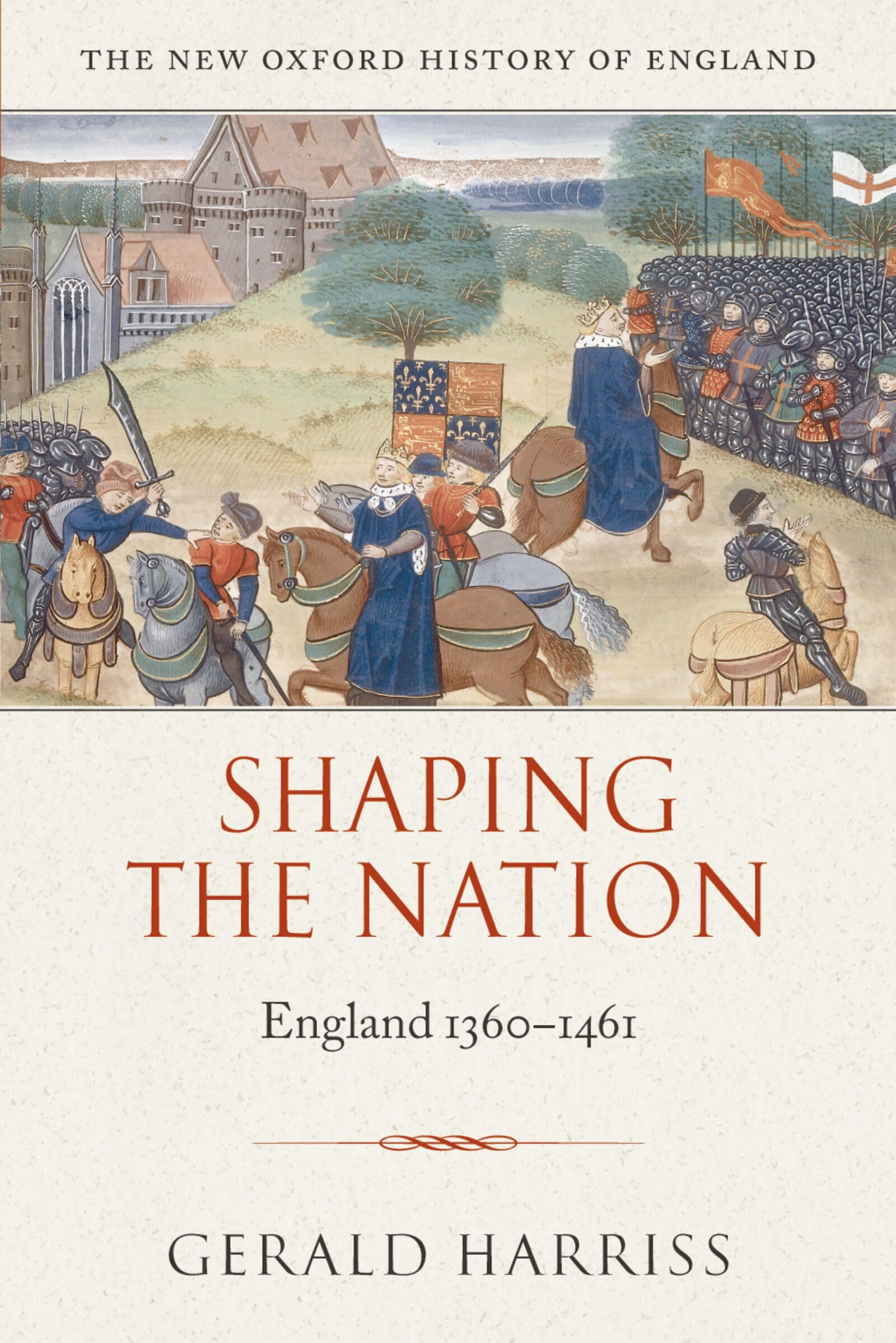
Shaping the Nation: England 1360-1461 (New Oxford History of England)
$78.00
by Gerald Harriss



The Black Death. The Peasants' Revolt. The Hundred Years War. The War of the Roses. A succession of dramatic social and political events reshaped England in the period 1360 to 1461. In his lucid and penetrating account of this formative period, Gerald Harriss draws on the research of the last thirty years to illuminate late medieval society at its peak, from the triumphalism of Edward III in 1360 to the collapse of Lancastrian rule. The political narrative centers on the deposition of Richard II in 1399 and the establishment of the House of Lancaster, which was in turn overthrown in the Wars of the Roses. Abroad, Henry V's heroic victory at Agincourt in 1415 led to the English conquest of northern France, lasting until 1450. Both produced long term consequences: the first shaped the English constitution up to the Stuart civil war, while the second generated lasting hostility between England and France, and a residual wariness of military intervention in Europe. "The decades of the late fourteenth and early fifteenth century are no longer perceived as ones of decadence and decline, lost opportunities and failure, but ones of transformation, economic growth, social maturity, and mobility, along with political strength in spite of those changes. For this, as well as a lively and engaging narrative that akillfully blends so much of scholarship printed over the last fifty years, we owe Prfoessor Harriss a debt of thanks."--Douglas Biggs, Speculum Gerald Harriss is an Emeritus Fellow of Magdalen College, Oxford.