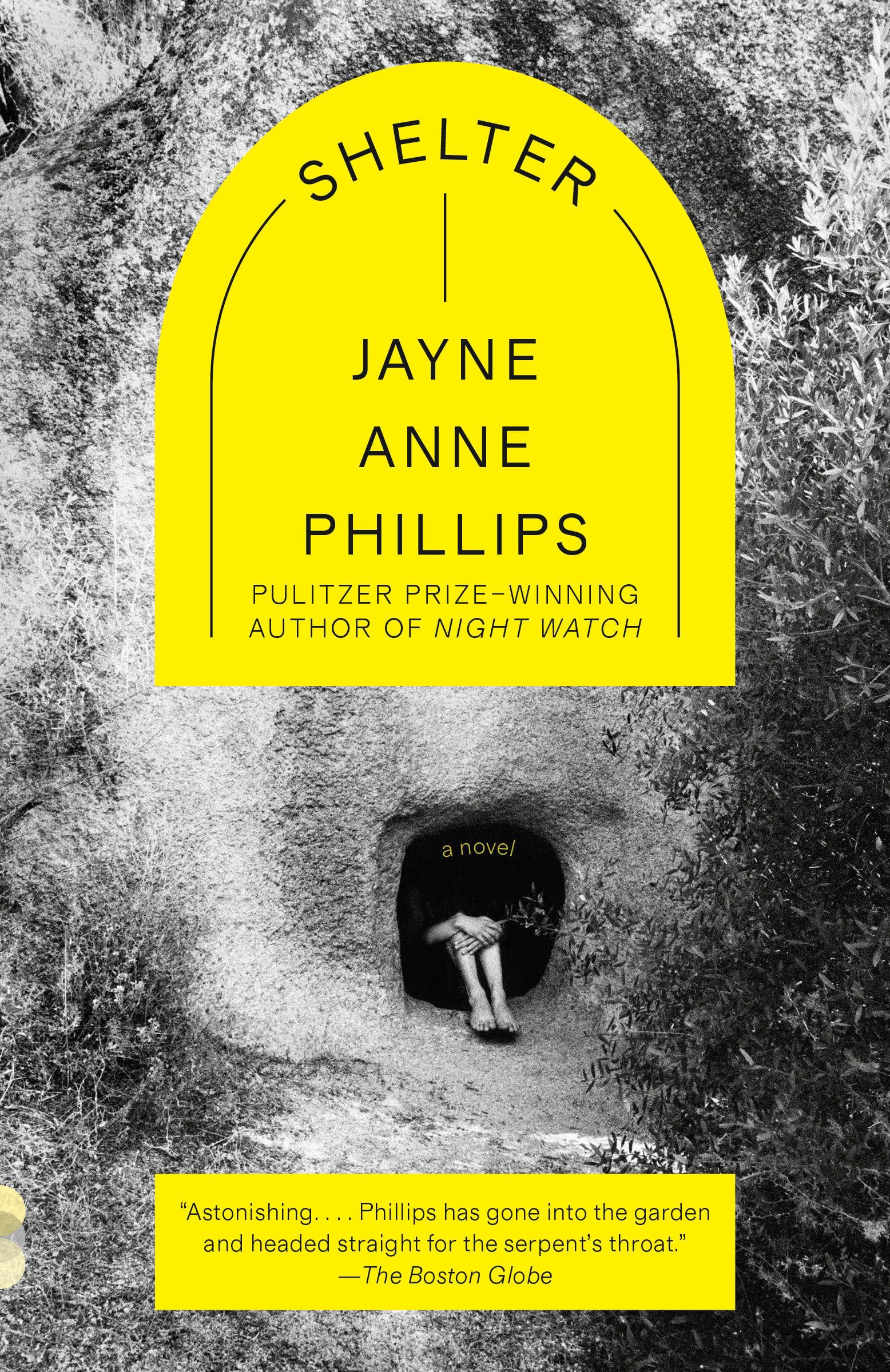



From the Pulitzer Prize-winning author of Night Watch comes a novel set in a West Virginia forest in 1963, where a group of children at summer camp enter a foreboding Eden and experience an unexpected rite of passage. “A rich, vivid novel of moral and psychological complexity destined to stand alongside works by Faulkner and other masters of Southern literature.” —Vanity Fair Shelter is an astonishing portrayal of an American loss of innocence as witnessed by a mysterious drifter named Parson, two young sisters, Lenny and Alma, and a feral boy called Buddy. Together they come to understand bravery and the importance of compassion. Phillips unearths a dangerous beauty in this primeval terrain and in the hearts of her characters. Lies, secrets, erotic initiations, and the bonds of love between friends, families, and generations are transformed in a leafy wilderness undiminished by societal rules and dilemmas. Cast in Phillips’ stunning prose, with an unpredictable cast of characters and a shadowy, suspenseful narrative, Shelter is a an enduring achievement from one of the finest writers of our time. “Astonishing.... Phillips has gone into the garden and headed straight for the serpent’s throat.” — The Boston Globe “Mesmerizing.... The physical world is so thoroughly and beautifully evoked that within pages we’re completely drawn in.” — The Washington Post “Written in prose that is often breathtakingly beautiful, Shelter is a rich, vivid novel of moral and psychological complexity destined to stand alongside works by Faulkner and other masters of Southern literature.” — Vanity Fair “This defiant, frighteningly beautiful novel is as disturbing as its setting. Built to last, Shelter feels like Phillips’ bid for immortality.” — Harper’s Bazaar rginia forest in 1963, a group of children at summer camp enter a foreboding Eden and experience an unexpected rite of passage. Shelter is an astonishing portrayal of an American loss of innocence as witnessed by a mysterious drifter named Parson, two young sisters, Lenny and Alma, and a feral boy called Buddy. Together they come to understand bravery and the importance of compassion. Phillips unearths a dangerous beauty in this primeval terrain and in the hearts of her characters. Lies, secrets, erotic initiations, and the bonds of love between friends, families, and generations are transformed in a leafy wilderness undiminished by societal rules and dilemmas. Cast in Phillips stunning prose, with an unpredictable cast of characters and a shadowy, suspenseful narrative, Shelter is a an enduring achievement from one of the finest writers of our time. In a West Virginia forest in 1963, a group of children at summer camp enter a foreboding Eden and experience an unexpected rite of passage. Shelter" is an astonishing portrayal of an American loss of innocence as witnessed by a mysterious drifter named Parson, two young sisters, Lenny and Alma, and a feral boy called Buddy. Together they come to understand bravery and the importance of compassion. Phillips unearths a dangerous beauty in this primeval terrain and in the hearts of her characters. Lies, secrets, erotic initiations, and the bonds of love between friends, families, and generations are transformed in a leafy wilderness undiminished by societal rules and dilemmas. Cast in Phillips' stunning prose, with an unpredictable cast of characters and a shadowy, suspenseful narrative, "Shelter is a an enduring achievement from one of the finest writers of our time. JAYNE ANNE PHILLIPS is the author of Black Tickets, Machine Dreams, Fast Lanes, Shelter, MotherKind, Lark and Termite, Quiet Dell, and Night Watch . She is the recipient of a Guggenheim Fellowship, a Bunting Fellowship, and two National Endowment for the Arts Fellowships. Winner of an Arts and Letters Award and the Sue Kaufman Prize from the American Academy of Arts and Letters, she was inducted into the Academy in 2018. A National Book Award finalist, and twice a finalist for the National Book Critics Circle Award, she lives in New York and Boston. LENNY: Higher and Highest The sky burned white to blond to powder to an almighty blue; the sun fell unobstructed. The girls wore heavy green shorts that were too long and short-sleeved white blouses embroidered in a clover silhouette above the right breast. The blouses were all too big; only the older girls with larger breasts looked strangely seductive in them. The dark shorts were forest-green gabardine, fluted with fine yellow braid on two deep pockets. In Charleston, the state headquarters of Girl Guides did not concede the heat of the Appalachian summer; they recommended knee socks with garters, neckerchiefs with a gold pin at the throat, wool berets. But Camp Shelter was newly reopened, the cabins were in shored-up disrepair, the cots themselves castoffs from a Boy Scout camp in the Panhandle. The county was low income, the mines, statewide, laid off. Only the shorts and blouses