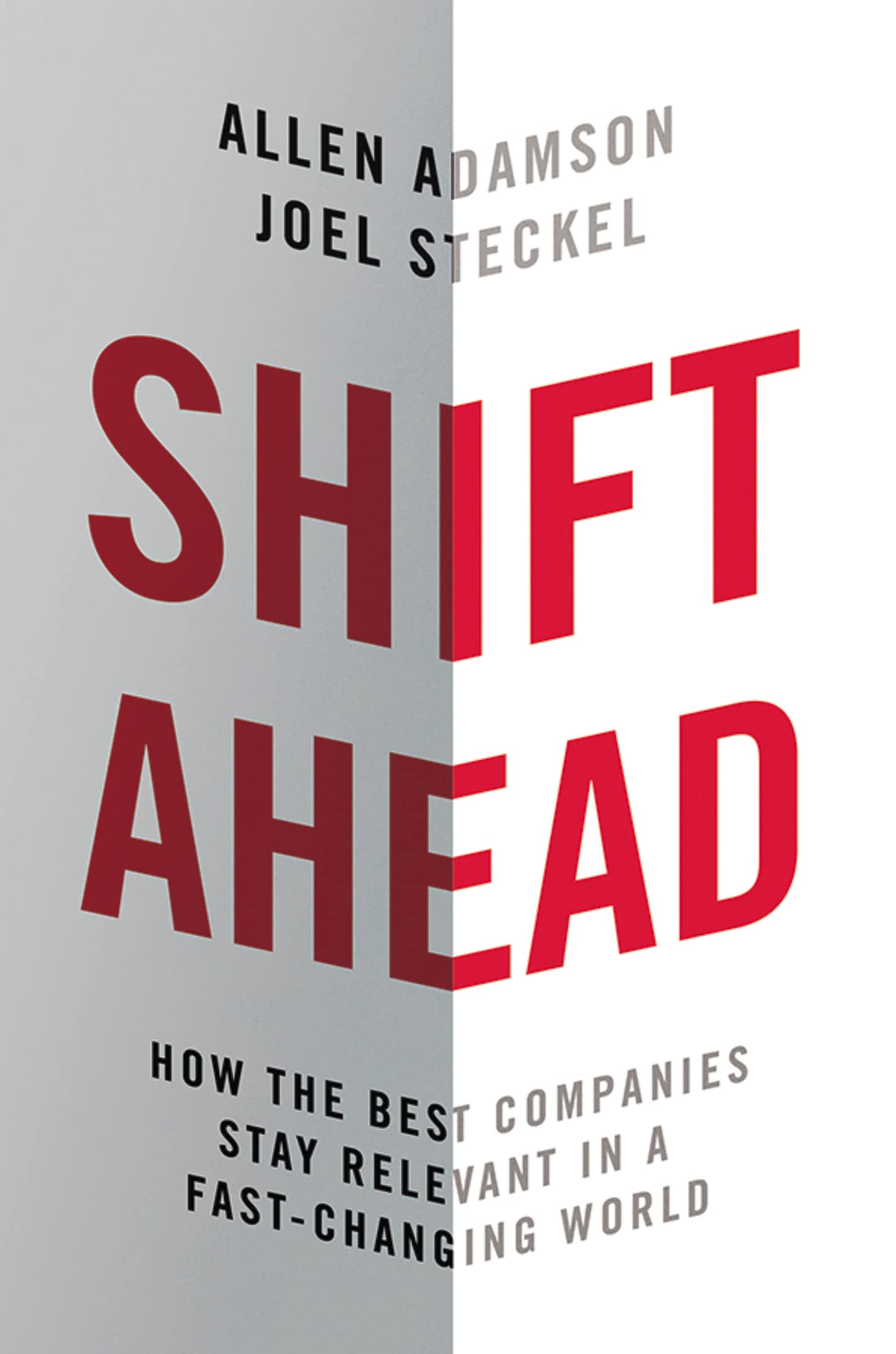
Shift Ahead: How the Best Companies Stay Relevant in a Fast-Changing World
$27.95
by Allen Adamson



This book taps into both success stories and cautionary tales from others to provide you with a smart, calculated approach to knowing both: 1) when to change course and 2) how to pull it off. In a world that's changing faster and more furiously than ever, the ability to shift focus is critical. Why is it that some organizations can continually evolve to meet the times and the marketplace, and others can't? How do some companies always seem to know the perfect season to shift gears, as well as the rights methods to implement when doing so, while others go down sinking when a simple shift would’ve saved everything? Packed with insightful interviews from leaders at HBO, Adobe, BlackBerry, National Geographic, Microsoft, Kodak, and elsewhere, Shift Ahead explains how to: Spot warning signs that it’s time for a reinvention - Overcome obstacles standing in the way of your company’s future goals - Maintain authenticity when shifting gears - Execute changes seamlessly, no matter how bold they are Today more than at any other time before, knowing when to shift, and how to do so successfully, is the key to remaining competitive. With Shift Ahead , this difficult yet imperative maneuver will become the key to your company’s long-term success! Shift Ahead: How the Best Companies Stay Relevant in a Fast-Changing World By Allen Adamson and Joel Steckel AMACOM, $35, 272 pages, ISBN 9780814438336 Adamson and Steckel, academics who specialise in marketing and branding, are interested in how companies form their responses to changing market conditions, and their good reputations in the field meant that they could conduct a wide range of interviews as well as draw on their consulting experience. There is no single answer to ensure relevance but there are recurring themes. Interestingly, there seems to be more to learn from the companies that failed than those that succeeded.Shift Ahead The story of the venerable National Geographic magazine is a case in point. The people running it took the view that the brand formula had always worked, so they did nothing to change it even as sales declined. They, like Blackberry and others discussed here, were blinded by past successes and failed to see how the market was changing. 'Digging in' was akin to digging a grave. The companies that have stayed relevant to their market put concerted effort into it. Hiring people with new ideas is a good start. Some ruthlessness is also required: if an old product line is dragging the brand down, cut it loose. Another lesson is to move fast, even if it means taking a chance. This is interesting stuff, with illustrative case studies. Not revolutionary, but the book does a solid job at explaining the thinking required for surviving and thriving. When National Geographic was slammed with online competition and declining subscriptions, the magazine resisted adapting. In the end, it was taken over by Fox. Forbes Media, in contrast, swiftly reinvented its business model to focus on online platforms and new content creation strategies. As the world began going paperless, Xerox made a last-minute effort to rebrand as a "solutions company." It stumbled and was soon split into two enterprises. IBM, on the other hand, built on its legacy of change to successfully move from computer vendor into enterprise consulting. In example after example, shifting markets, customers, competitors, and technology have left organizations struggling to stay relevant. While some become paralyzed, others make bold steps forward. Some bungle their change efforts, but others emerge stronger. What puts them on such different paths? The authors of Shift Ahead interviewed more than 100 executives and experts who lived through change or analyzed the phenomenon, such as MTV and Nickelodeon creator Bob Pittman, Delta Airlines CEO Ed Bastian, New York Times columnist Thomas Friedman, former Ogilvy & Mather chairman Shelly Lazarus, and Conservation International founder Peter Seligmann. They distill those experiences into a set of lessons applicable to any organization, from small startups to nonprofits to multinational corporations, including how to: - Read the signs that it's time to shift business strategy - Overcome financial, cultural, and psychological barriers to change - Get ready for change by financing the effort, adopting the right attitude, and communicating effectively - Discover what customers really want - Turn threats into new ways to extend a brand's promise - Lead an organization through a period of rapid change - Stay aligned to your "True North" - And more Change is difficult. But when new technology can quickly dismantle traditional operations . . . when competitors can appear out of nowhere . . . when trends and tastes constantly fluctuate, organizations need to continually monitor developments and prepare to act. Packed with fascinating first-person accounts and detailed case studies, Shift Ahead explains how to recognize when it's time to change d