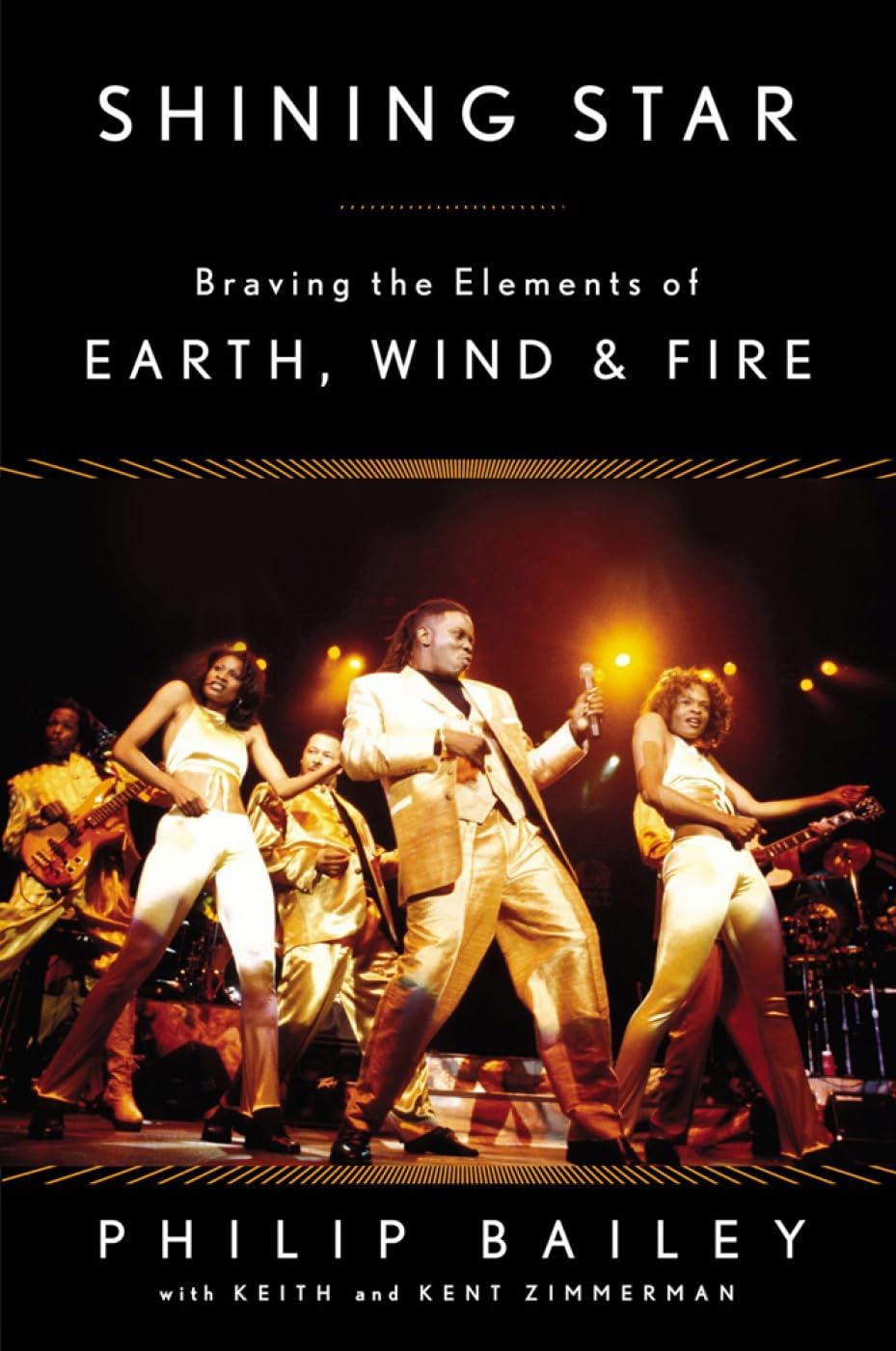



Earth, Wind & Fire has sold some ninety million records and won eight Grammy awards. But while its charismatic founder, Maurice White, and Philip Bailey, one of popular music’s greatest voices, are remarkable musical talents, their relentless work ethic exhausted and emotionally gutted the group. Now, Bailey shares the inside story of his professional and spiritual journey, from his origins to the band’s meteoric rise to stardom, and from its breakup to its triumphant reinvention. Shining Star will mesmerize the supergroup’s millions of fans and anyone who loves an inspiring story about what happens when real life exceeds your dreams. "An energetic memoir about a complex individual and his music." ~Kirkus Reviews "Fans of Bailey’s music will find him a warm and occasionally very funny guide through the elements of this American band that Rolling Stone declared “changed the sound of black pop." ~Publishers Weekly "[ Shining Star ] is a memoir of a man, a band, and a vision.... What may impress the most is Bailey’s honesty in relating conflicts that eventually tore the band apart, as well as his own shortcomings." "If you’ve ever been a fan of Earth, Wind and Fire (and who hasn’t?), buy this book!" ~Ebony "Ninety million records sold. Eight Grammy awards. Lot of platinum and gold records. And lead singer Bailey’s leaping multi-octave range. The numbers speak for themselves, but Bailey has more to say in this memoir, which ranges from Earth, Wind, & Fire’s early years to founder Maurice White’s disbanding the group in 1983 to Bailey’s solo career (which gave us “Easy Lover”) to the group’s reuniting and eventual ascension to the Rock and Roll Hall of Fame." ~ Library Journal A fun read overall, especially for the many EWF fans still out there. ~Booklist — all Philip Bailey lives in southern California. Prelude The Concept Looking back and upon reflection, Earth, Wind & Fire’s premier mission has been to raise people to a higher level of consciousness. Maurice White—our founder, visionary, and mentor—called it “the Concept.” He’d sit me down, and we’d talk about it for hours. He stressed the importance of the Concept. He had drawings, charts, and schematics of the band detailing the Concept. “Always be strong talking about the Concept,” he emphasized. It was 1972 in Los Angeles, the year Motown Records relocated from Detroit to the West Coast. Maurice White’s brainchild musical ensemble had already released two albums on Warner Brothers Records, the self-titled Earth, Wind & Fire and The Need to Love in 1970 and 1971, respectively. They were ambitious, eclectic re- leases that explored the tenets of soul, jazz, blues, and other facets of American music. Yet when disagreements over direction and leadership clouded the picture, in 1971 Maurice promptly dis- solved the Warner lineup. He started over in early 1972, having left Chicago for Southern California. The second time around, he was advised to enlist a group of young, eager players he could guide and who would inject more vitality and energy into the group. That’s how I came to join Earth, Wind & Fire. I was a twenty- one-year-old “country” lad, arriving in Los Angeles from Denver with a pregnant wife and a large duffel bag—big enough to hold my conga drums. Maurice, the tall, slim, and dapper singer, composer, and drummer of EWF, had auditioned and then assembled an ambitious eight-piece group of mostly anxious rookies. I was the third member to join a lineup that included me as a singer-percussionist, Maurice’s lanky brother, Verdine White, on bass, singer Jessica Cleaves from the slick R&B pop group Friends of Distinction, local Los Angeles drummer Ralph Johnson, horn player Ronnie Laws (younger brother of jazz flautist Hubert Laws), guitarist Ro- land Bautista, and keyboardist Lorenzo (Larry) Dunn, who had migrated to LA alongside me from Denver. Spring 1972 had sprung some impressive R&B superstars and megahits: Sly and the Family Stone were at their creative peak with “Family Affair.” The Staple Singers’ “I’ll Take You There” was a sexy across-the-board success, and Al Green tore it up with the silky “Let’s Stay Together.” All three became timeless smash cross- over hits on both the R&B and Top 40 charts. Earth, Wind & Fire had just been signed to Columbia Records. Things were happening pretty fast. We had just wowed the label staff at their national convention and were in the process of recording our Columbia debut album, Last Days and Time. Yet when it came time to hit the road and solidify our skills as a working road band in order to spread our musical gospel, we had a ways to go. Maurice had hit many a brick wall getting his band to the per- forming stage, so to speak. Whenever we had an important gig lined up, particularly on the East Coast, something would go wrong at the last minute, and the tour or the dates would be canceled. There were times when I was on my way to the airport, only to find out at the airline gate