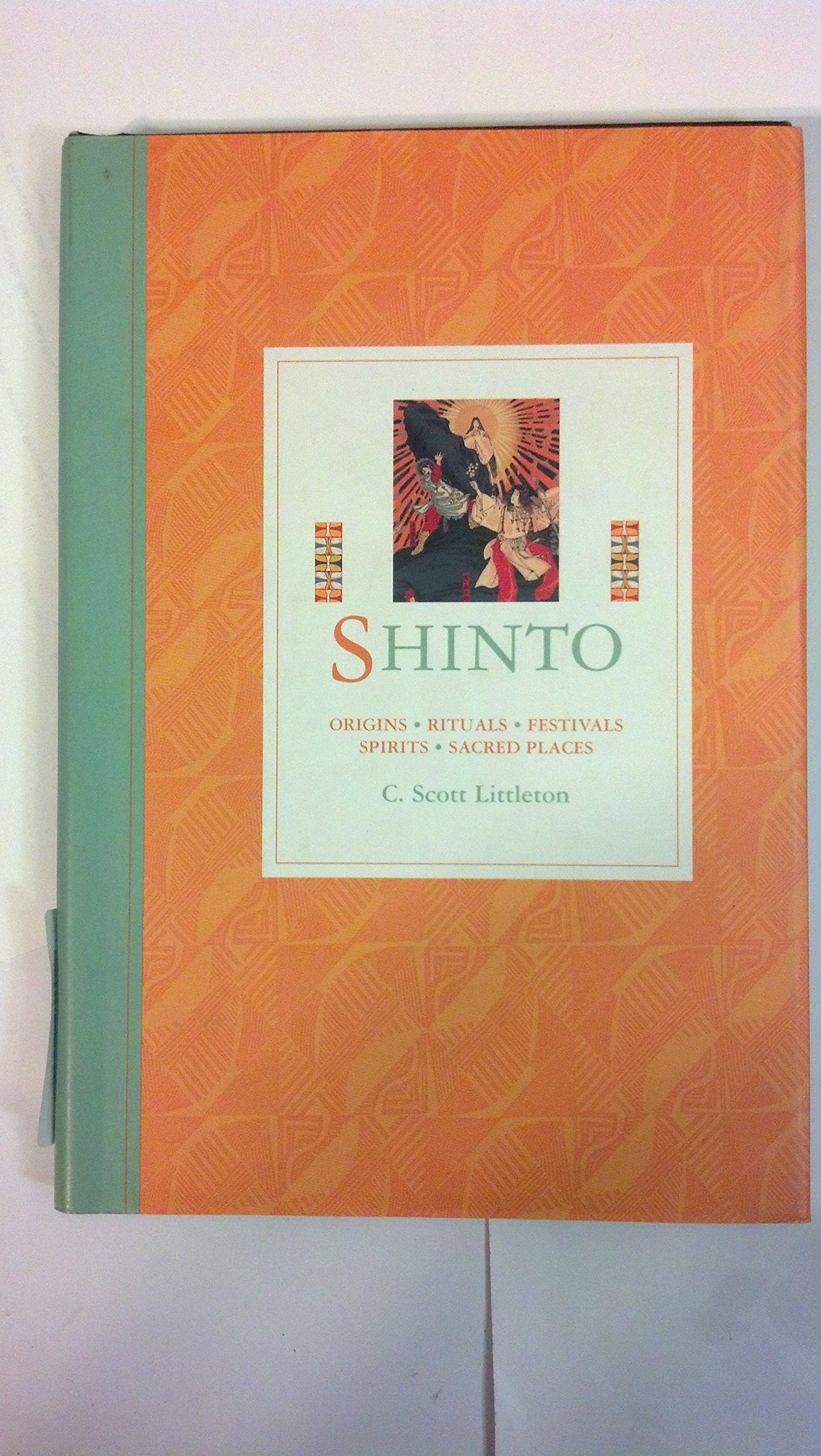



In Japan, two religions predominate--Buddhism and Shintoism--and the Japanese people see no contradiction in practicing both: worshipping Buddha even as they revere the kami , the divine beings that populate the country and define the indigenous faith of Shintoism. In Shintoism and the Religions of Japan , C. Scott Littleton illuminates this unusual spiritual pluralism and shows how it has fertilized a vast and varied religious landscape. Littleton describes the origins and development of Shinto (or Kami no Michi , "Way of the Gods"), the introduction of Buddhism a millennium and a half ago, the rise of various sects of Buddhism (some indigenous to Japan), and the role of the imperial court and the shogunate in the nation's religious life. Here too is a clear and succinct summary of Shintoism's teeming pantheon of spiritual figures, the holy writings of Shintoism, and the islands' landscape of holy sanctuaries. Littleton explains how Buddhism has been reinterpreted in light of Japan's indigenous traditions (some monumental statues of the Buddha are worshipped as manifestations of kami ), and describes the "new religions" that flourished during the Meiji period of the late nineteenth century, after Japan once again opened up to the outside world. Writing with grace and clarity, he captures the essential features of Japanese religious life, including the countless local festivals and rituals, the importance of harmony and enlightenment, and concepts of death and salvation. Lavishly illustrated with some thirty color photographs, sprinkled with boxed features that focus on fascinating issues, this volume offers a marvelous tour of Japan's distinctive spiritual experience. These two introductory texts are similar both in format they are short, visually appealing, and have a small trim size and in arrangement, with chapters including "Origins and Historical Development," "Sacred Persons," "Ethical Principles," "Sacred Time," "Death and After Life," and "Society and Religion." Chapters conclude with a one-page excerpt and commentary from a sacred or historical book. Littleton (Eastern Wisdom) and Gordon (The Breaking of a Thousand Swords) provide clear and informative explanations about Shinto and Islam, respectively, as they develop and balance themes of religion, history, society, and modernity within their discussions. In discussing Shinto, a significant religion in Japan, Littleton focuses on deities and spirits, shrines, and the ways Buddhism and Christianity have influenced Shintoism. He frequently cites Ryusaku Tsunoda's Sources of Japanese Traditions (1958), along with more recent sources. The several themes Gordon develops in his introduction to Islam include Hadith, or stories regarding the life, teachings, and actions of Muhammad; and Sharia, or ways divine will is portrayed in Islamic sacred law, Hadith, and the Quran. Libraries may already be well stocked with introductions to Islam by such authors as Karen Armstrong and John Esposito, but these useful works are unique in providing an introduction to their respective religions without trying to explain too much. These books can either stand alone or supplement a larger collection. Appropriate for academic and public libraries, especially where there is interest and existing religion collections. Naomi Hafter, Baltimore Copyright 2002 Reed Business Information, Inc. Littleton delves into Japanese prehistory, seeking to isolate the roots of Shinto, which has long lived peacefully beside Buddhism in Japan. Buddhism and Shinto share sacred places and sacred persons in Japan, but whereas Buddhism emphasizes the nonworldly, Shinto, as Littleton portrays it, is a religion of the world. Lacking a clear vision of the afterlife, Shinto makes veneration of the innumerable kami , or deities, the center of the faith. Littleton glosses over sacred texts, ethics, festivals, and rituals as well. Although this slim, handsome title is a brief, boilerplate overview, its attractive illustrations and solid introductory information make it worth considering for collections lacking introductions to these subjects. John Green Copyright © American Library Association. All rights reserved "This is an outstanding introduction to the Japanese religion Shinto ('spirit way'), exploring its syncretistic affinities with Buddhim, its modern status at the state religion and its emphasis on harmony with nature. Readers will come away with a deeper appreciation of both Shinto and Japanese culture."-- Publishers Weekly "In this well-rounded and well-organized review of Shinto, Littleton touches upon its history, belief system, and practices.... The many color photographs in this beautifully designed book add luster to our appreciation of this tradition."-- Spirituality & Health A beautifully illustrated introduction to the religions of Japan C. Scott Littleton is Chair of the Department of Anthropology at Occidental College, Los Angeles. His books include The Sacred East