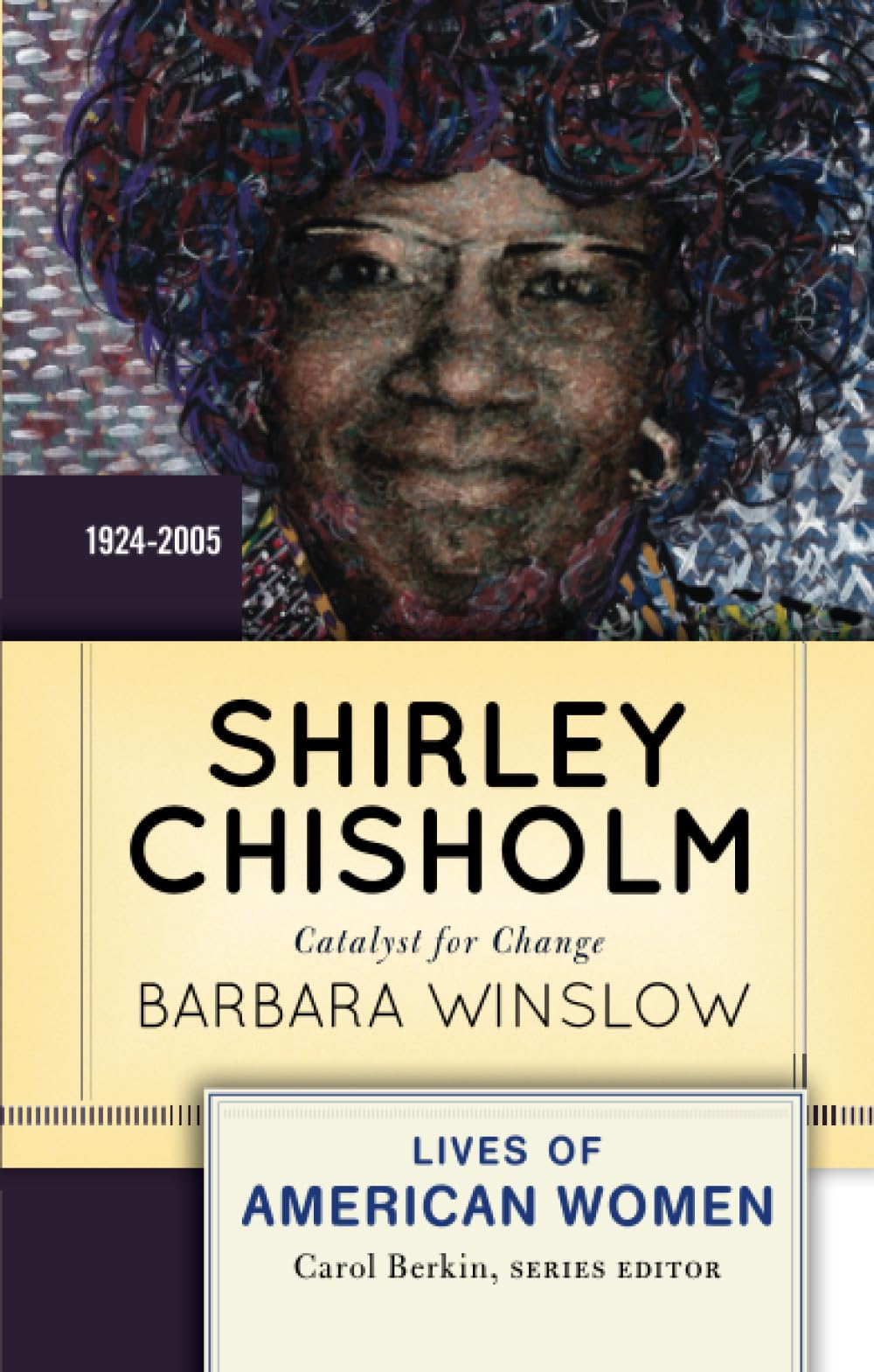



A staunch proponent of breaking down racial and gender barriers, Shirley Chisholm had the esteemed privilege of being a pioneer in many aspects of her life. She was the first African American woman from Brooklyn elected to the New York State legislature and the first African American woman elected to Congress in 1968. She also made a run for the Democratic Party nomination for president in 1972. Focusing on Chisholm's lifelong advocacy for fair treatment, access to education, and equal pay for all American minority groups, this book explores the life of a remarkable woman in the context of twentieth-century urban America and the tremendous social upheaval that occurred after World War II. About the Lives of American Women series: Selected and edited by renowned women's historian Carol Berkin, these brief biographies are designed for use in undergraduate courses. Rather than a comprehensive approach, each biography focuses instead on a particular aspect of a woman's life that is emblematic of her time, or which made her a pivotal figure in the era. The emphasis is on a 'good read', featuring accessible writing and compelling narratives, without sacrificing sound scholarship and academic integrity. Primary sources at the end of each biography reveal the subject's perspective in her own words. Study questions and an annotated bibliography support the student reader. In 1972, when Chisholm was the first African American and first woman to seriously run for U.S. president, it was the ultimate in a series of firsts for her, including first black woman from Brooklyn to be elected to the state legislature and first black woman elected to the U.S. Congress. Having grown up in Barbados and Brooklyn, Chisholm retained an immigrant perspective on the U.S., especially the need to work hard to advance. While still enrolled in Brooklyn College, she started working in local politics, developing a strong power base among women’s clubs and community organizations that later helped her win elections. Her personal slogan was “unbought and unbossed,” and her political pragmatism and outspokenness often put her at odds with mainstream Democrats, black nationalists, and feminists. She fought for unemployment insurance and minimum wages for domestic workers, encouraged women to enter politics, staffed her office mostly with women, and helped to organize the Congressional Black Caucus. Winslow offers a valuable perspective on a woman who faced challenges of race and sex as she pushed the agenda for social justice in her long political career. --Vanessa Bush "Just what any professor wants: books that will intrigue, inform, and fascinate students! These short, readable biographies of American women—specifically designed for classroom use—give instructors an appealing new option to assign to their history students." — Mary Beth Norton, Mary Donlon Alger Professor of American History, Cornell University "For educators keen to include women in the American story, but hampered by the lack of thoughtful, concise scholarship, here comes Lives of American Women,' embracing Abigail Adams's counsel to John—remember the ladies.' And high time, too!" — Lesley S. Herrmann, Executive Director, The Gilder Lehrman Institute of American History "These books are, above all, fascinating stories that will engage and inspire readers. They offer a glimpse into the lives of key women in history who either defied tradition or who successfully maneuvered in a man's world to make an impact. The stories of these vital contributors to American history deliver just the right formula for instructors looking to provide a more complicated and nuanced view of history." — Rosanne Lichatin, 2005 Gilder Lehrman Preserve America History Teacher of the Year "When my daughter announced to her 4th grade teachers that she wanted to study Shirley Chisholm for her Women's History Month project, they responded by saying, 'who?' Their response is indicative of the nearly complete erasure of this extraordinary woman from our shared political cannon. This text rushes in to fill the unconscionable void where knowledge of Shirley Chisholm should reside. Resisting the seduction of rendering Chisholm as an exclusively heroic figure, Barbara Winslow insists on delving into the complex, multi-layered, and deeply human reality of Shirley Chisholm. Winslow then tells a story we must know if we are to understand our own political moment. One in which a reelected black president governs alongside a Democratic Congressional delegation composed of a majority of women and racial minorities who were voted into office by an interracial coalition of voters led by women of color. This reality is quite literally unimaginable in the absence of Chisholm's trailblazing political career. This is a book that should have been written three decades ago, but now that it is here, it is required reading for all who claim to know American political history." — Melissa Harris-Perry, Director, Anna