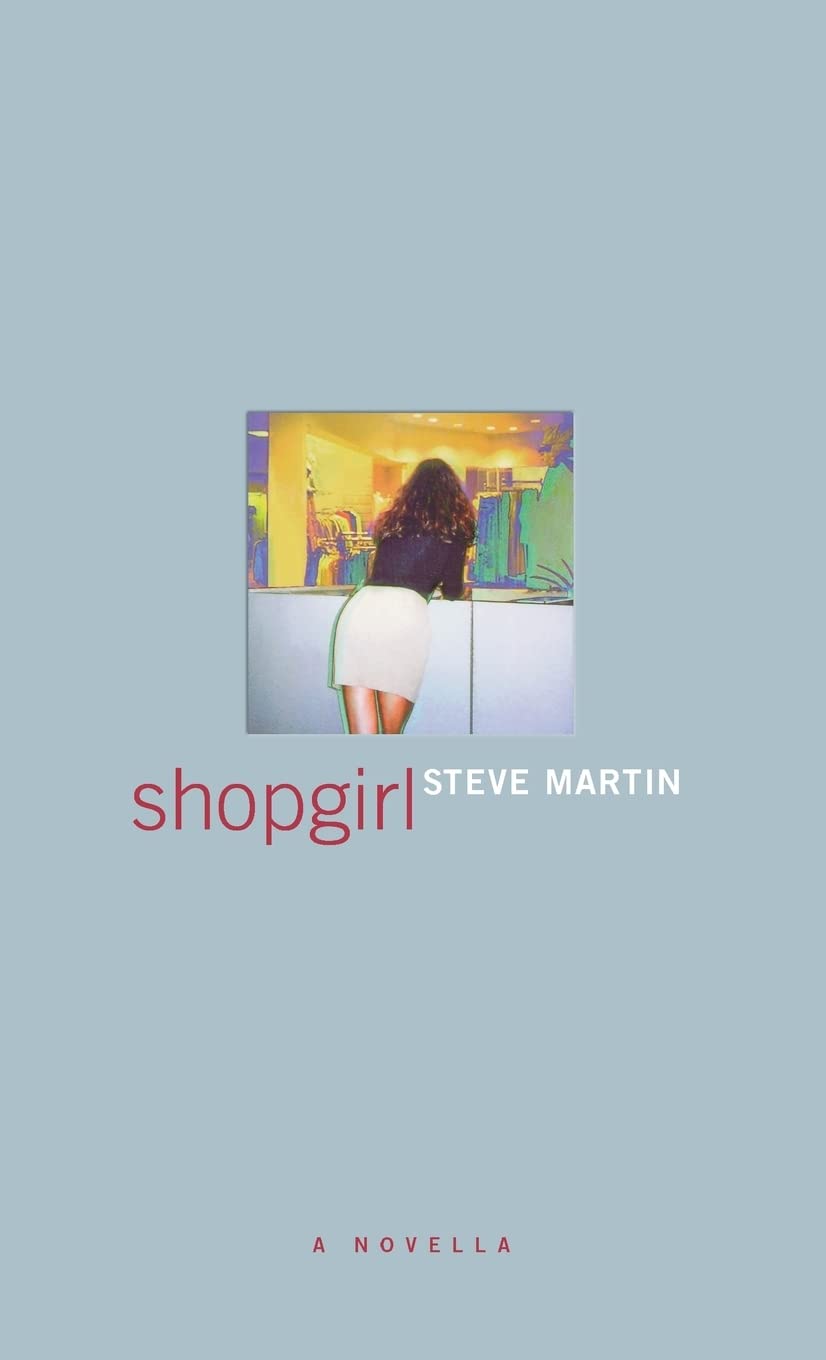



One of the most acclaimed and beloved entertainers, Steve Martin is quickly becoming recognized as a gorgeous writer capable of being at once melancholy and tart, achingly innocent and astonishingly ironic ( Elle ). A frequent contributor to both The New Yorker and the New York Times as well as the author of the New York Times bestseller Pure Drivel , Martin is once again poised to capture the attention of readers with his debut novella, a delightful depiction of life and love. The shopgirl is Mirabelle, a beautiful aspiring artist who pays the rent by selling gloves at the Beverly Hills Neiman Marcus. She captures the attention of Ray Porter, a wealthy, lonely businessman. As Ray and Mirabelle tentatively embark on a relationship, they both struggle to decipher the language of love--with consequences that are both comic and heartbreaking. Filled with the kind of witty, discerning observations that have brought Steve Martin incredible critical success, Shopgirl is a work of disarming tenderness. Steve Martin's first foray into fiction is as assured as it is surprising. Set in Los Angeles, its fascination with the surreal body fascism of the upper classes feels like the comedian's familiar territory, but the shopgirl of the book's title may surprise his fans. Mirabelle works in the glove department of Neiman's, "selling things that nobody buys any more." Spending her days waiting for customers to appear, Mirabelle "looks like a puppy standing on its hind legs, and the two brown dots of her eyes, set in the china plate of her face, make her seem very cute and noticeable." Lonely and vulnerable, she passes her evenings taking prescription drugs and drawing "dead things," while pursuing an on-off relationship with the hopeless Jeremy, who possesses "a slouch so extreme that he appears to have left his skeleton at home." Then Mr. Ray Porter steps into Mirabelle's life. He is much older, rich, successful, divorced, and selfish, desiring her "without obligation." Complicating the picture is Mirabelle's voracious rival, her fellow Neiman's employee Lisa, who uses sex "for attracting and discarding men." The mutual incomprehension, psychological damage, and sheer vacuity practiced by all four of Martin's characters sees Shopgirl veer rather uncomfortably between a comedy of manners and a much darker work. There are some startling passages of description and interior monologue, but the characters are often rather hazy types. Martin tries too hard in his attempt to write a psychologically intense novel about West Coast anomie, but Shopgirl is still an enjoyable, if rather light, read. --Jerry Brotton Mirabelle, the image of fragile, feminine loveliness, is the shopgirl. She works in the glove department at Neiman's in L.A., where she's come to escape the provincialism of her Vermont hometown. And though she may remind people of Olive Oyl, once the resemblance is noted, many readers also will find a likeness to Chaplin's little tramp, the poor, lonely soul with a heart of gold. But Mirabelle is not just a shopgirl; she spends her nights toiling as an artist. Her specialty is creating a striking image surrounded by a black background. Mirabelle lives with two cats; one is always hiding. She has a few friends, who invariably forget to include her in their social activities, and she can barely claim the interest of Jeremy, an awkward, inexperienced young man without means, whom she met in a laundromat. Then, abruptly and mysteriously, Mr. Ray Porter, a millionaire, comes into her life. They becomes lovers, and that initiates the ire of Mirabelle's antagonist, Lisa Cramer. Cramer's aim in life is to be flawlessly pleasing to men, to which end she has viewed a few "`educational' porno tapes," discussed techniques extensively with other women, and "once attended a class given by Crystal Headly, a down and going sex-film actress." The action moves quickly, yet the narrative takes its time to develop, which is a very skillful bit of writing business. Martin's literary fable of a novella is disarming, particularly for those who come to it expecting the biting, zany humor of Pure Drivel (1998), but it may mark a new direction in a noteworthy writer's career. Bonnie Smothers Copyright © American Library Association. All rights reserved "...Martin's shift from public follies to private frailties registers as courageous and convincing." -- Entertainment Weekly, September 29, 2000 "...a hilarious but intense first novella...One of the nicest things about this novel is the way it effortlessly bridges generations." -- Vogue, October, 2000 "His writing has sometimes been sweet, sometimes biting, occasionally intellectually boastful- but it has always been funny." -- Wall Street Journal, October 6, 2000 The new book is not what you would expect... with the arch skew of an observer of manners. -- New York Times, October 17,2000 Steve Martin is a celebrated writer, actor, and performer. His film credits i