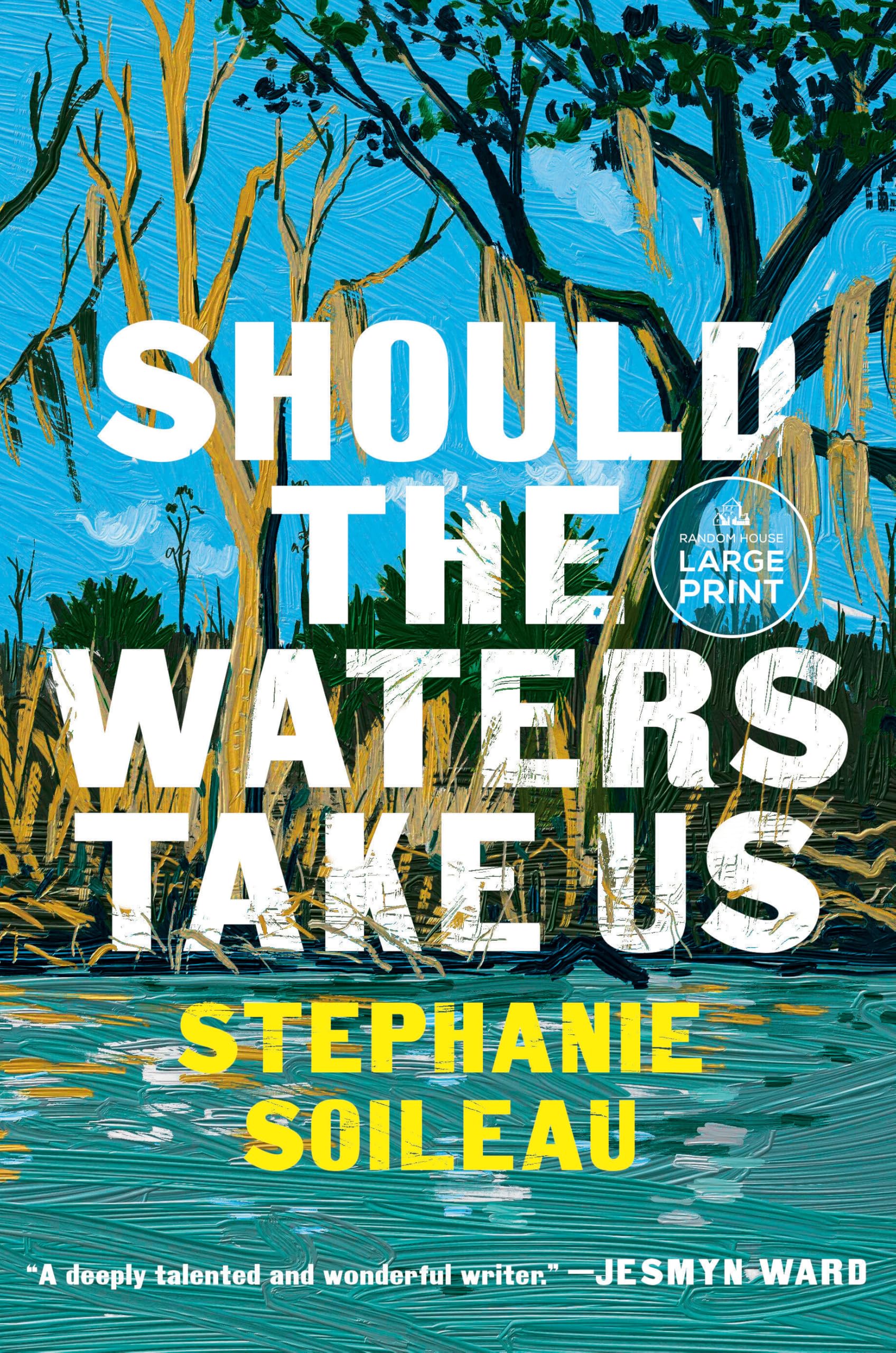



An epic literary debut that follows one family across four centuries from France, to Acadia, to the bayous of Southern Louisiana—a poignant examination of belonging, place, and how individual, self-interested acts of moral compromise contribute to cycles of injustice and destruction. In the shifting bayous of coastal Louisiana, on a rapidly disappearing spit of land, generations of Acadians have kept their heads above water. When an offshore rig explodes and unleashes a catastrophic spill, the people of Pelerin Parish face a reckoning that tests the bonds of family and the survival of their way of life. As the toxic plume of oil advances across the Gulf, Boy Broussard, already living hand-to-mouth off land that isn’t his, finds himself raising a daughter he barely knows. His dying aunt, Rosa Terrebonne, tries to right the misdeeds of the past, yet finds herself thwarted by her husband Jacot, a retired landman for big oil, who refuses to give up his claim to the land where Boy makes his living. Meanwhile the parish priest Father Fabian, far from his home in the Niger Delta, lends his assistance to Boy’s all-but-motherless daughter, only to be met with suspicion and hostility from the insular community. When a powerful hurricane threatens to turn an already dire situation into a total cataclysm, this sharp-edged cast of characters collides in a thunderclap of resentment and violence. Throughout all of this, Soileau unfolds a sweeping tapestry of loss, resilience, and the fragile miracle of hope. Should the Waters Take Us reaches across four hundred years of history to illuminate the many epochs and peoples of this storied place. Soileau has crafted an emotionally explosive family saga, as well as a masterful literary crie de coeur about the ways in which moral compromise can eat away at the very fabric of the places we call home. “As the best fiction does, Stephanie’s work makes us empathize . . . makes us bear more than we thought we could, makes us understand more deeply than we thought we were capable of. A deeply talented and wonderful writer.” —Jesmyn Ward, National Book Award-winning author of Salvage the Bones and Let Us Descend “ Should the Waters Take Us is filled with unforgettable characters, breathtaking scenes, fascinating time jumps, and a setting so precisely rendered that it’s palpable, but what I admire most is the intimate and shape-shifting narrative voice that delivers it all. Stephanie Soileau’s debut novel is a stunning achievement.” —Patrick Ryan, author of Buckeye “Should the Waters Take Us is an extraordinary book—one of the most accomplished debut novels I’ve ever read. Stephanie Soileau is wise, fierce, and brilliant, a writer of unflinching moral authority and uncommon wisdom who asks us to mourn those lonesome and beautiful places that have already been lost and to act now to save what remains.” —Elizabeth Wetmore, author of Valentine STEPHANIE SOILEAU is the author of the critically acclaimed story collection Last One Out Shut Off the Lights . Her work has been supported by fellowships from the Wallace Stegner Fellowship Program at Stanford University and the National Endowment for the Arts. Originally from Lake Charles, Louisiana, Soileau now lives in Chicago with her family and teaches in the Creative Writing Program at the University of Chicago. PELERIN PARISH, LOUISIANA 2010 WILFORD “BOY” BROUSSARD If it’s good to eat, he’ll shoot it, never mind what the law says. That’s just his right, as he sees it. Gros becs, bec croches, hérons bleus. Wood ducks too, but there haven’t been many of those the last few years. He don’t pay no mind to all them rules that say kill three of this and none of that, a female this, a male that, and only during these particular months. He don’t waste his money on no lease nor license. Boy Broussard shoots or fishes for what he wants, wherever he wants, as long as he can eat it or sell it. He doesn’t brag, never mentions the salt-cured alligator hides rolled up behind a false wall at the old camp, or the sack of doves out of season, or the three dozen squirrels in the freezer. The bobcat pelts and coon tails. The owl skull on top of the TV. And anyhow, he doesn’t do it to brag. He does it to get by. He ought to have inherited the piece of marshland that had belonged to his forefathers, granted to his long-ago Acadian ancestor on his mama’s side, Louisana’s ur-Guidry, by the Spanish colonial government and handed down for almost two hundred years, even up to his parents’ generation. Boy’s mama would spend every winter out there with her sister and parents, piled up in a houseboat, trapping muskrats. If some part of that land had come to him as it should have, he would now be making bank on the extraction of oil. He might have become a hunter, trapper, fisherman, and pursuer of traditional arts for the pure shits and giggles of it instead of by necessity. Local color by choice. Meanwhile, the royalties would roll in. He