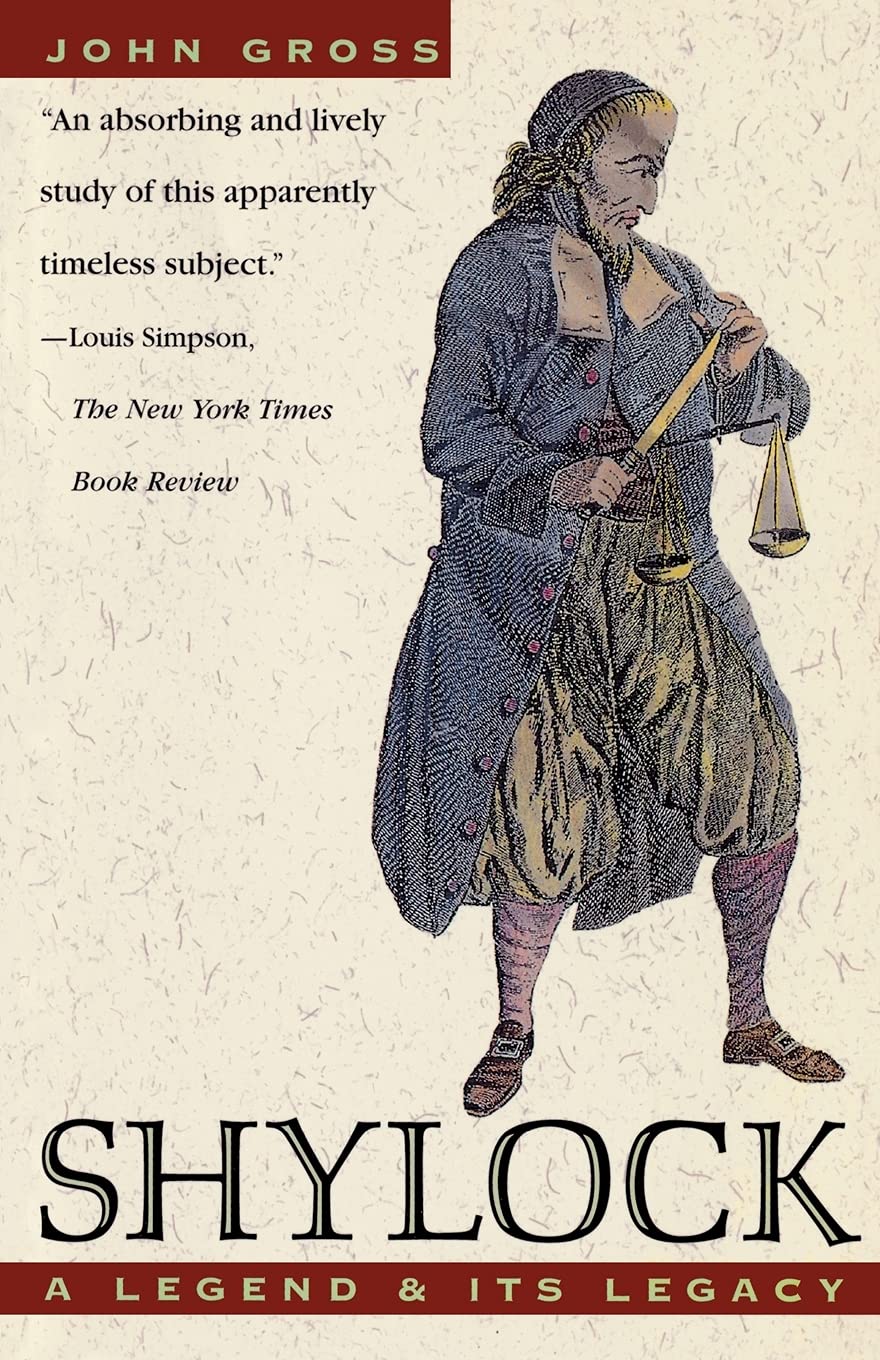



With brilliant historical perspective and insight, theater critic John Gross explores the complex and influential history that has given Shylock a life beyond the play and established him as a figure of world mythology. Illuminating Shylock's evolution on the stage, his importance to writers and psychologists, and his enduring influence on society and culture, John Gross sheds as much light on our own shifting attitudes and beliefs as on the rich and disquieting figure Shakespeare created. “An absorbing and lively study of this apparently timeless subject” – New York Times “I read John Gross’s fascinating Shylock straight through twice and enjoyed it more than I can say” – Leading British actor, Sir John Gielgud, The Guardian “Gross’s urbane, endlessly engaging study of Shylock and his legacy” – Washington Post “Lucid, urbane and illuminating, Gross’s investigation makes the best book on Shakespeare I have read for a long time” – John Bailey, Sunday Telegraph “Impressively learned, thoughtful and subtle” – distinguished British historian Lord Hugh Trevor Roper, Daily Telegraph “Gross makes a good case for considering Shylock as a key figure in the history of Western culture as a whole” – Robert Nye, The Scotsman “Absorbing… The joy of this Shylock is that it is several books in one: despite its relative brevity, it covers the ground of several types of study… lucid, elegant, witty, judicious, and informative” – John Simon, The Atlantic “A civilized book, such as used to be an ideal and is now, unfortunately, a rarity. One puts it down with a profound sense of gratitude” – Robert M. Adams, The American Scholar “The best book I read was Shylock by John Gross – a magisterial exercise in deep learning lightly worn” – Godfrey Smith, Sunday Times Book of the Year Never has one character of the stage provoked such controversy or achieved such infamy as Shakespeare's enigmatic Shylock. For four centuries the money lender of "The Merchant of Venice" has been reinvented as both villain and victim, as an object of tragedy and comedy, and has been used as an economic symbol and often as a lightning rod for anti-Semitism. But what was Shakespeare's attitude toward the character described on the play's title page in 1600 as "a man of extreme crueltie", and what should be our own? With brilliant historical perspective and insight, theater critic John Gross explores the complex and influential history that has given Shylock a life beyond the play and established him as a figure of world mythology. Illuminating Shylock's evolution on the stage, his importance to writers and psychologists, and his enduring influence on society and culture, John Gross sheds as much light on our own shifting attitudes and beliefs as on the rich and disquieting figure Shakespeare created. John Gross FRSL was an eminent English man of letters. A leading intellectual, writer, anthologist, and critic, The Guardian and The Spectator were among several publications to describe Gross as "the best-read man in Britain"