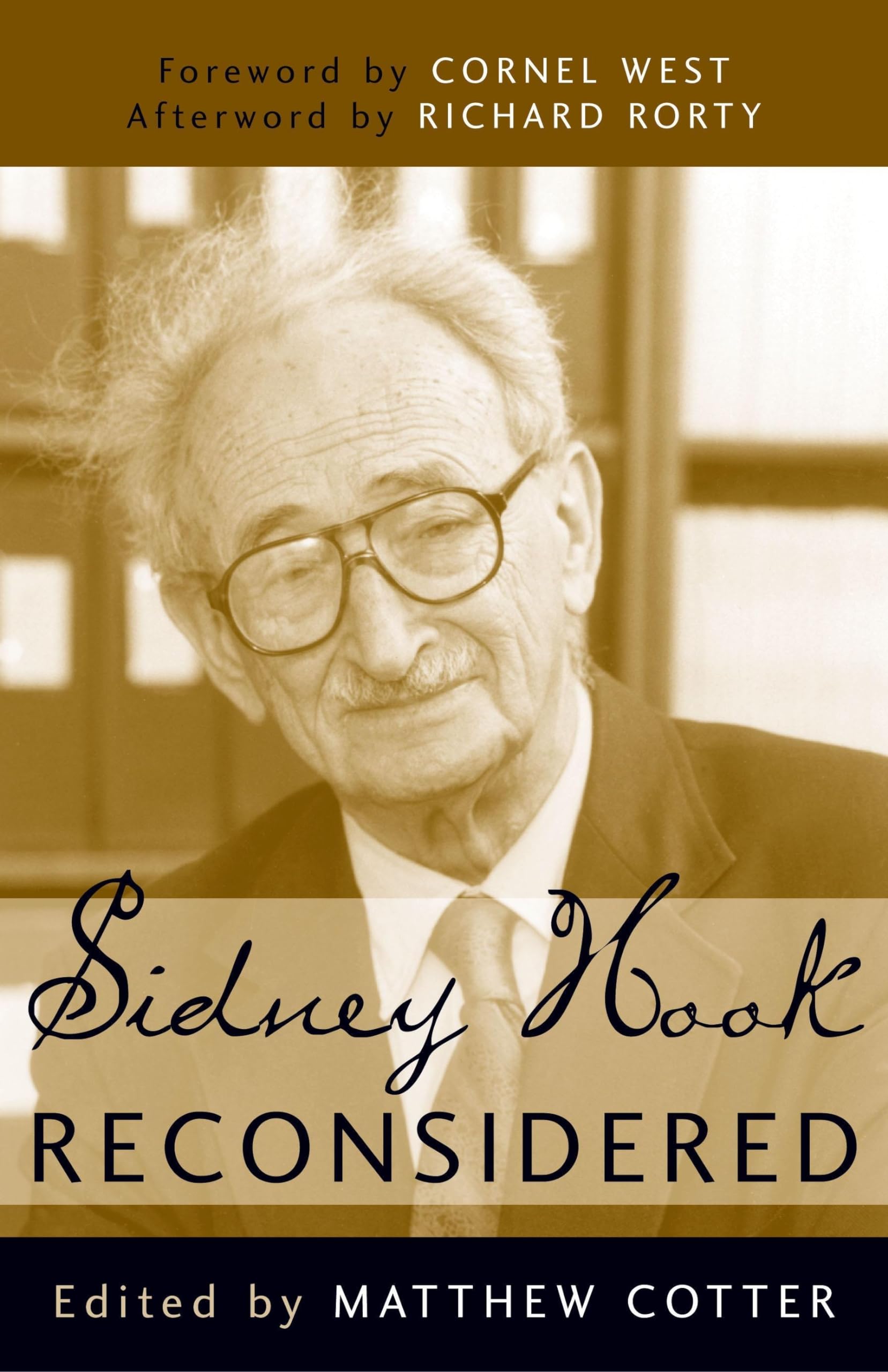



The essays in this volume are the outcome of a centennial celebration honoring the life and career of Sidney Hook. In addition to some of his former students, colleagues, allies, and adversaries, this volume contains several essays by relatively unknown scholars. The value of their contributions is measured by fresh insights into Hook’s philosophical significance, as well as the underlying argument that adequate distance is needed to evaluate his historical relevance. Despite the contentious nature of these two approaches, ultimately these essays represent the comprehensive attempt to both reexamine Hook’s legacy and celebrate his life. The contributors include Jo-Ann Boydston, Gary Bullert, Steven Cahn, Matthew Cotter, Michael Eldridge, Barbara Forrest, Nathan Glazer, Neil Jumonville, Marvin Kohl, Paul Kurtz, Tibor Machan, Christopher Phelps, Kathleen Poulos, Edward Shapiro, David Sidorsky, Robert Talisse, and Bruce Wilshire. With a completely revised and updated bibliography of Hook’s works, plus an afterword by Richard Rorty, this outstanding collection of essays examining the rich and varied experience of one of America’s most misunderstood intellectuals will be of great interest to students and scholars of American intellectual history and philosophy. The current intensification of scholarly interest in the response of US intellectuals to the rise and fall of American and Soviet Communism, the cold war, the radical student movements on campuses throughout the country, and neoconservatism has brought the controversial and fascinating views of Sidney Hook (1902-1989) once again to the attention of scholars of US thought and culture. Beginning his career as the first US scholar of Marxism, a leading disciple of John Dewey's naturalism and critical inquiry, and an early supporter of Marxist ideals, Hook eventually came to be well known as one of the most vigorous opponents of Stalinism. Throughout his long an unquiet life, Hook was revered as the heir to Dewey's legacy of critical intelligence and democracy and was renowned as a brilliant polemicist. Yet he was an independent thinker, unconstrained by conventional (and increasingly polarized) American political thought-often eliciting criticism from all points of the political spectrum. In SIDNEY HOOK RECONSIDERED, Matthew J. Cotter edits a collection of essays originally presented at a centennial celebration honoring Hook's life and career. Articles by both former students, colleagues, allies, and adversaries, as well as younger scholars, who offer fresh insights into Hook's philosophical significance, are included. David Sidorsky contributes a detailed introduction to the development of Hook's work and thought; the remaining essays are divided into three parts. The first deals with Hook's role in the American philosophical tradition, with essays by Barbara Forrest, Robert B. Talisse, Michael Eldridge, Paul Kurtz, and Marvin Kohl. topics discussed include Hook's thoughts on philosophical pragmatism, secularism, the use of violence, and dogmatic politics versus public inquiry. The second part addresses Hook's place in the intellectual tradition of the United States, with essays by Steven M. Cahn, Christopher Phelps, Edward Shapiro, Gary Bullert, and Neil Jumonville. Hook's early affiliation with Marxism; his connection to his mentor, John Dewey; and his thoughts on education and open discussion are among the issues presented. The final part consists of reminiscences by three men who knew Hook personally: Nathan Glazer, Tibor R. Machan, and Bruce Wilshire. With a full bibliography of Hook's works and reviews of them, plus an afterword by Richard Rorty, this outstanding collection of essays presents an excellent reassessment of one of the United States' most misunderstood public philosophers and will make provocative reading for anyone interested in the intellectual history of the cold war and the complex sociopolitics of the twentieth century. Matthew J. Cotter (Brooklyn, NY) has been a lecturer at William Paterson University, Baruch College and Hunter College at the City University of New York (CUNY). He is currently pursuing a Ph.D. in American history at the City University of New York's Graduate Center. Used Book in Good Condition