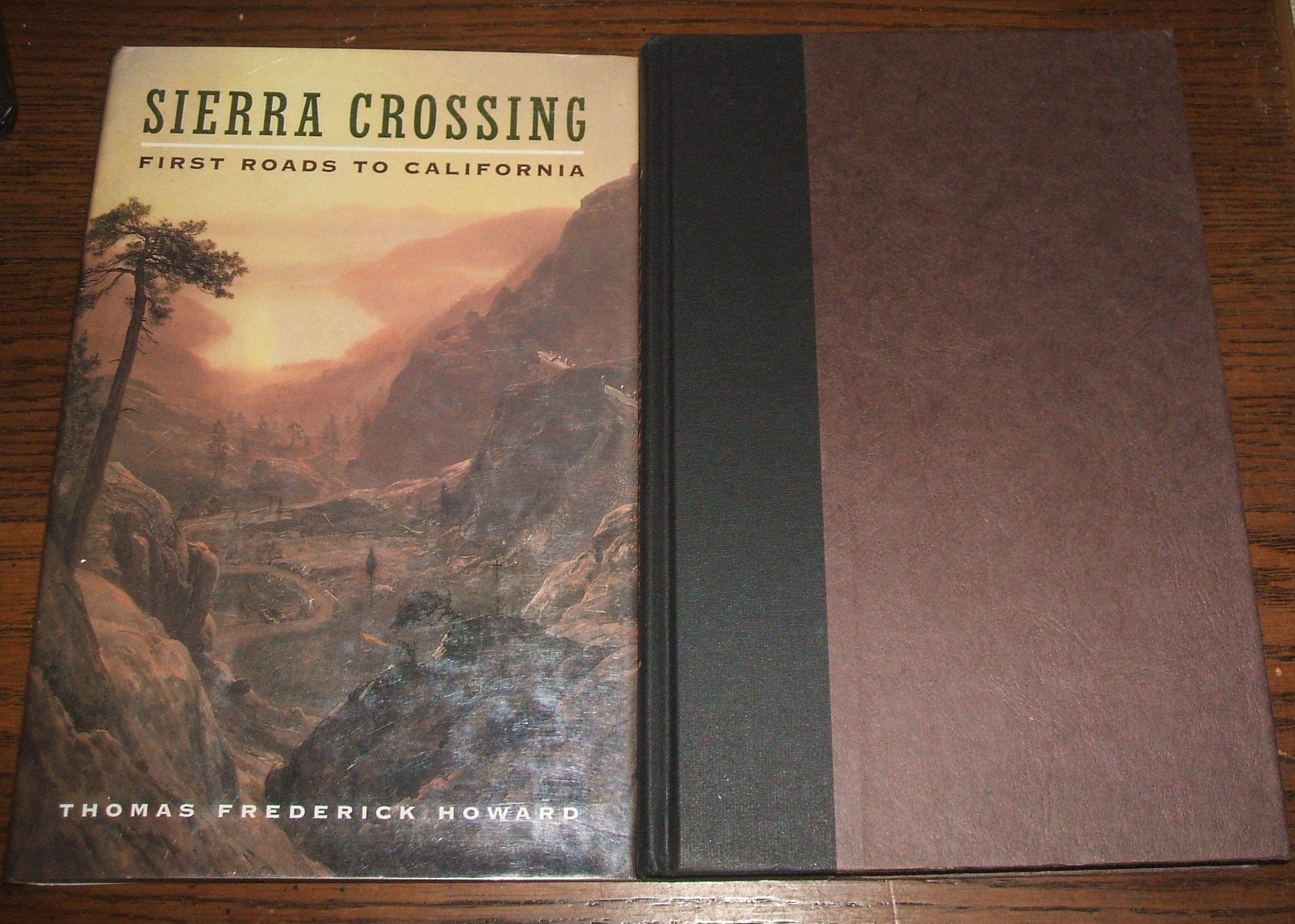



A critical era in California's history and development―the building of the first roads over the Sierra Nevada―is thoroughly and colorfully documented in Thomas Howard's fascinating book. During California's first two decades of statehood (1850-1870), the state was separated from the east coast by a sea journey of at least six weeks. Although Californians expected to be connected with the other states by railroad soon after the 1849 Gold Rush, almost twenty years elapsed before this occurred. Meanwhile, various overland road ventures were launched by "emigrants," former gold miners, state government officials, the War Department, the Interior Department, local politicians, town businessmen, stagecoach operators, and other entrepreneurs whose alliances with one another were constantly shifting. The broad landscape of international affairs is also a part of Howard's story. Constructing roads and accumulating geographic information in the Sierra Nevada reflected Washington's interest in securing the vast western territories formerly held by others. In a remarkably short time the Sierra was transformed by vigorous exploration, road-promotion, and road-building. Ox-drawn wagons gave way to stagecoaches able to provide service as fine as any in the country. Howard effectively uses diaries, letters, newspaper stories, and official reports to recreate the human struggle and excitement involved in building the first trans-Sierra roads. Some of those roads have become modern highways used by thousands every day, while others are now only dim traces in the lonely backcountry. Howard (geography, Armstrong Atlantic State Univ., Georgia) offers a history of overland roads to California. Fur trappers and mountain men were the first European Americans to traverse the mountains, deserts, and passes. Their routes laid the foundation for wagon trains, overland stages, freight wagons, and, finally, the railroads. The elevation and snow of the Sierra Nevadas created great challenges for road builders, as did politics?both local and national. California cities vied to become terminuses, and sectional difficulties at the federal level postponed the building of a transcontinental railroad until the 1860s. With the completion of the Union Pacific in 1869, the nation was physically joined, the Western territories were secured, and the mineral wealth, agricultural lands, and seaports of California were now a part of the national system. Howard has used diaries, letters, newspapers, and official reports while also describing present conditions of many of California's first roads to produce an entertaining piece of scholarship. Recommended for all public libraries.?Patricia Ann Owens, Wabash Valley Coll., Mt. Carmel, IL Copyright 1998 Reed Business Information, Inc. An academic study of the quest by explorers and later entrepreneurs to find a way over Californias mountain wall. Geographer Howard discusses a critical development in the history of California, the building of the first roads across the Sierra Nevada, tall and snow-blocked mountains that, even at their easier passes, still required days and even weeks to traverse. (The Truckee Pass, where the Donner party met its doom and where Interstate 80 now cuts through the Sierra, was especially difficult, and as Howard notes, the paralyzing effect of heavy snowfall remains a threat to trans-Sierra transportation even today.) After surveying the geography of montane California, Howard looks into the careers of the 19th-century explorers who first established various routes over the Sierra, notably Jedediah Smith, Joseph Walker, and John Charles Frmont, and at the rush to build true roads after the US government opened competitive bidding for mail delivery (Wells Fargo eventually won) and Congress passed the Wagon Road Act of 1857, a precursor of the modern federal highway system. Howard offers many interesting asides, some of them buried in endnotes, about the intense rivalries between Golden State cities and individuals to profit from the road-building enterprise. He also notes that with the advent of transcontinental railroads many of the earliest road builders efforts were undone, largely because the railroads had the resources to blast and tunnel their way over mountain grades that would have been impassible for horse-drawn wagons. Though well written, this book, born of the authors doctoral dissertation, will appeal only to a specialized audience. Even so, it is a solid if modest contribution to 19th-century Western history. (22 b&w photos, 3 maps, not seen) -- Copyright ©1998, Kirkus Associates, LP. All rights reserved. "As Thomas Howard proves in this engaging study of early efforts to breach the Sierra Nevada, contemporary pathways represent an intriguing interaction of geography, human intention--and will. Having read this book, one will never again think simply about roadways. From Native American trails to overland stage routes, and the railways and freeways that were to