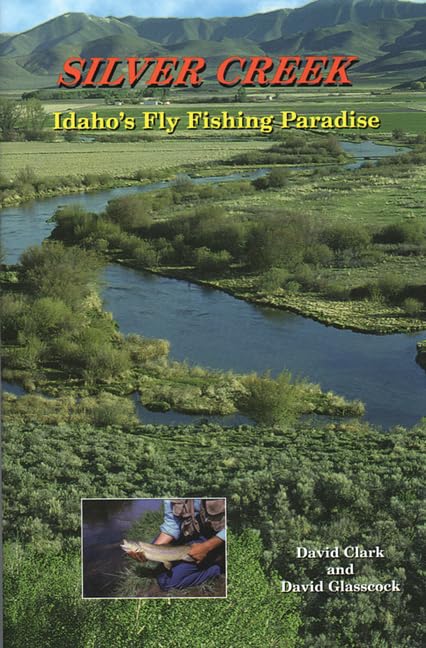



This is the story of one of the most revered trout fisheries in the world. The book includes color photographs, detailed Silver Creek area map, Nature Conservancy map, s-curves map, Silver Creek hatch chart, fly chart, and tips on equipment, flies, and techniques. David Clark and David Glasscock are avid outdoorsmen and fishing guides in the Silver Creek/ Big Wood River area of Idaho. Chapter One The Heart of Idaho At one time, I fished Silver Creek with a near obsession. I can remember fishing the stream seven days a week. I can recall standing in the same spot for five hours, both feet tingling from a lack of blood flow, casting to one rising fish after another. And, I think it was me, who one July day, began by imitating Tricos at 6 a.m. and successively fished imitations of blue-winged-olives, Callibaetis, pale morning duns, damsels, hoppers, small, brown caddis and, after dark, leeches. On that day I fished Silver Creek for nearly 18 straight hours - leaving only when I zinged a fly into the back of my hand and couldn't see well enough to remove it. Today, many years later, my obsession is different. I still fish, but now I occasionally spend my time sitting on the stream bank watching birds appropriately called flycatchers snatching caddisflies bobbing up and down just over the water's surface. Or I find myself laying on my belly in the early calm just after dawn attempting to photograph the wild iris before the morning breeze arrives to jiggle the flower out of focus. And occasionally, I just wander around, looking for nothing other than something I have never experienced before. Silver Creek never disappoints me. The Center of Idaho If you open an Idaho road map and point to the exact center of state, your finger will be located only slightly north of Silver Creek. By highway, Silver Creek is 135 miles east of Boise, Idaho's capital and its largest city (in Idaho it only takes 150,000 citizens to acquire this distinction). The stream is also 120 miles west of Idaho Falls, the gateway to Yellowstone National Park, sixty miles north of the state's bread basket, Twin Falls, and thirty-five miles south of Sun Valley, the first destination ski resort in the United States and Idaho's sole island of liberalism. For the naturalist, Silver Creek symbolizes the wild heart of Idaho. It is a place where you can stumble over a mule deer asleep in the shade of a sagebrush, smell the sweet fragrance of a wild rose blossom, or watch a rough-legged hawk drop out of the sky to capture a deer mouse. This is the side of Silver Creek that turns the heads of even the most dedicated fishing addicts and convinces them there are a few other sights just as incredible as a trout rising to a fly. To the geologist, Silver Creek is also the heartland or focal point where powerful geologic forces once met. Sandwiched between the Pioneer, Smoky and Boulder Mountains to the north and the Snake River Plain to the south, Silver Creek was created where a dam of lava rock trapped a slurry of sand, pebbles and boulders scraped from the Earth's face by glacial scalpels. Silver Creek exists where the mountains and lava now touch. And finally, for anglers Silver Creek is the heart of the sport of fly fishing for trout in Idaho. Most anglers try Idaho's other rivers - the Henry's Fork, Big Lost, South Fork of the Snake, or the Big Wood- before taking on the challenge of Silver Creek. But Silver Creek's reputation beckons and once anglers tie into one of the stream's rambunctious rainbows or brutish browns, they often lose their own hearts to this stream. Of Fire and Ice Like a child who looks like neither of its parents, the Silver Creek which seeps out of the ground and placidly meanders across grassy pastures and fields of alfalfa, bears little resemblance to the awesome powers that created it. No mild-mannered ancestors here, Silver Creek is the result of a union of molten lava and frozen ice. To understand Silver Creek's strange family tree, it's necessary to go far back into the geologic past. The basement rock that makes up the foundation of southern Idaho formed about one billion of years ago when immense oceans covered much of the Earth. During this aquatic period, anything - gravel, soil or dead animals - that found its way into these large bodies of water was eventually deposited as part of a blanket of ooze on the sea floor. These layers of organic and inorganic materials became what geologist refer to as "sedimentary" rock and their composition depended on their varied ingredients. Waves that crashed onto the beach churned up sand that was compressed into hundred- foot bands of sandstone. When rushing rivers slowed, they dumped clay silt, and gravel pebbles on top of each other to form parallel layers of shale and conglomerate. And when the trillions of marine invertebrates died, their shells drifted down to the ocean floor and were altered and compacted into limestone. Eventually, the seas subsided and all that rem