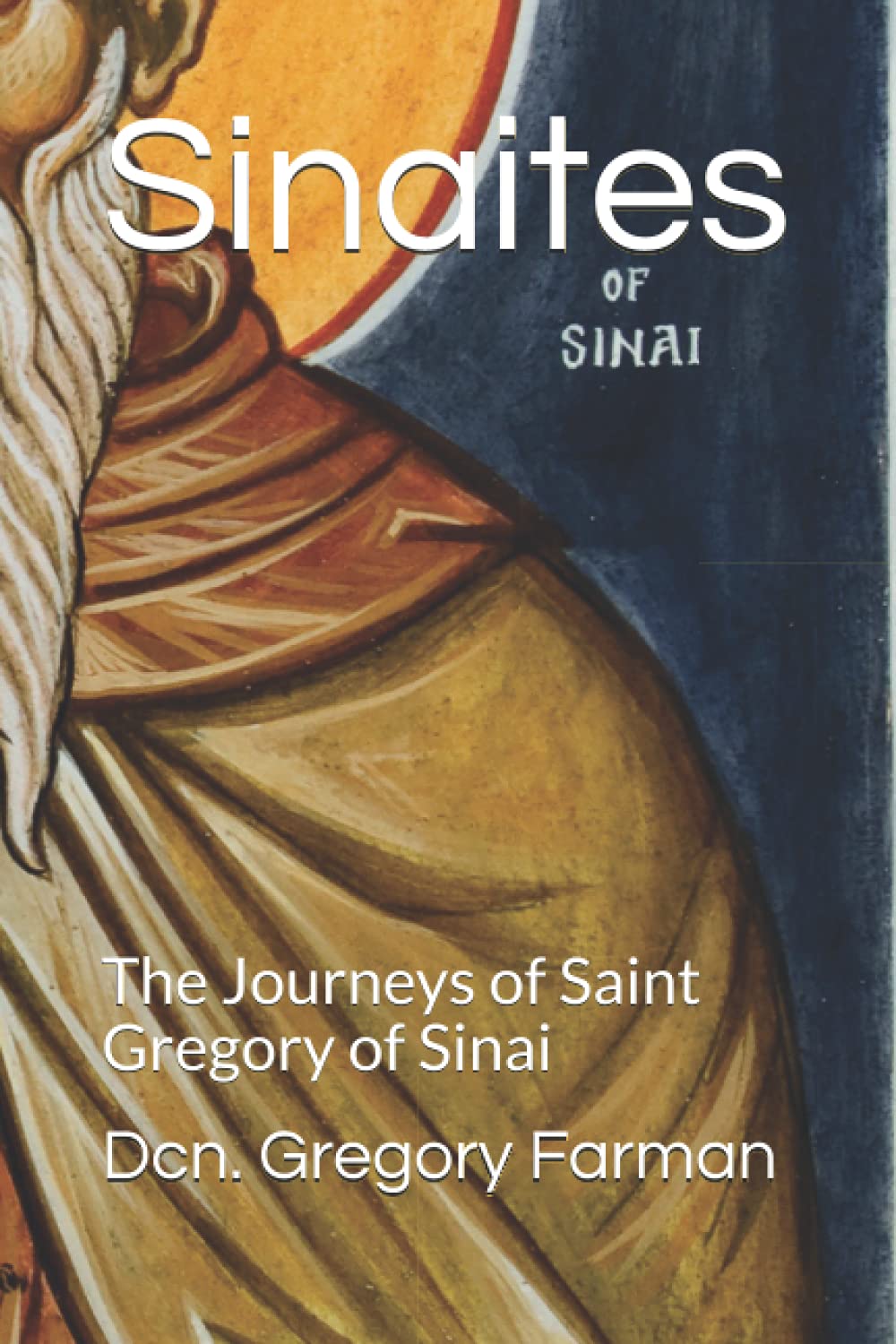



No one did more to preserve Christian traditions during the chaotic 14th century than Saint Gregory of Sinai. Certainly few traveled further or survived greater dangers. As a galley slave, a pilgrim, a monk, a monastic elder, and finally as a saint, Gregory struggled to revive the ancient practice of inner stillness and pure prayer. Sinaites tells Gregory's story through the memories of four of his friends. Kallistos, later to become Patriarch of Constantinople, meets Gregory on the island of Cyprus about 1280 CE. Together they make the risky journey to Alexandria and Cairo, then on to the Monastery of Saint Catherine below Mount Sinai. There the elder Neilos introduces them to the discipline of the Ladder of Divine Ascent and they learn of a threat that could split the Church and hasten the end of the Empire of New Rome. When Kallistos is called away to the capital, the young African Gerasimos takes his place as Gregory's companion and disciple. They escape pirates and plotters on their way to Crete, where Gregory learns the discipline of pure prayer from the elder Arsenios. Carrying what they have learned to Mount Athos, they work to restore the practice of inner prayer among the monks of the Holy Mountain. The story continues with Longinos' account of challenges and dangers they faced through decades on the Holy Mountain. Gregory's final years are remembered by Theodosios of Trnovo, who helps Gregory establish the Monastery of Saint Mary in the wilderness of Paroria, Bulgaria. While Sinaites is a work of fiction, it has close ties to the historical characters and challenges of the 14th century. As noted, Kallistos really was patriarch of Constantinople and Gregory’s hagiographer. Gerasimos, Longinos, and Theodosios really were Gregory´s disciples. Athanasios was Pope for the Orthodox Christians in Alexandria. Tsar Ivan Alexander was Gregory´s benefactor for the monastery in Paroria, and Amirales was his nemesis. Gregory learned inner prayer from the hermit Arsenios on Crete. And of course Gregory Palamas and Barlaam of Calabria were antagonists in the hesychast debates that saved the Orthodox doctrine of the uncreated energies of God.