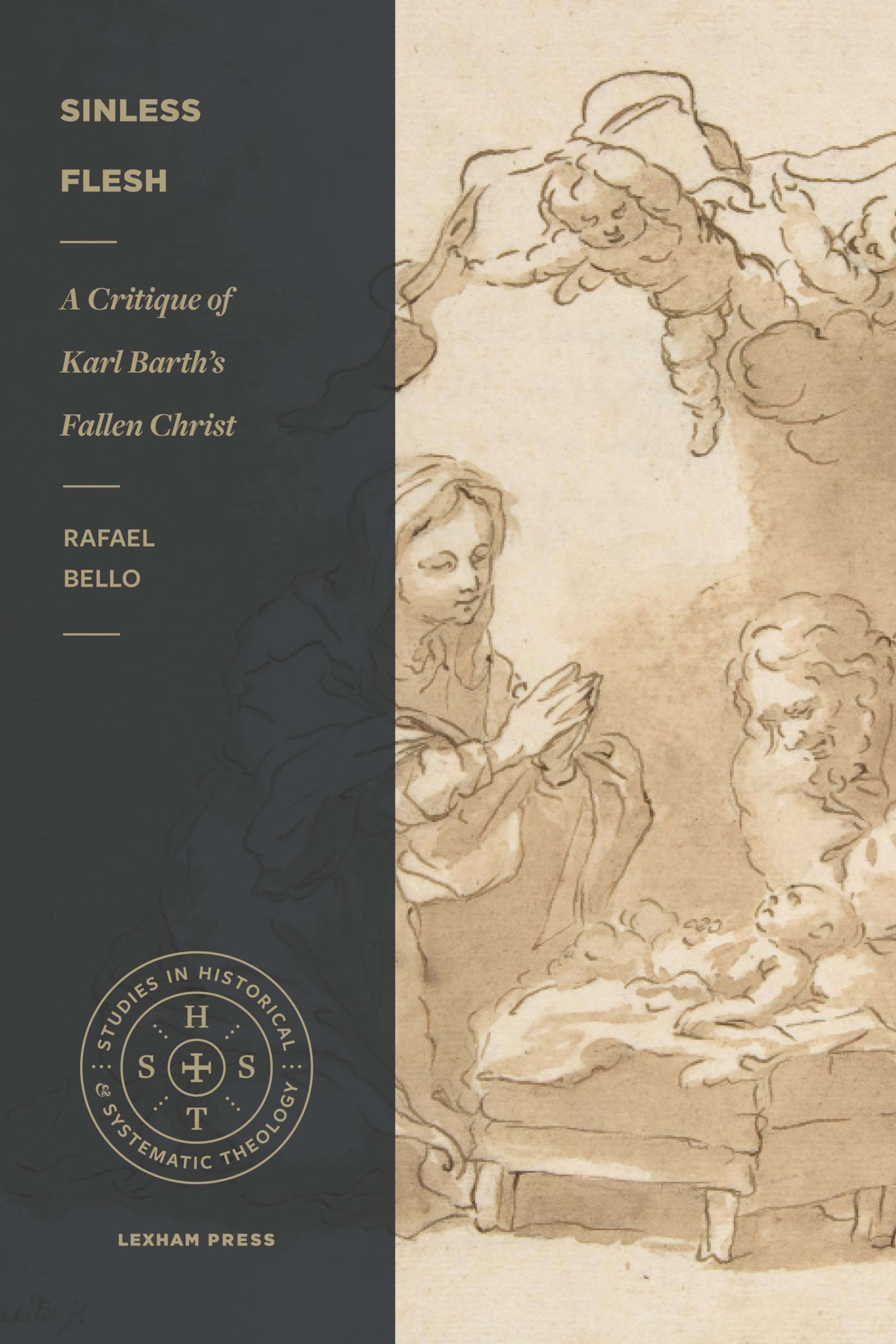
Sinless Flesh: A Critique of Karl Barth's Fallen Christ (Studies in Historical and Systematic Theology)
$28.99
by Rafael Nogueira Bello



Did Christ assume a fallen human nature? "What is not assumed is not healed." So goes the Chalcedonian maxim articulated by Gregory of Nazianzus regarding the nature and extent of Christ's work in assuming a human nature. But what is the nature of that assumption? If Christ is to stand in solidarity with us, must he have assumed not merely a human nature, but specifically a fallen human nature? In Sinless Flesh: A Critique of Karl Barth's Fallen Christ, Rafael Bello argues against the assertion made by Karl Barth, T. F. Torrance, and those who follow them that Christ assumed a fallen nature. Through retrieval of patristic, medieval, and Reformed orthodox theologians, Bello argues that a proper understanding of human nature, trinitarian inseparable operations, and the habitual grace-grace of union distinction leads to the conclusion that the assertion that Christ assumed a fallen human nature is at odds with faithful theological and historical understandings of the incarnation. Readers interested in theological retrieval for issues in contemporary theology will find a faithful model and way forward for a thorny issue in modern dogmatics. Avoiding the errors of those who propose Christ’s assumption of a fallen nature, Bello offers a lucid account of how the Son’s human nature is actually sanctified. Furthermore, by seriously considering the Trinitarian nature of the act of assumption, the reader is treated to a careful and nuanced construction of a model rejecting the fallen view. Learned in the christological thinking of Thomas Aquinas and Karl Barth, this study warrants serious consideration. ―Christopher R. J. Holmes, associate professor of systematic theology and head of the theology programme, University of Otago (New Zealand) Did Christ assume a fallen human nature? "What is not assumed is not healed." So goes the Chalcedonian maxim articulated by Gregory of Nazianzus regarding the nature and extent of Christ's work in assuming a human nature. But what is the nature of that assumption? If Christ is to stand in solidarity with us, must he have assumed not merely a human nature, but specifically a fallen human nature? In Sinless Flesh: A Critique of Karl Barth's Fallen Christ, Rafael Bello argues against the assertion made by Karl Barth, T. F. Torrance, and those who follow them that Christ assumed a fallen nature. Through retrieval of patristic, medieval, and Reformed orthodox theologians, Bello argues that a proper understanding of human nature, trinitarian inseparable operations, and the habitual grace-grace of union distinction leads to the conclusion that the assertion that Christ assumed a fallen human nature is at odds with faithful theological and historical understandings of the incarnation. Readers interested in theological retrieval for issues in contemporary theology will find a faithful model and way forward for a thorny issue in modern dogmatics. Rafael Bello (PhD, The Southern Baptist Theological Seminary) is Academic Editor at Editora Fiel (Brazil) and Professor of Theology at Martin Bucer Seminary. He has previously served as a Research Expert in Theology at The James P. Boyce Centennial Library.