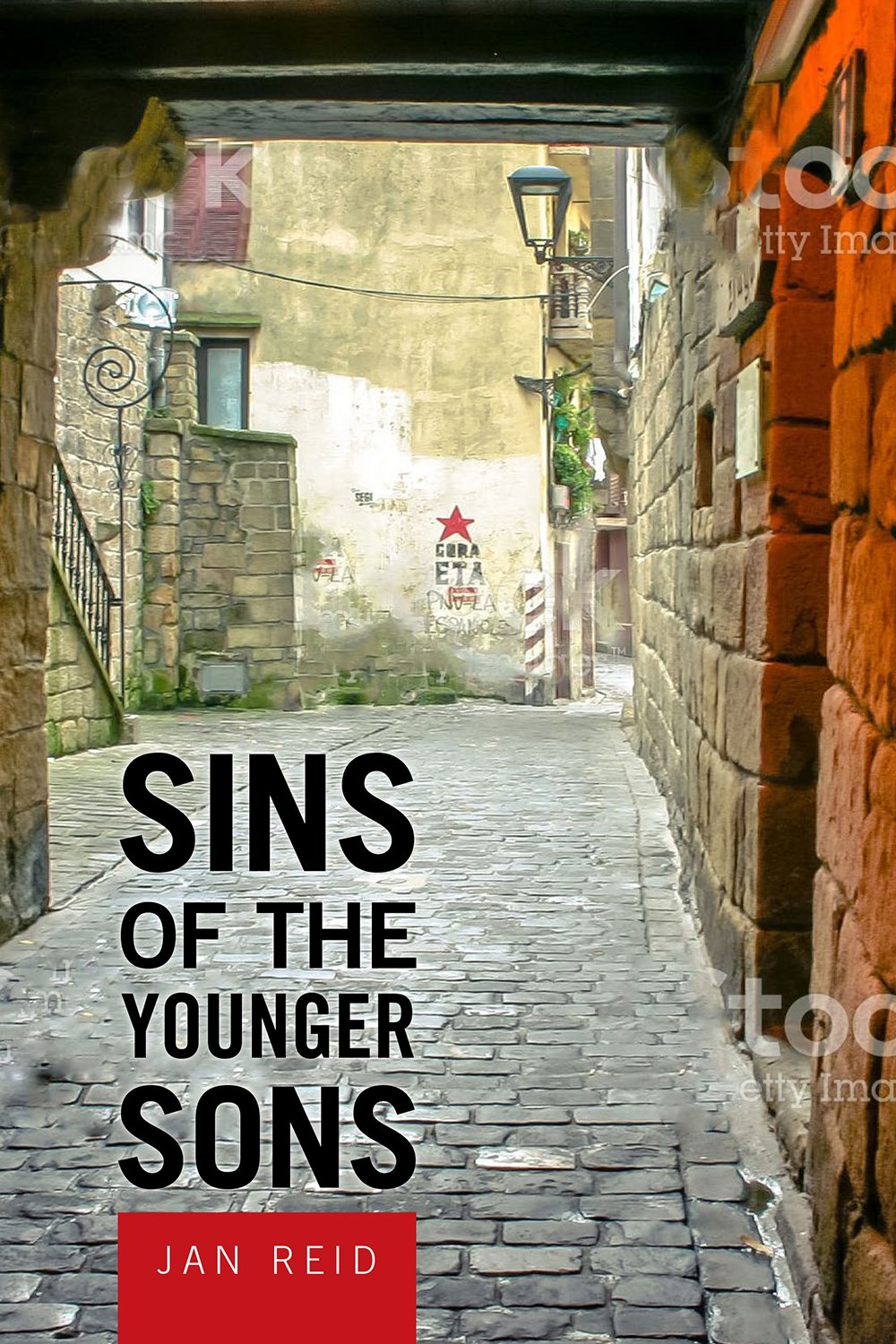



Luke Burgoa is an ex-Marine on a solitary covert mission to infiltrate the Basque separatist organization ETA in Spain and help bring down its military commander, Peru Madariaga. Luke hails from a Basque ancestry that came with the Spanish empire to Cuba, Argentina, Mexico, and, seventy-five years ago, to a Texas ranch. Neighbors consider the Burgoas Mexican immigrants and exiles of that nation’s revolution, but the matriarch of the family speaks the ancient language Euskera and honors traditions of the old country. Luke’s orders are to sell guns to the ETA and lure Peru into a trap. Instead he falls in love with Peru’s estranged wife, Ysolina, who lives in Paris and pursues a doctorate about an Inquisition-driven witchcraft frenzy in her native land. From the day they cross the border into the Basque Pyrenees, their love affair on the run conveys the beauty, sensuality, exoticism, and violence of an ancient homeland cut in two by Spain and France. Their trajectory puts Luke, Ysolina, and Peru on a collision course with each other and the famed American architect Frank Gehry, whose construction of a Guggenheim art museum seeks to transform the Basque city of Bilbao, a decrepit industrial backwater haunted by the Spanish Civil War—and a hotbed of ETA extremism. Ranging from the Amazon rain forest to a deadly prison in Madrid, Sins of the Younger Sons is a love story exposed to dire risk at every turn. JAN REID’s highly praised books include his novel Comanche Sundown , his biography of Texas governor Ann Richards Let the People In , his memoir of Mexico The Bullet Meant For Me , and The Improbable Rise of Redneck Rock . Making his home in Austin, Reid has been a leading contributor to Texas Monthly for over forty years. Comanche Sundown A Novel By Jan Reid TCU Press Copyright © 2010 Jan Reid All rights reserved. ISBN: 978-0-87565-428-7 Contents PROLOGUE: Coup, 1869, PART I: Dirt Luck, 1860–1868, PART II: Steal the Fire, 1870–1873, PART III: The Bloodstained Grass, 1874–1875, PART IV: Peyote Road, 1909, AFTERWORD, CHAPTER 1 If Bose Ikard had to Labor another life, he hoped to be relieved of doctors. At fourteen he was the property of a physician who had given him his name in Noxubee County, Mississippi, while living along a stream called the Tombigbee—all those places as foreign to Bose's ears as the Bight of Biafra, which was where his people probably came from, his owner once told him with a chuckle. Doctor Milton Ikard heard all the talk about the noble rights of Southerners and the cowardly radicals up North but put all the distance he could between himself and that growing trouble; also he disliked a damp climate. He did not give much thought to the family he dragged along. After stops in Shreveport, Louisiana, and Paris, Texas, the doctor trundled his itemized possessions due west in six-mule wagons to the dry skirt of the Comanche plain. Among them was "the orphan Negro Bose." The value he attached to the boy, $1,500, was a damn lie. That was the going rate for prime field hands, and Bose never was that. The mix of post oak forest and bunchgrass prairie called the Palo Pinto country began with a thickening of the savannah thirty miles west of Fort Worth. It was the far reach of the settled frontier. Nothing lay beyond but six hundred miles of fear, bloodshed, and grief, and it had been that way for a hundred fifty years. Giving up their claim, the Spaniards gave the plains and canyonlands a name in grudging honor of the nomads, Comanchería. Soon after the Ikards' arrival in the Palo Pinto country, a Comanche war axe laid open the chest of Ikard's nine-year-old daughter like a pullet prepared for a frying pan. A single rider, who must have gotten separated from his raiding party, came along wearing black face paint and a cap of wooly buffalo topknot and horns and killed that little girl out in the yard just because he took a mind to. It's a wonder he didn't kill them all. The doctor who ought to have been the child's protector was nowhere around. After that, seeking strength in numbers and patients for his practice, he moved them into the little town of Weatherford. Bose had the barest memory of coffee-colored arms and a smell perhaps of milk-giving breasts, but the doctor and his wife, a fragile creature Bose was required to call Lady Isabella, told him nothing about his mother except that she died in that place where he was born. Gave him not even a name. Bose was light-skinned, and the older and taller he got, the more obvious it became that he was the son of the man who owned him. The doctor could joke about his ancestors but he didn't feel obliged to say one word to him about that. Not one, not ever. The son of a bitch. That little girl, his half-sister, was named Euphrasia, after a plant and flower that was a parasite of grass, of which there was a great wealth in the Palo Pinto country. Eyebright, the plant was also called. Dust those scales a