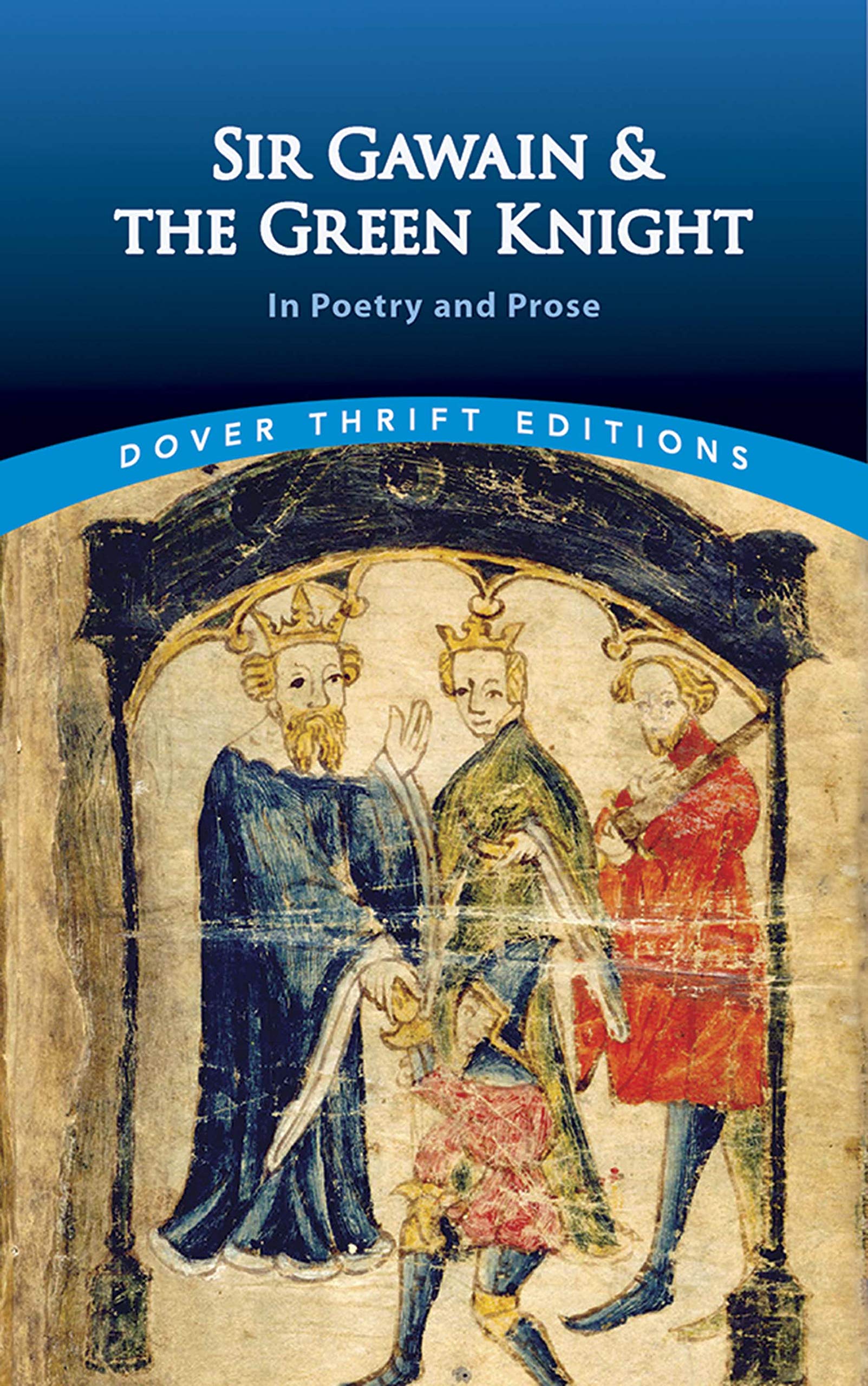
Sir Gawain and the Green Knight: In Prose and Poetry (Dover Thrift Editions: Poetry)
$7.00
by Jessie L. Weston



While the knights of King Arthur's Round Table are toasting the new year, a colossal stranger clad in green armor bursts in to deliver a formidable challenge: Any of them may strike off the intruder's head as long as he is prepared to receive a similar blow from the Green Knight in one year. Of all the gallant knights in the assembly, only Sir Gawain—brave, gallant, and true to his word—is willing to answer the dare. So begins this gem of medieval English literature, which traces Gawain's adventures as he endeavors to fulfill his pledge. Dating from the late fourteenth century or earlier, the story blends paganistic elements with Christian ethics to celebrate the virtue of forgiveness, thus forming a classic example of the chivalric tradition. This edition presents the legend in two forms: in prose and in verse, both translated by the distinguished scholar Jessie Weston. Sir Gawain And The Green Knight In Prose And Poetry By JESSIE L. WESTON Dover Publications, Inc. Copyright © 2018 Dover Publications, Inc. All rights reserved. ISBN: 978-0-486-82443-7 Contents Preface to the First Edition, vii, Sir Gawain and the Green Knight, in Prose, 1, Sir Gawain and the Green Knight, in Poetry, 53, CHAPTER 1 PART ONE OF THE MAKING OF BRITAIN After the siege and the assault of Troy, when that burg was destroyed and burnt to ashes, and the traitor tried for his treason, the noble Æneas and his kin sailed forth to become princes and patrons of well-nigh all the Western Isles. Thus Romulus built Rome (and gave to the city his own name, which it bears even to this day); and Ticius turned him to Tuscany; and Langobard raised him up dwellings in Lombardy; and Felix Brutus sailed far over the French flood, and founded the kingdom of Britain, wherein have been war and waste and wonder, and bliss and bale, ofttimes since. And in that kingdom of Britain have been wrought more gallant deeds than in any other; but of all British kings Arthur was the most valiant, as I have heard tell, therefore will I set forth a wondrous adventure that fell out in his time. And if ye will listen to me, but for a little while, I will tell it even as it stands in my story stiff and strong, fixed in the letter, as it hath long been known in the land. HOW ARTHUR HELD HIGH FEAST AT CAMELOT King Arthur lay at Camelot upon a Christmas-tide, with many a gallant lord and lovely lady, and all the noble brotherhood of the Round Table. There they held rich revels with gay talk and jest; one while they would ride forth to joust and tourney, and again back to the court to make carols; for there was the feast holden fifteen days with all the mirth that men could devise, song and glee, glorious to hear, in the daytime, and dancing at night. Halls and chambers were crowded with noble guests, the bravest of knights and the loveliest of ladies, and Arthur himself was the comeliest king that ever held a court. For all this fair folk were in their youth, the fairest and most fortunate under heaven, and the king himself of such fame that it were hard now to name so valiant a hero. NEW YEAR'S DAY Now the New Year had but newly come in, and on that day a double portion was served on the high table to all the noble guests, and thither came the king with all his knights, when the service in the chapel had been sung to an end. And they greeted each other for the New Year, and gave rich gifts, the one to the other (and they that received them were not wroth, that may ye well believe!), and the maidens laughed and made mirth till it was time to get them to meat. Then they washed and sat them down to the feast in fitting rank and order, and Guinevere the queen, gaily clad, sat on the high dais. Silken was her seat, with a fair canopy over her head, of rich tapestries of Tars, embroidered, and studded with costly gems; fair she was to look upon, with her shining grey eyes, a fairer woman might no man boast himself of having seen. But Arthur would not eat till all were served, so full of joy and gladness was he, even as a child; he liked not either to lie long, or to sit long at meat, so worked upon him his young blood and his wild brain. And another custom he had also, that came of his nobility, that he would never eat upon an high day till he had been advised of some knightly deed, or some strange and marvellous tale, of his ancestors, or of arms, or of other ventures. Or till some stranger knight should seek of him leave to joust with one of the Round Table, that they might set their lives in jeopardy, one against another, as fortune might favour them. Such was the king's custom when he sat in hall at each high feast with his noble knights, therefore on that New Year tide, he abode, fair of face, on the throne, and made much mirth withal. OF THE NOBLE KNIGHTS THERE PRESENT Thus the king sat before the high tables, and spake of many things; and there good Sir Gawain was seated by Guinevere the queen, and on her other side sat Agravain, a