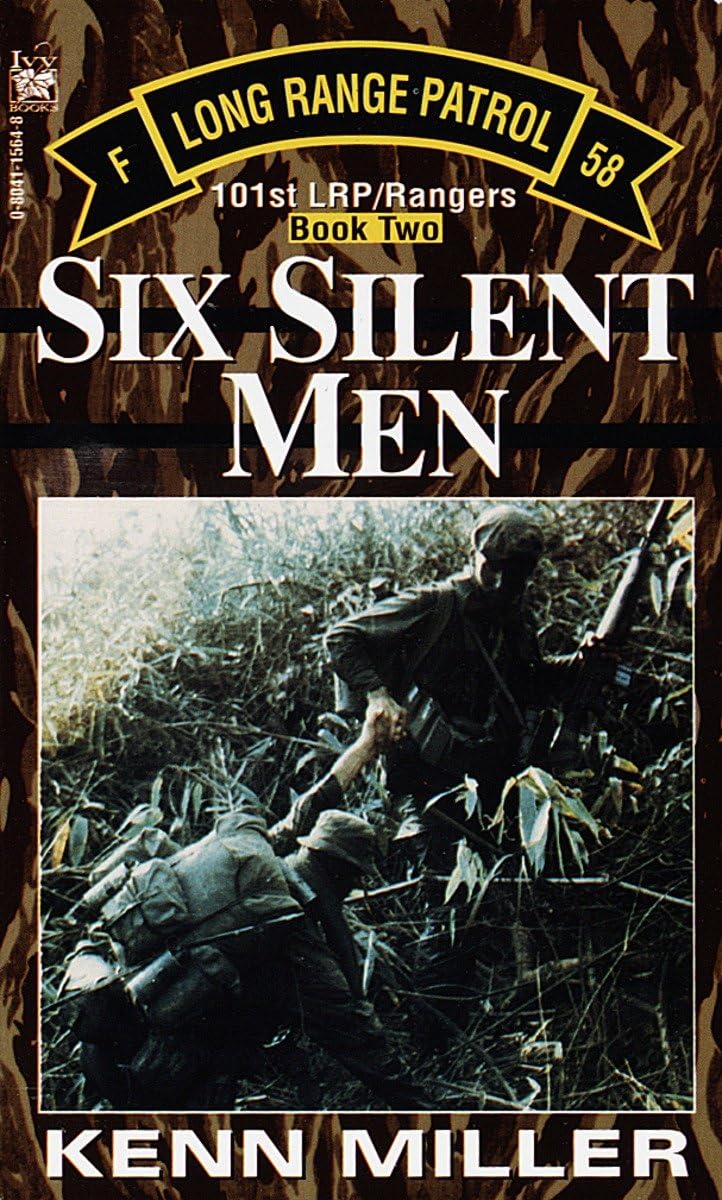



In the summer of 1967, the good old days were ending for the hard-core 1st Brigade LRRPs of the 101st Airborne Division, perhaps the finest maneuver element of its size in the history of the United States Army. It was a bitter pill. After working on their own in Vietnam for more than two years, the Brigade LRRPs were ordered to join forces with the division once again. But even as these formidable hunters and killers were themselves swallowed up by the Screaming Eagles' Division LRPs to eventually become F Co., 58th Infantry, they continued the deadly, daring LRRP tradition. From saturation patrols along the Laotian border to near-suicide missions and compromised positions in the always dangerous A Shau valley, the F/58th unflinchingly faced death every day and became one of the most highly decorated companies in the history of the 101st. r of 1967, the good old days were ending for the hard-core 1st Brigade LRRPs of the 101st Airborne Division, perhaps the finest maneuver element of its size in the history of the United States Army. It was a bitter pill. After working on their own in Vietnam for more than two years, the Brigade LRRPs were ordered to join forces with the division once again. But even as these formidable hunters and killers were themselves swallowed up by the Screaming Eagles' Division LRPs to eventually become F Co., 58th Infantry, they continued the deadly, daring LRRP tradition. From saturation patrols along the Laotian border to near-suicide missions and compromised positions in the always dangerous A Shau valley, the F/58th unflinchingly faced death every day and became one of the most highly decorated companies in the history of the 101st. In the summer of 1967, the good old days were ending for the hard-core 1st Brigade LRRPs of the 101st Airborne Division, perhaps the finest maneuver element of its size in the history of the United States Army. It was a bitter pill. After working on their own in Vietnam for more than two years, the Brigade LRRPs were ordered to join forces with the division once again. But even as these formidable hunters and killers were themselves swallowed up by the Screaming Eagles' Division LRPs to eventually become F Co., 58th Infantry, they continued the deadly, daring LRRP tradition. From saturation patrols along the Laotian border to near-suicide missions and compromised positions in the always dangerous A Shau valley, the F/58th unflinchingly faced death every day and became one of the most highly decorated companies in the history of the 101st. Kenn Miller is a former LRRP and 101st Ranger veteran. He is author of the successful and well-received novel Tiger: The LURP Dog. He lives in Southern California. Chapter One In the early summer of 1967, shortly after the cadre of the 101st Airborne Division’s famed Recondo School returned to Fort Campbell from training cadets at West Point, Brigadier General Frank B. Clay, the assistant division commander, and Lieutenant Colonel Charles Beckwith, the division G-2, paid an unexpected visit to the school, bearing the news that General Westmoreland had ordered all the divisions and separate brigade-size maneuver units then conducting operations in Vietnam to organize long-range patrol (LRP, pronounced “Lurp”) companies. Since the 101st Airborne Division was scheduled to join its 1st Brigade in Vietnam at the end of the year, it was to organize such a company within the division. And though there was no shortage of talent in the division, it seemed only natural that the Recondo School cadre become the nucleus of this new company. General Clay’s visit was brief, but after his departure, Lieutenant Colonel Beckwith remained behind to go over some of the details. Having previously commanded the 5th Special Forces Group’s Project Delta, Colonel Beckwith was more than familiar with the organization and duties of a long-range patrol company. And as he was the G-2, such a company, at least in theory, would be working for him. Wasting little time, Beckwith had already made up his mind to put the new company under the command of Captain Peter Fitts. Fitts, a mustang officer with plenty of enlisted time (and an array of tattoos to prove that most of his service had been as an enlisted man), had a prior tour in Vietnam establishing and running long-range recon teams for Special Forces. Colonel Beckwith knew what he wanted. The Table of Organization and Equipment (TOE) called for a three-platoon company. Two of the platoons would be patrol platoons, each running four to five six-man reconnaissance teams. The third platoon would be a headquarters platoon with a strong communications section. Beckwith made it very clear to the gathered Recondo School cadre that the company was to be a volunteer unit with standards that would exclude all but the most qualified. There was no disagreement. When Beckwith had taken over Project Delta, it had been with the understanding that he would be given free rein to hire and fire