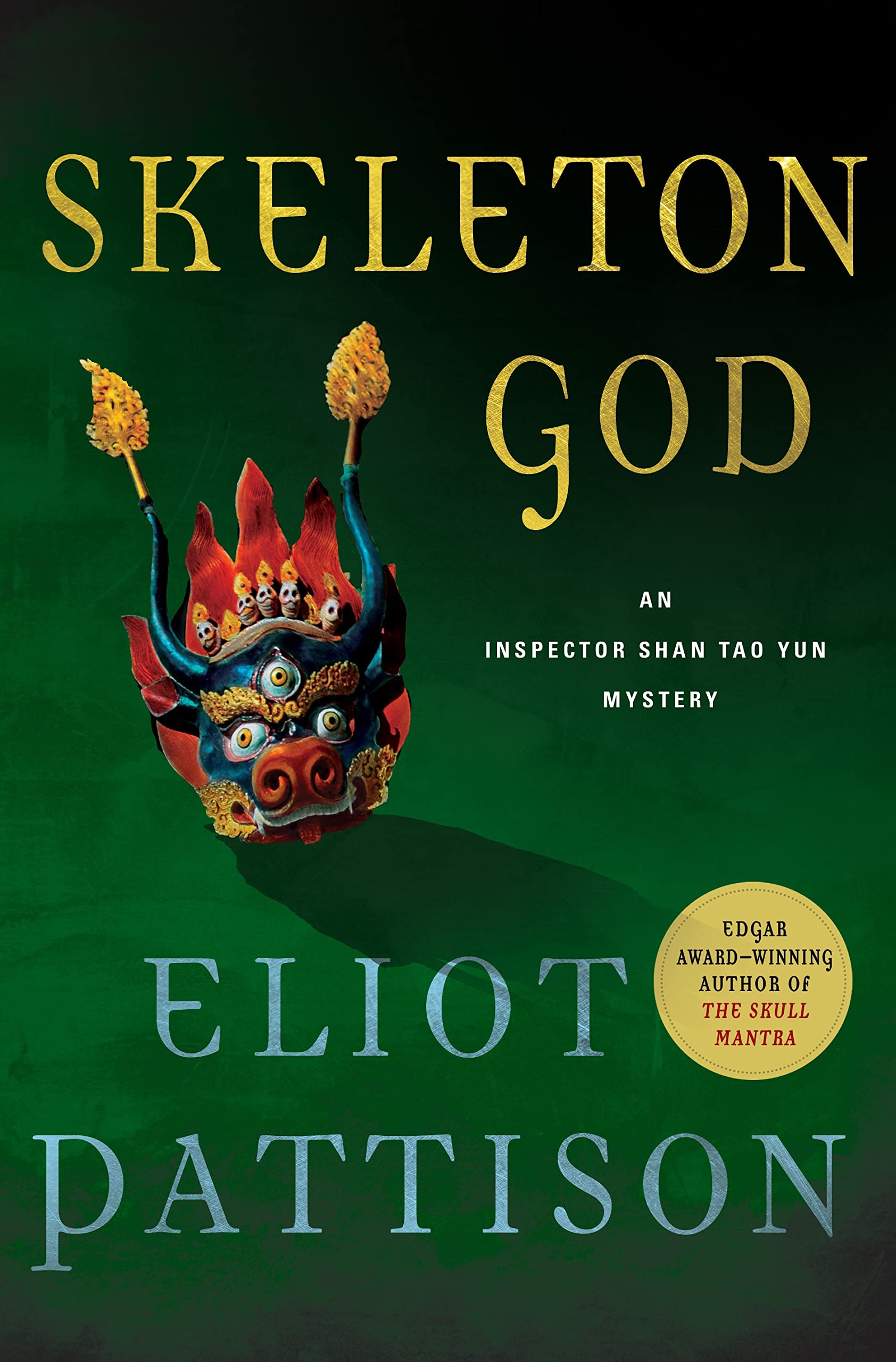



In Eliot Pattison's Skeleton God , Shan Tao Yun, now the reluctant constable of a remote Tibetan town, has learned to expect the impossible at the roof of the world, but nothing has prepared him for his discovery when he investigates a report that a nun has been savagely assaulted by ghosts. In an ancient tomb by the old nun lies a gilded saint buried centuries earlier, flanked by the remains of a Chinese soldier killed fifty years before and an American man murdered only hours earlier. Shan is thrust into a maelstrom of intrigue and contradiction. The Tibetans are terrified, the notorious Public Security Bureau wants nothing to do with the murders, and the army seems determined to just bury the dead again and Shan with them. No one wants to pursue the truth–except Shan, who finds himself in a violent collision between a heartbreaking, clandestine effort to reunite refugees from Tibet separated for decades and a covert corruption investigation that reaches to the top levels of the government in Beijing, China. The terrible secret Shan uncovers changes his town and his life forever. "Edgar-winner Pattison remains without peer at integrating a fair-play whodunit into a searing portrayal of life under an oppressive and capricious regime. Even readers unfamiliar with the physical and cultural devastation China has wrought in Tibet will find themselves engrossed―and moved―by Pattison’s nuanced portrayal."― Publishers Weekly (starred boxed review) "Pattison's ninth installment provides an important history lesson little understood in the West with authority, nuance, and genuine suspense."― Kirkus reviews Eliot Pattison is the author of The Skull Mantra , which won the Edgar Award and was a finalist for the Gold Dagger , as well Water Touching Stone and Bone Mountain . Pattison is a world traveler and frequent visitor to China, and his numerous books and articles on international policy issues have been published around the world. Skeleton God By Eliot Pattison St. Martin's Press Copyright © 2017 Eliot Pattison All rights reserved. ISBN: 978-1-250-06762-3 CHAPTER 1 If you would know the age of the human soul, an old lama had once told Shan Tao Yun, look to Tibet. Here at the roof of the world, where humans were so battered, where wind and hail and tyranny had pounded so many for so long, it was a miracle the human spark remained at all. As Shan gazed at the old Tibetan herder beside him, knee-deep in mud, grime covering his grizzled, weathered face, and saw the eyes shining with the joy of life, he knew that he was looking at something ancient and pure. In Tibet souls were tried, and souls were tormented, but always souls endured. "Put your back into it, Chinese!" the old man gleefully shouted, revealing two missing teeth, then twisted the tail of the yak in front of them. Shan leaned into the dank hair of the animal's hindquarters. With a loud bellow the huge yak strained at the mud that trapped it, then sank back. The four Tibetans he was with were called ferals, not because the old couple, their granddaughter, and her son exhibited the wildness of their remote mountain home, but because they numbered among the few Tibetans who refused to register as citizens of the Chinese government. Their precious bull yak had become mired in the soft mud of a river crossing uncomfortably close to the township's main road, and Shan, standing up to his knees in the ooze as he pushed the gentle, massive creature, did not miss the worried glances the old Tibetans began casting down the road. "Gyok po! Gyok po!" Trinle, the old grandfather, shouted to Lhamo, his wife, who was tying the lead rope to Shan's truck. Desperation now crept into his voice. "Hurry! Hurry!" The young woman in the battered truck eased it into gear, tightening the rope around the animal's chest, propelling such a shower of mud onto the yak and Shan that the boy in the back of the old pickup burst into laughter. The rope tightened, the yak snorted, and Shan and Trinle strained against the hairy haunches. A single yak, provider of hair for the felt used in tents, blankets, and clothing, milk for nourishment, and dung for fuel, could mean life or death to such impoverished nomads during Tibet's harsh winters. The yak grunted and leaned forward, the truck's wheels found traction, and with a mighty heave the animal broke free, so abruptly that Shan fell facedown into the muck. He rose to the laughter of Trinle and his great-grandson, who leapt from the truck to give an affectionate hug to the gentle beast. In a moment they were all laughing, the old woman Lhamo pointing to Shan's mud-covered face, the grandfather scooping up a mud ball and playfully throwing it at his wife. Yara, the woman at the steering wheel, leapt out, her beaded braids swinging, relief shining on her face. "Ati," she gleefully called out to her son, "when we clean him you can ride him up to the meadow by the —" A shadow fell over her and she froze. An army truck