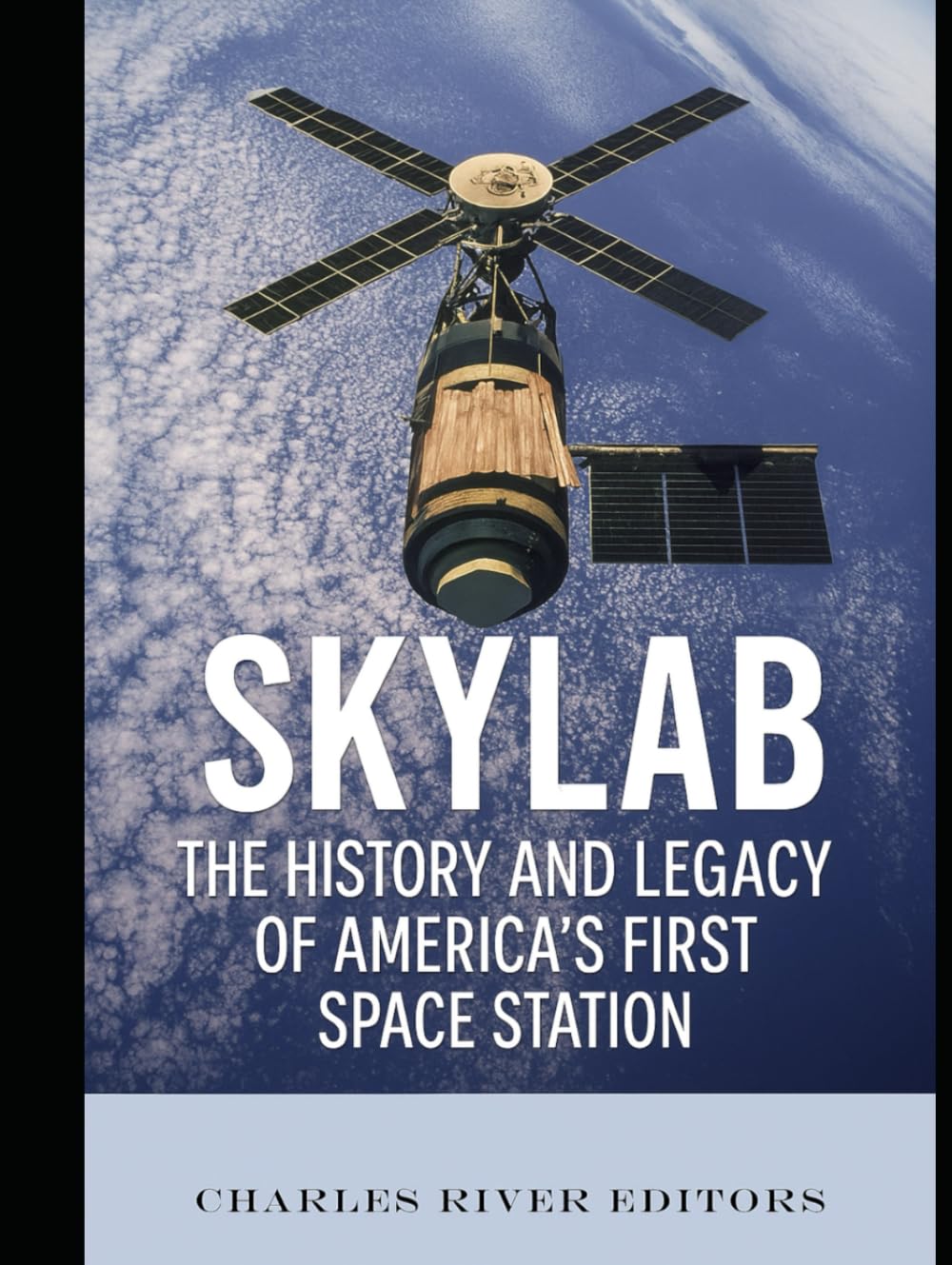
Skylab: The History and Legacy of America’s First Space Station
$13.99
by Charles River Editors



In 1869, the Atlantic Monthly magazine published a new novella in serial form. This bizarre tale, The Brick Moon , was written by a historian (and Unitarian minister) named Edward Everett Hale, who had already written several well-received novels and articles. However, this was something completely different today, as it was in the genre of what is today considered science fiction. Many people compared the new work to the previous novels of French writer Jules Verne, including From the Earth to the Moon , but Hale’s work was presented as a genuine account of a previous experiment. The Brick Moon concerned the launch of an artificial satellite, a sphere made of brick, into Earth’s orbit. In the story, it is launched as an aid to navigation, one of four such satellites planned to be launched. In many ways, this is a remarkably prescient story covering many attributes of today’s world-spanning GPS system. In the story, the satellite is accidentally launched with passengers aboard, and most of the tale is an account of their struggles to survive in space. The story proved so popular that, in 1870, Hale wrote a more detailed account of life in space as Life on the Brick Moon . This work is now generally accepted as being the very first attempt to describe what would be called a space station today. The Brick Moon was , of course, a work of fiction, but like many such early novels, it raised interesting questions about whether it would be possible for humans to live in space for extended periods in a man-made satellite. During the Space Race, many people envisioned a future in which space travel would be a common undertaking for ordinary citizens. Just as riding in an airplane was once a daring endeavor, travel by rocket could be refined and made safer over time. That collective aspiration to someday take part in dreams NASA brought to life was integral to inspiring public interest in the space program. However, in the years following Apollo 11 in 1969, popular enthusiasm for space travel waned, and dreams of vacationing like the Jetsons gave way to more grounded goals. The level of interest NASA enjoyed would never again be comparable to the culturally defining moments of the agency’s most celebrated missions during the Mercury, Gemini and Apollo Programs. Nonetheless, in 1972 and 1973, NASA sent nine astronauts to spend extended periods of time living in a craft named Skylab, the very first experimental American space station. Though Skylab would not last long, and the International Space Station remains far more famous, Skylab’s history is one of ingenuity and challenge, as well as how NASA found itself without a mission after the triumph of the Apollo Program.