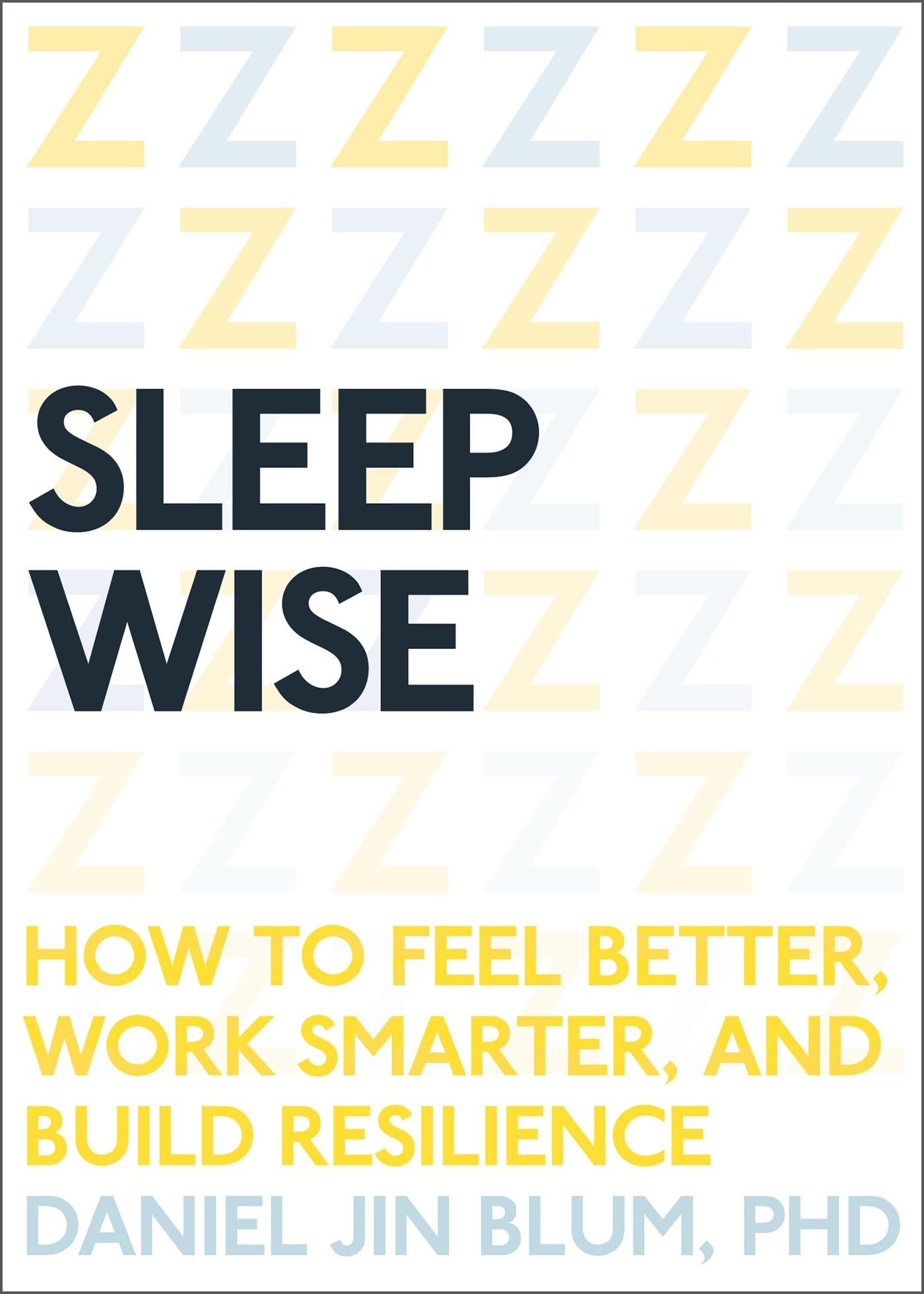



The Center for Disease Control considers insufficient sleep a national public health epidemic— nearly 30% of adults and two–thirds of all high school students report they regularly get insufficient sleep. Time, effort, and intention are required to keep our sleep healthy. In Sleep Wise , Dr. Daniel Blum discusses the everyday activities and habits that play a major role in shaping sleep and overall health, including physical exercise and diet. Sleep Wise incorporates sleep science, mindfulness practices related to sleep, and real–world examples and anecdotes to support a mindful, sustainable sleep practice. Anybody who has trouble sleeping will be relieved to have this enjoyable, effective manual at their bedside. Dr. Daniel Jin Blum, PhD, DBSM, is a sleep psychologist and research assistant professor at NYU Shanghai. An expert in cognitive behavioral therapy for insomnia, Dr. Blum trained at UC Berkeley's Sleep & Mood Research Clinic as well as Stanford's Center for Sleep Sciences & Medicine, where he was a clinical fellow. He currently leads research examining the intersections of sleep and circadian fasting, and authored Sleep Wise: How to Feel Better, Work Smarter, and Build Resilience , a book designed to improve wellbeing through sleep and mindfulness. When he is not engaging in patient care, he consults for companies focused on integrating sleep, behavior change, and technology. Dr. Blum is a transracial Korean-adoptee and resides in Shanghai. He received his BA in Psychology from University of Colorado Boulder and his PhD in Clinical Psychology from CSPP. He is a Diplomate in Behavioral Sleep Medicine and Licensed Psychologist in California, Colorado, and Florida. From Chapter 2: Benefits of Sleep For many people, it is unnecessary to make a strong case in favor of sleep. We feel great when we get enough sleep and a bit more on edge when we don’t. Despite intuitively knowing that we should get adequate amounts of sleep, this gut feeling is often insufficient motivation. Part of the challenge is that many of the effects of sleep lie between barely perceptible to outside of conscious awareness; this is particularly so when it accumulates gradually over time, as it does for so many of us. These subtle changes subsequently affect how we respond to the environment and how the outside world responds to us. We may notice the effects of drastic changes in sleep, yet the impact this has on our internal physical and mental processes remain hidden. Thanks to the amazing human capacity of adaptability, we quickly shift our frame of reference to match our sleep–deprived states. While this is an incredibly helpful mechanism to get us through rough patches in the short–term, it can inadvertently perpetuate the perception that we can function on less sleep. The truth is that we can "function" but at levels far below our potential, for a much shorter time in this life, and while feeling worse; we can become quite good at living on autopilot and only engaging for moments at a time. Choosing to more fully experience all the moments in between requires intention, effort, practice, and sleep. It is not for everyone. It can be difficult and even painful. But just like a tough hike to a gorgeous vista, the work and the moments along the way contribute to the greater enjoyment at the end. The first step is to fill one’s knowledge base with the amazing benefits of sleep. The more you know about and understand these processes, the deeper the well with which to draw upon when other activities compete for your attention. Research continues to illuminate the critical nature of sleep through the myriad ways it impacts our physical and emotional lives and functioning, both positively and negatively, so this chapter will focus on some of the great insights that have already been discovered. As you continue to delve deeper into your intentional sleep practice, the interactions between your waking and sleeping lives will strengthen your resolve; you will see that your entire being benefits from this interconnected collaboration. This understanding will then give you the freedom to choose where to intervene to start the ripples of positive change.