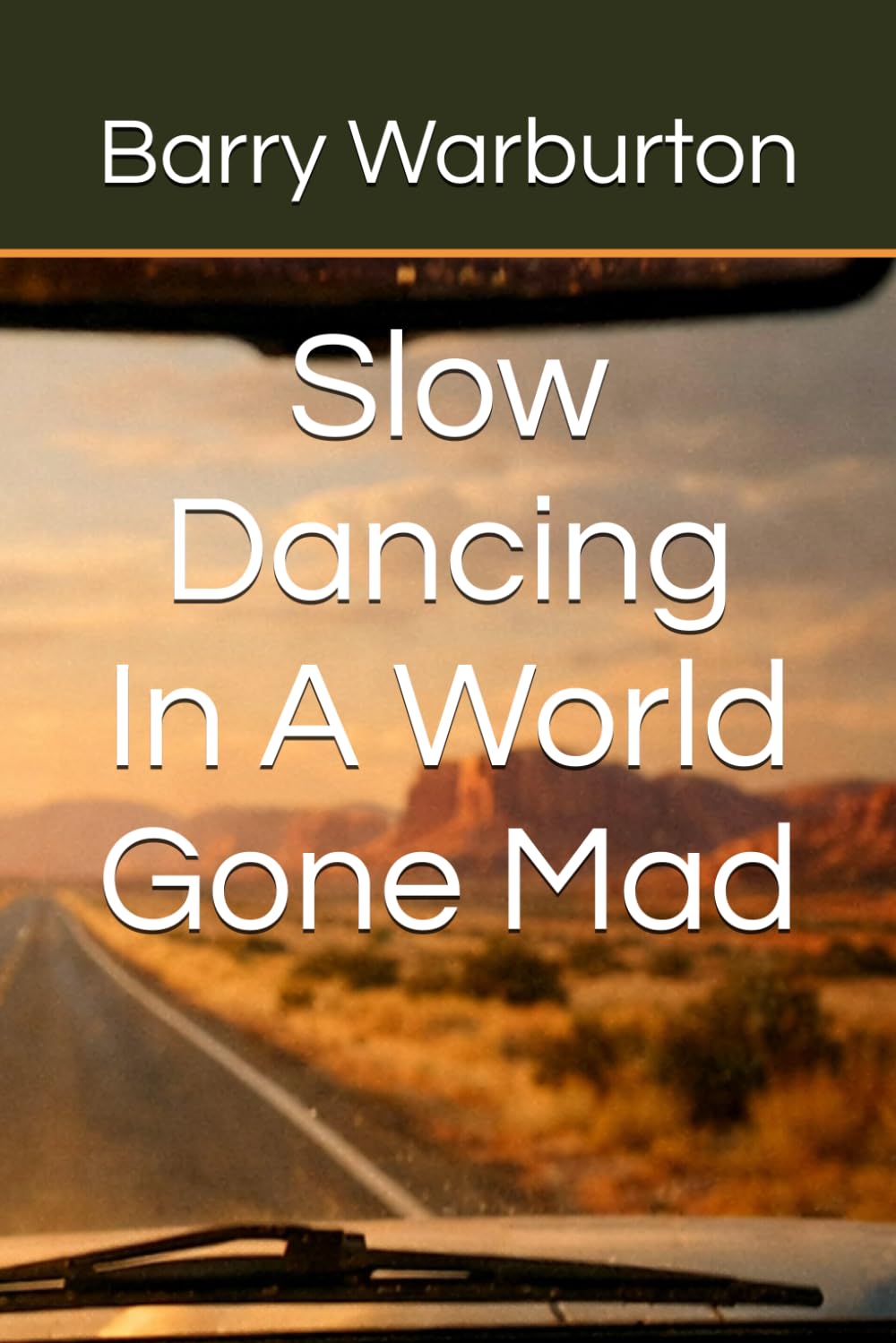



In Slow Dancing in a World Gone Mad , Barry Warburton offers a collection of lyrical essays rooted in place, movement, and attention. Walking coastal trails, sailing inland waters, working with his hands, and listening closely to the natural world, he searches for ways to remain human amid cultural noise, political fracture, and personal loss. These essays move through forests and deserts, rivers and harbors, family history and daily ritual. They are not arguments or manifestos, but acts of witness—moments where love is practiced through care, presence, and refusal to abandon the real. When public life grows abstract and performative, Warburton turns instead to the physical world: birds lifting from tide flats, wind in rigging, music drifting from a job site, a dog ranging ahead on the trail. Written during a period of national and personal unraveling, Slow Dancing in a World Gone Mad is a quiet, steady book about endurance without hardness, resistance without spectacle, and hope without illusion. It invites readers to slow down, pay attention, and remember that meaning is made not through certainty, but through participation in the living world.