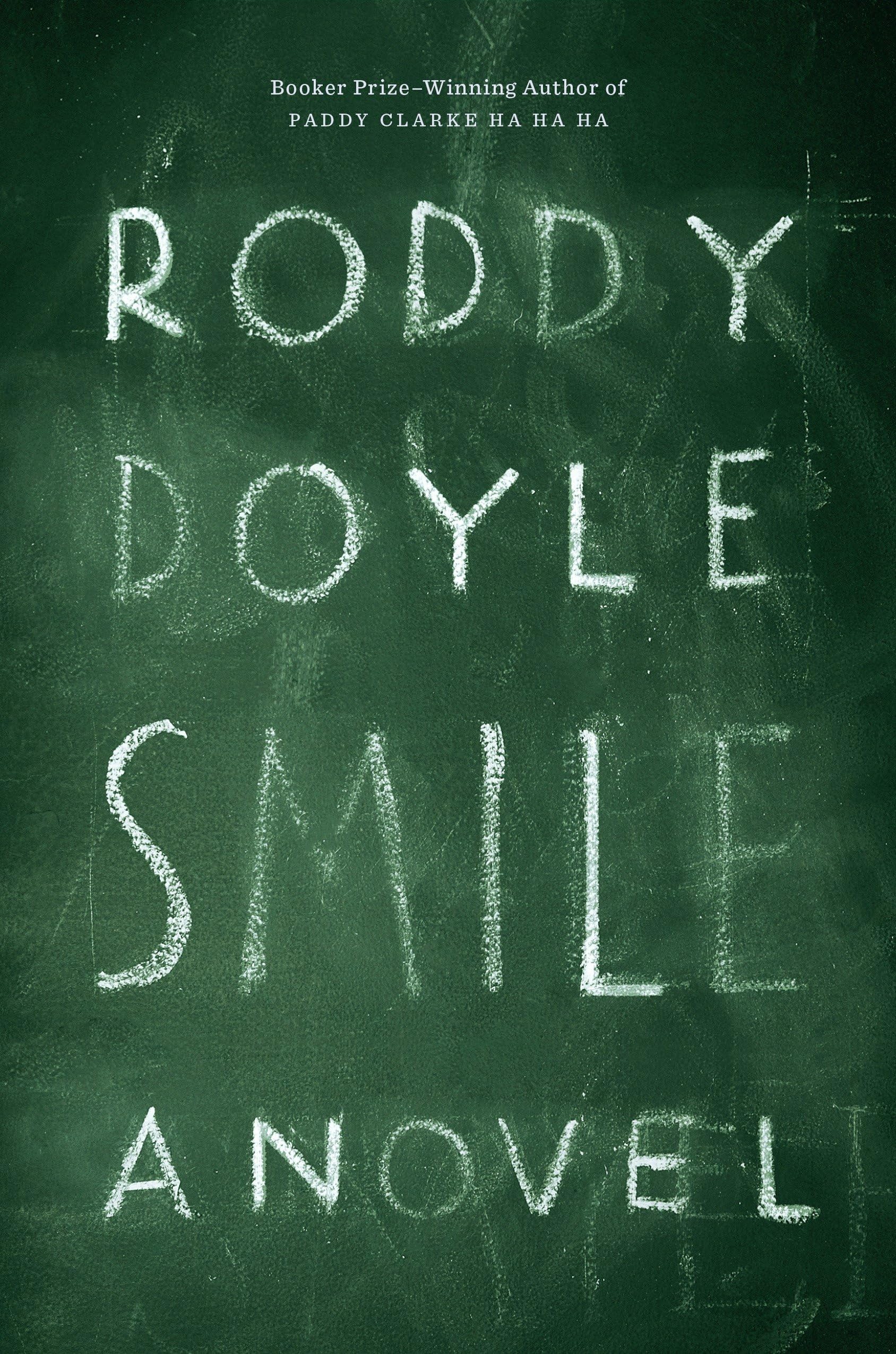



From the author of the Booker Prize winning Paddy Clarke Ha Ha Ha, a bold, haunting novel about the uncertainty of memory and how we contend with the past. "It's his bravest novel yet; it's also, by far, his best." -- npr.org “The closest thing he’s written to a psychological thriller."– The New York Times Book Review Just moved into a new apartment, alone for the first time in years, Victor Forde goes every evening to Donnelly’s for a pint, a slow one. One evening his drink is interrupted. A man in shorts and a pink shirt comes over and sits down. He seems to know Victor’s name and to remember him from secondary school. His name is Fitzpatrick. Victor dislikes him on sight, dislikes, too, the memories that Fitzpatrick stirs up of five years being taught by the Christian Brothers. He prompts other memories—of Rachel, his beautiful wife who became a celebrity, and of Victor’s own small claim to fame, as the man who would say the unsayable on the radio. But it’s the memories of school, and of one particular brother, that Victor cannot control and which eventually threaten to destroy his sanity. Smile has all the features for which Roddy Doyle has become famous: the razor-sharp dialogue, the humor, the superb evocation of adolescence, but this is a novel unlike any he has written before. When you finish the last page you will have been challenged to reevaluate everything you think you remember so clearly. Roddy Doyle was born in Dublin in 1958. He is the author of ten acclaimed novels, including The Commitments, The Van (a finalist for the Booker Prize), Paddy Clark Ha Ha Ha (winner of the Booker Prize), The Woman Who Walked Into Doors, A Star Called Henry , and, most recently, The Guts . Doyle has also written two collections of stories, and several works for children and young adults. He lives in Dublin. —Victor? I looked up when I heard my name but I couldn’t see a thing. I was sitting near the open door and the light coming through was a solid sheet between me and whoever had spoken. My eyes were watering a bit – they did that. I often felt that they were melting slowly in my head. —Am I right? It was a man. My own age, judging by the shape, the black block he was making in front of me now, and the slight rattle of middle age in his voice. I put the cover over the screen of my iPad. I’d been looking at my wife’s Facebook page. I could see him now. There were two men on the path outside, smoking, and they’d stood together in the way of the sun. I didn’t know him. —Yes, I said. —I thought so, he said.—Jesus. For fuck sake. I didn’t know what to do. —It must be – fuckin’ – forty years, he said.— Thirty- seven or -eight, anyway. You haven’t changed enough, Victor. It’s not fair, so it isn’t. Mind if I join you? I don’t want to interrupt anything. He sat on a stool in front of me. —Just say and I’ll fuck off. Our knees almost touched. He was wearing shorts, the ones with the pockets on the sides for shotgun shells and dead rabbits. —Victor Foreman, he said. —Forde. —That’s right, he said.— Forde. I had no idea who he was. Thirty- eight years, he’d said; we’d have known each other in secondary school. But I couldn’t see a younger version of this man. I didn’t like him. I knew that, immediately. —What was the name of the Brother that used to fancy you? he said. He patted the table. —What was his fuckin’ name? His shirt was pink and I could tell that it had cost a few quid. But there was something about it, or the way it sat on him; it hadn’t always been his. —Murphy, he said.—Am I right? —There were two Murphys, I said. —Were there? —History and French. —Were they not the same cunt? I shook my head. —No. —Jesus, he said.—I hate that. The memory. It’s like dropping bits of yourself as you go along, isn’t it? I didn’t answer. I have a good memory – or I thought I did. I still didn’t know who he was. He moved, and put one foot on top of a knee. I could see right up one leg of his shorts. —Anyway, he said.—It was the one who taught French that wanted your arse. Am I right? I wanted to hit him. I wanted to kill him. I could feel the glass ashtray that wasn’t there any more, that hadn’t been on the table since the introduction of the smoking ban a decade before – I could feel its weight in my hand and arm as I lifted it, and myself, and brought it flat down on his head. I looked to see if anyone had been listening to him. I could hear the remains of the word ‘arse’ roll across the room. I hated this man, whoever he was. But I nodded. —Fuckin’ gas, he said.—And look at us now. Would he fancy us now, Victor? —Probably not. —Not me, anyway, he said. He slapped his stomach. —You’re not looking too bad, he said. His accent was right; he came from nearby. He took a slurp from his pint – it was Heineken or Carlsberg – and put the glass back on the table. —You’ve done alright, Victor, he said.—Haven’t you? I couldn’t answer.